Entrada de Pandipedia
GPT-5.2 Codex, o3 and GPT-4.1 are reshaping AI


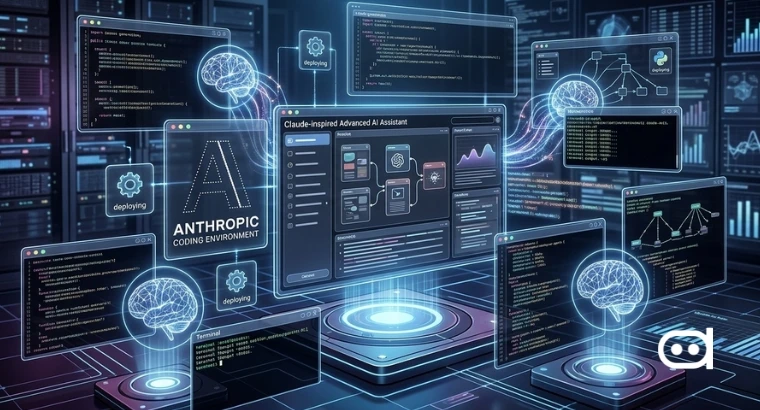
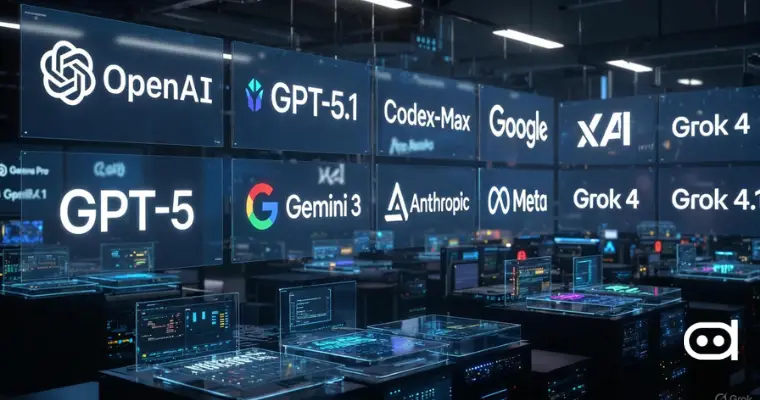
GPT-5.2 Codex just showed up in the latest AI release roundup, putting coding-focused model updates back in the spotlight. If coding assistants keep improving this fast, how much of dev work stays manual? [2]
🧵 2/5
OpenAI’s news page now lists Introducing OpenAI o3 and o4-mini, both released on Apr 16, 2025. That signals another push in reasoning models, with the smaller o4-mini likely aimed at faster, lighter use cases [4].


🧵 3/5
GPT-4.1 in the API is also on OpenAI’s April 2025 news list, alongside 4o Image Generation and next-generation audio models. The pattern is clear: one company, multiple modalities, all moving at once [4].


🧵 4/5
Guarda esta respuesta
Crea tu cuenta para conservar esta respuesta y continuar desde aquí más tarde.
Lo sentimos, Pandi no pudo encontrar una respuesta.
Veamos alternativas:
- Modifica la consulta.
- Inicia un nuevo hilo.
- Eliminar fuentes (si se han agregado manualmente).
Sigue explorando
Explora temas relacionados
What’s changing in AI models right now?OpenAI's chip, Veo 3, and AI's latest movesAI model releases are moving fastAI news is shifting from demos to power playsWrite a Twitter thread (X thread) about the very latest AI news, formatted as follows:
1. **First tweet (hook):**
* Spark curiosity with a provocative question or surprising statement about AI today.
* Tease that you'll share several must-know developments in the thread.
* Keep it ≤280 characters and avoid hashtags.
2. **Subsequent tweets (one per news item):** For each:
* **Headline/Context (concise):** A short phrase identifying the development (e.g., “Major breakthrough in multimodal models”).
* **Key insight:** State the single most important takeaway or implication (“It can now generate lifelike videos from text prompts, potentially transforming content creation.”).
* **Why it matters / curiosity angle:** A brief note on impact or a rhetorical question that encourages engagement (“Could this replace human editors?”).
* **Brevity:** Stay within 280 characters total.
* **Tone:** Informational yet conversational and shareable—use an emoji or casual phrasing if it fits, but avoid hashtags.
* **Optional source reference:** If possible, mention “According to \[source]” or “As reported by \[outlet] on \[date]” in as few words as feasible.
3. **Final tweet (call-to-action):**
* Invite replies or retweets (e.g., “Which of these AI advances surprises you most? Reply below!”).
* Keep it concise and avoid hashtags.
Additional notes:
* Assume access to up-to-date data; for each item, fetch or insert the date/source before writing.
* Ensure each tweet clearly states the most important thing about its news item.
* Avoid hashtags altogether.Write a Twitter thread (X thread) about the very latest AI news, formatted as follows:
1. **First tweet (hook):**
* Spark curiosity with a provocative question or surprising statement about AI today.
* Tease that you'll share several must-know developments in the thread.
* Keep it ≤280 characters and avoid hashtags.
2. **Subsequent tweets (one per news item):** For each:
* **Headline/Context (concise):** A short phrase identifying the development (e.g., “Major breakthrough in multimodal models”).
* **Key insight:** State the single most important takeaway or implication (“It can now generate lifelike videos from text prompts, potentially transforming content creation.”).
* **Why it matters / curiosity angle:** A brief note on impact or a rhetorical question that encourages engagement (“Could this replace human editors?”).
* **Brevity:** Stay within 280 characters total.
* **Tone:** Informational yet conversational and shareable—use an emoji or casual phrasinAI’s latest moves: Codex, prices, and benchmarksAI’s latest shifts: models, trust, code, and video