Descubre Pandipedia
Un directorio creciente de respuestas útiles seleccionadas por la comunidad de Pandi. Busca en la colección o explora los últimos descubrimientos.
2272 entradas disponibles

Coast Guard cutter Polar Star breaking Antarctic ice
Veamos alternativas:
- Modifica la consulta.
- Inicia un nuevo hilo.
- Eliminar fuentes (si se han agregado manualmente).
Luna 16: A Robotic Handful from the Moon
Transcripción
Luna 16 set out to do something previously achieved only by crewed missions: bring lunar soil back to Earth without astronauts. The Soviet spacecraft was a Ye-8-5 sample-return design, developed and managed by Lavochkin, with a remote arm for collecting material. After entering lunar orbit, it landed in the northeastern Sea of Fertility at 05:18 UT on September 20, 1970. Less than an hour later, at 06:03, its automatic drill penetrated the surface to gather soil. That sequence was the turning point: landing, collecting, and returning a lunar sample through an automated mission. Siddiqi records that Luna 16 successfully returned lunar samples, though the account available here does not specify their mass. He describes it as the first fully automatic recovery of lunar samples from the Moon, and a Soviet deep-space landmark after five consecutive failures. Its importance was practical as well as symbolic: robotic exploration could bring lunar material home.
Veamos alternativas:
- Modifica la consulta.
- Inicia un nuevo hilo.
- Eliminar fuentes (si se han agregado manualmente).
How Desert Sand Reached Egypt’s Farmland
Veamos alternativas:
- Modifica la consulta.
- Inicia un nuevo hilo.
- Eliminar fuentes (si se han agregado manualmente).
The grasshopper wart remedy Cowan records
Cowan reports that Swedish peasants had Decticus verrucivorus, a kind of grasshopper, bite warts on their hands. They believed the black fluid it released from its mouth would make the warts disappear. This was a folk remedy he recorded, not a tested or recommended treatment[1]. He also says boys attributed wart-curing power to similar black fluid from grasshoppers, which they called “tobacco spit”[2].
Veamos alternativas:
- Modifica la consulta.
- Inicia un nuevo hilo.
- Eliminar fuentes (si se han agregado manualmente).
A nook, made from what’s here



Veamos alternativas:
- Modifica la consulta.
- Inicia un nuevo hilo.
- Eliminar fuentes (si se han agregado manualmente).
The orangutan’s stone and the oyster
In the traveller’s account recorded by A Hundred Anecdotes of Animals, the orangutan reportedly wedged a stone into an open oyster shell so it could not close on its paw, then drew out the oyster and ate it[1].
Veamos alternativas:
- Modifica la consulta.
- Inicia un nuevo hilo.
- Eliminar fuentes (si se han agregado manualmente).
When a car check is a job for a professional
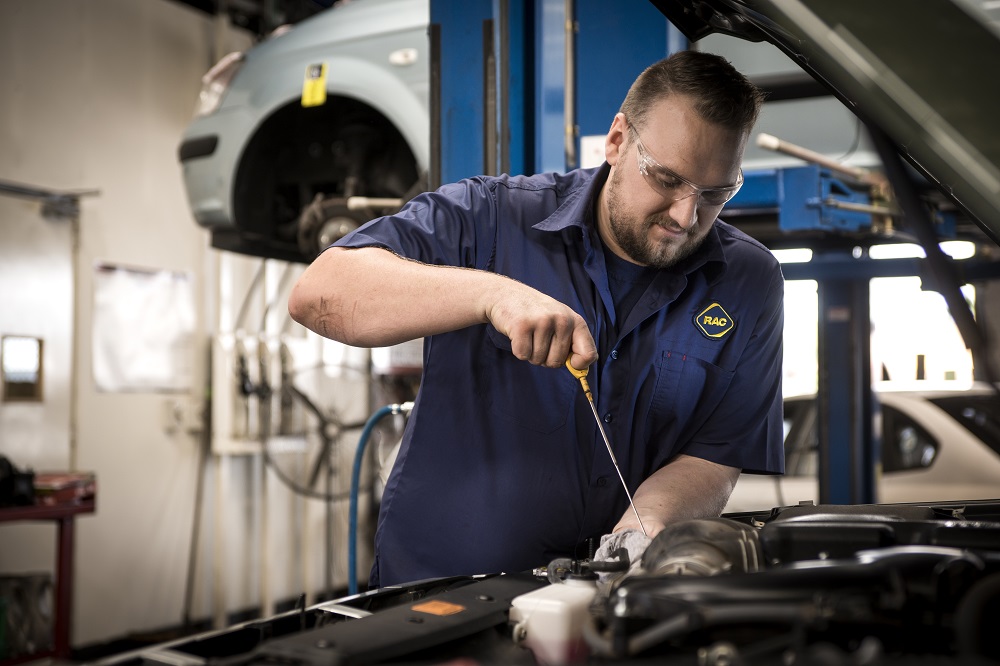
Recognizing the boundary between a simple owner check and a professional garage job comes down to knowing which tasks are safe for home maintenance and which require specialized tools, certified expertise, or safety precautions.
According to RAC guidance, basic checks like inspecting your engine oil [1], tyres [2], windscreen washer fluid [3], and lights [4] can be handled at home. However, you should follow specific cautions for fluid maintenance and larger repairs:
- Follow your handbook for fluids: Always check your owner's manual to find correct fluid locations, capacities, and manufacturer-approved specifications before topping anything up [5][6].
- Check coolant only when cold: Never open the coolant filler cap or attempt maintenance on a hot engine, as pressurised boiling water can cause severe burns [7][8]. If your coolant level drops repeatedly, it indicates a leak that requires professional attention [9][10].
- Be careful with brake fluid: You can check brake fluid levels visually from the outside of the container [11], but if the level is low, dramatically reduced, or if water gets inside and causes the fluid to boil under heavy braking, it can lead to brake failure [12]. Brake systems are crucial for safety and should be left to a professional if you have any doubts [13].
- Seek professional help for serious problems: Complex areas like fuel systems, brake repairs, and specialist air-conditioning servicing carry significant safety risks and require professional expertise, proper workshop space, and specialized equipment [14].
Your next step is to consult your vehicle's handbook for recommended maintenance intervals [15] and schedule your car with a local approved garage or mobile mechanic if you suspect a leak, warning light, or a repair beyond basic fluid top-ups [16][17].
Veamos alternativas:
- Modifica la consulta.
- Inicia un nuevo hilo.
- Eliminar fuentes (si se han agregado manualmente).
The cereal seed’s nutrient handoff
During cereal grain germination, such as in corn or wheat, a coordinated handoff takes place between the starchy endosperm and the embryo to supply necessary nutrition [1][2].
The starchy endosperm acts as a storage tissue that surrounds the embryo and holds reserves primarily in the form of starch [3]. Rather than simply sitting beside the embryo as passive food, these reserves must be actively mobilized [4]. This is where specialized tissues come into play:
- Aleurone layer: This outer layer of endosperm cells remains alive and secretes hydrolytic enzymes, such as amylase, which digest the endosperm's stored starches into usable sugars [5][6].
- Scutellum: Acting as a nutrient transfer link between the embryo and the endosperm, the scutellum absorbs the newly released sugars and nutrients and passes them directly to the embryo [7].
This biochemical pipeline creates a dynamic transfer pathway rather than a simple static food source [8][9]. By converting complex stored reserves into accessible energy and nutrients, this mechanism directly supports early seedling growth [10].
Would you also like to know what happens to the aleurone layer after germination finishes?Respuesta completa. Hay una opción de seguimiento disponible.
Veamos alternativas:
- Modifica la consulta.
- Inicia un nuevo hilo.
- Eliminar fuentes (si se han agregado manualmente).
How NASA built the Apollo Guidance Computer
Veamos alternativas:
- Modifica la consulta.
- Inicia un nuevo hilo.
- Eliminar fuentes (si se han agregado manualmente).
The Ship Built on a Vast Scale
In The World of Wonders, the Great Eastern is a ship of almost startling scale: 680 feet long, 83 feet broad and 58 feet deep, with a reported tonnage of 23,000 tons. Each paddle-wheel measured 58 feet across. The book says each of the four engine cylinders was cast in one piece, weighed 28 tons and had a 14-foot stroke; the condenser was another single casting of 36 tons[1].
The book dates the start of Brunel’s work to 1854, describes the ship as constructed at Millwall in 1857, and says nearly a million pounds had been spent before she was tried. Financial difficulties brought a new company in 1858. She went to sea in autumn 1859, when a destructive accident occurred off Hastings[2]. In the book’s account of the casualties that followed, she endured an Atlantic hurricane that damaged her paddles and disabled her rudder, then struck a rock at New York, breaking bottom-plates along 80 feet of her hull. Those plates, it says, were repaired while she remained afloat[3].
Veamos alternativas:
- Modifica la consulta.
- Inicia un nuevo hilo.
- Eliminar fuentes (si se han agregado manualmente).