Descubre Pandipedia
Un directorio creciente de respuestas útiles seleccionadas por la comunidad de Pandi. Busca en la colección o explora los últimos descubrimientos.
2272 entradas disponibles
The Manual Backup That Brought Palapa B-2 Home
Transcripción
In November 1984, the crew of space shuttle mission STS-51A set out to retrieve the communications satellite Palapa B-2. The satellite weighed 555 kilograms, and the spacewalk to recover it lasted six hours. The planned capture depended on a stinger, a probe that Allen inserted into the bell of the satellite’s apogee kick motor. He used the Manned Maneuvering Unit’s automatic attitude hold to stop the satellite from spinning. But Gardner could not attach the A-frame capture device, which was meant to secure the satellite. The crew turned to a rehearsed backup: Gardner held the satellite by hand while Fisher used the shuttle’s Remote Manipulator System, its robotic arm, to move him to the frame in the payload bay. The chronology records the manual hold and the move to the frame, without separately stating a later mission outcome. The episode shows why a practiced backup mattered: when the planned hardware connection failed, the crew had another procedure to continue the retrieval.
Veamos alternativas:
- Modifica la consulta.
- Inicia un nuevo hilo.
- Eliminar fuentes (si se han agregado manualmente).
Did writers prescribe a silver ring for a scorpion sting?
Cowan records an older prescription, attributed to Diophanes’ collection of earlier writers’ opinions: apply a silver ring to the site of a scorpion sting[1]. This is a report of what was recommended, not evidence that the ring treated the sting or its venom.
Veamos alternativas:
- Modifica la consulta.
- Inicia un nuevo hilo.
- Eliminar fuentes (si se han agregado manualmente).
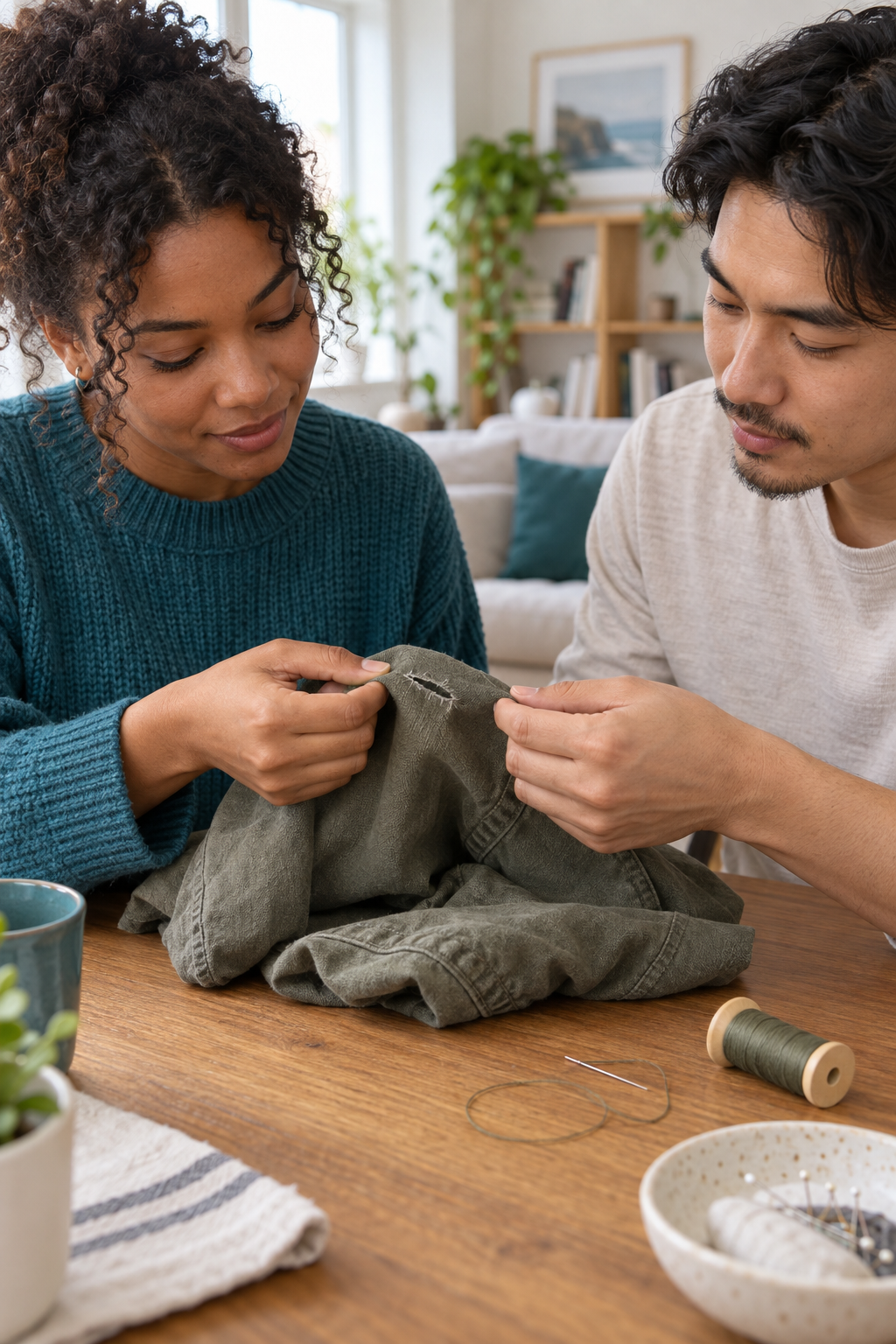
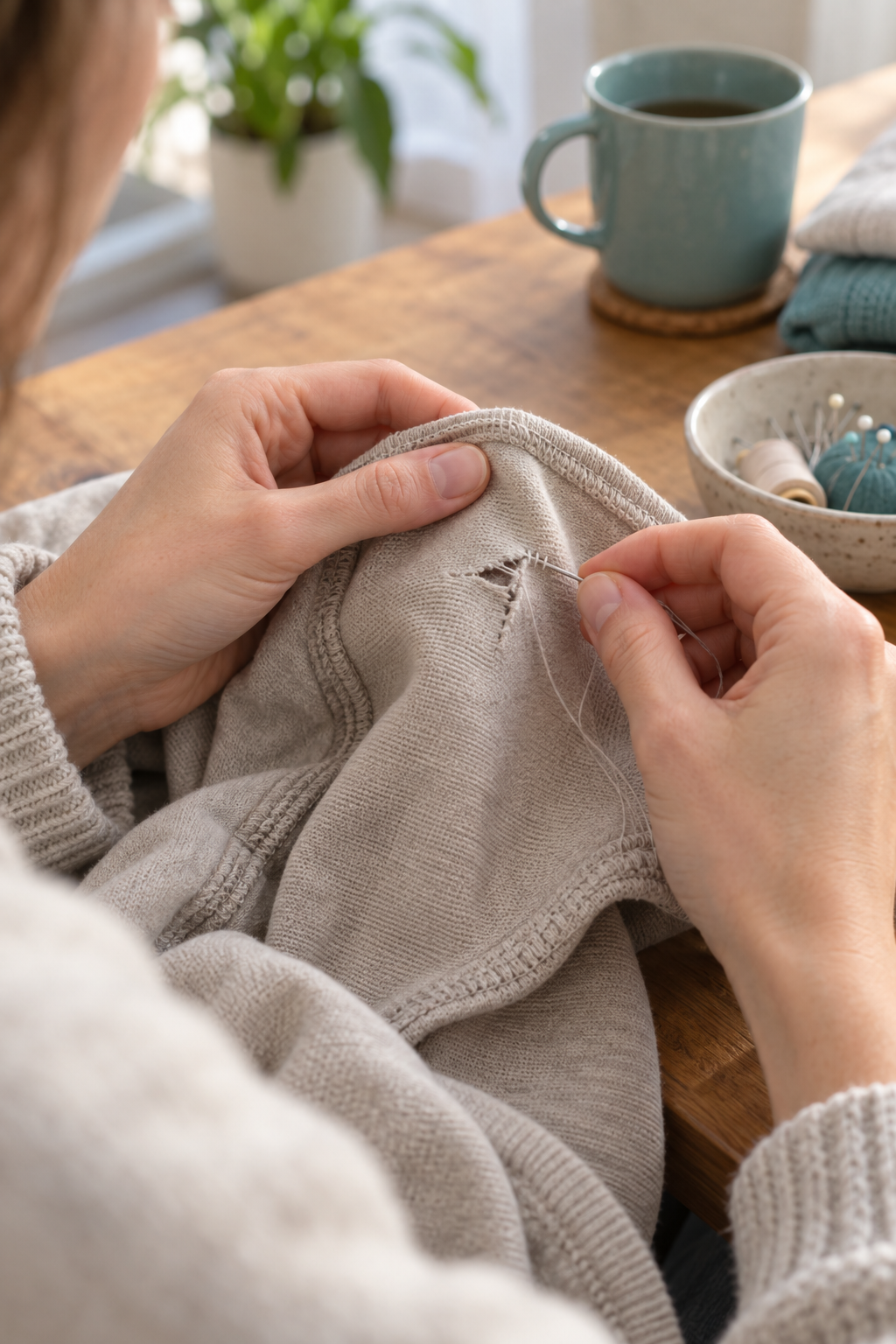
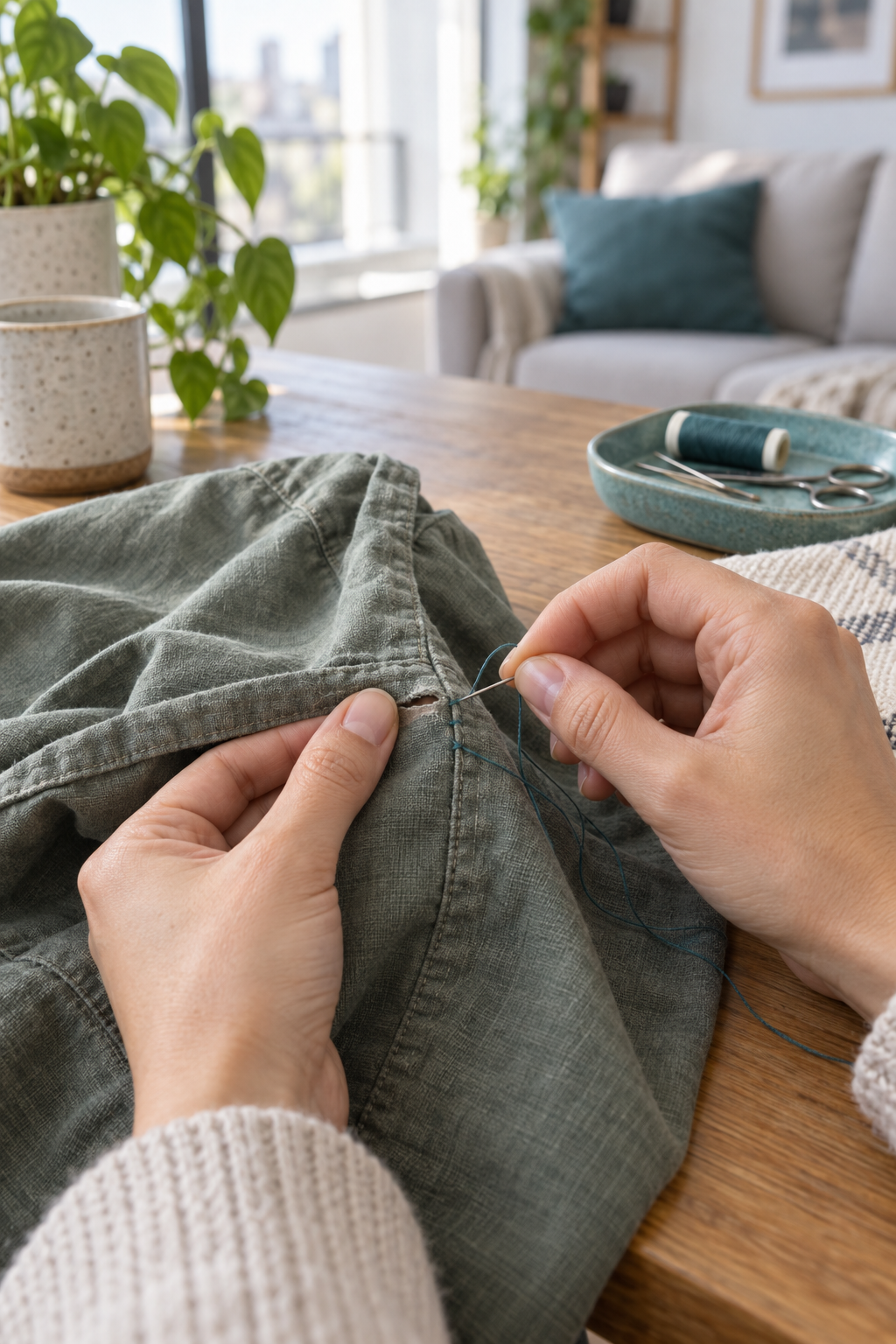
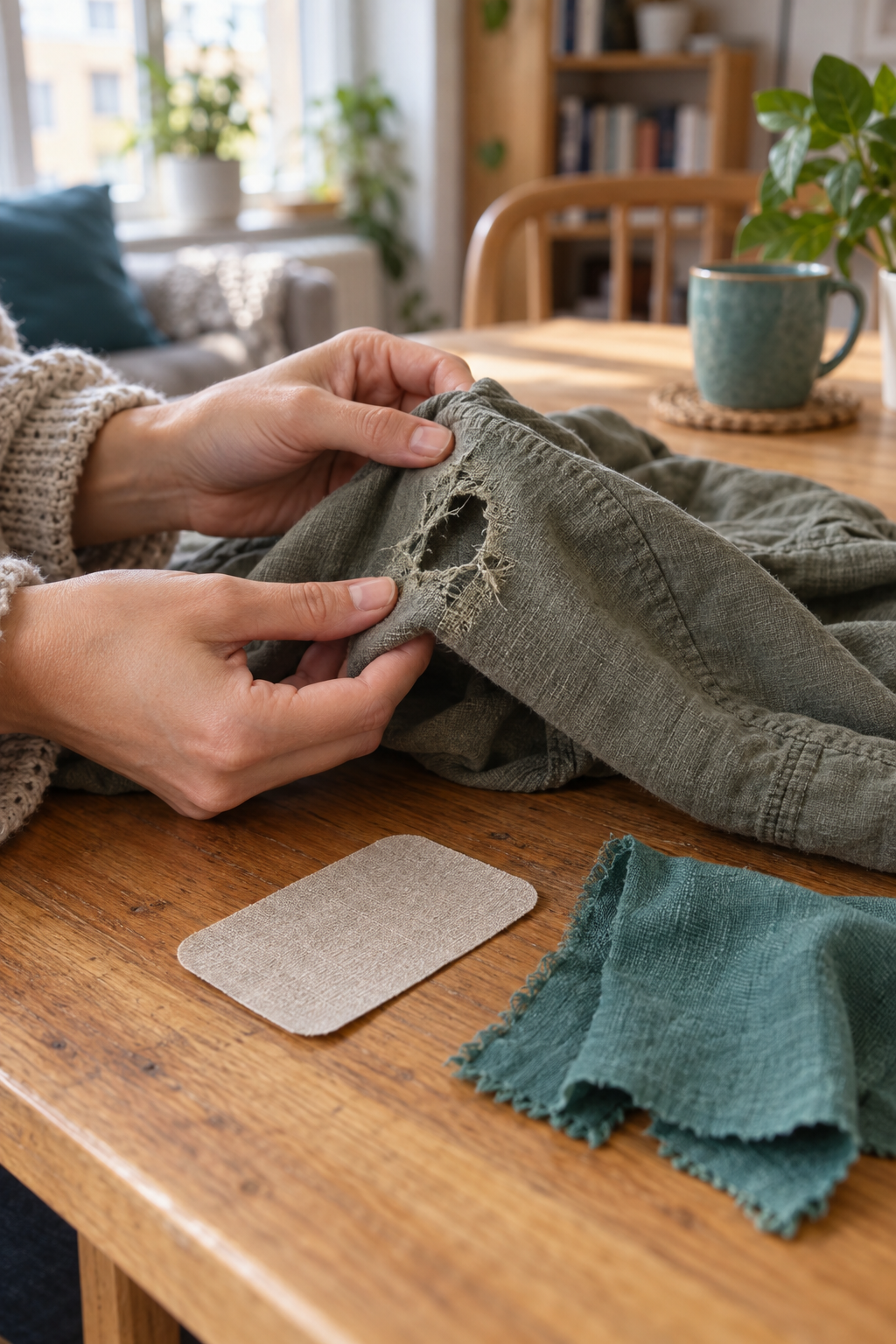
A small tear, mended by hand
Veamos alternativas:
- Modifica la consulta.
- Inicia un nuevo hilo.
- Eliminar fuentes (si se han agregado manualmente).
Why a Rewetted Lichen Recovers in Stages
Transcripción
If a lichen gets wet again, does photosynthesis restart all at once?
The study’s Cladonia stellaris sample had been dry eleven years.
PSI and PSII are two photosystems, separate light-working parts of photosynthesis.
PSI’s quantum yield, an estimate of photochemical use, recovered rapidly.
PSII’s maximum photochemical efficiency, an estimate of potential efficiency, stayed low during rehydration.
Those readings show different measured recovery, not that the whole lichen fully recovered.
This result describes that sample, not every lichen or condition.
Picture two dials moving at different speeds, not one master switch.
Veamos alternativas:
- Modifica la consulta.
- Inicia un nuevo hilo.
- Eliminar fuentes (si se han agregado manualmente).
Hayabusa’s Unsteady Touchdown
Transcripción
Hayabusa was Japan’s spacecraft sent to return samples from the asteroid Itokawa. Its touchdown became a test of a spacecraft already struggling to control its attitude, or orientation: two of its three reaction wheels had failed. On November nineteenth, 2005, Hayabusa made a soft landing in Itokawa’s MUSES Sea. It bounced back up, then settled into a stable position about half an hour later. But it was not properly aligned, and it lifted off again later that evening. The landing was documented. It is not, by itself, proof that the planned sample collection worked. On a later landing attempt, Hayabusa was supposed to fire small projectiles to kick up material for collection. Later data suggested the projectiles probably were not fired, though the chronicle says some material was clearly collected. It does not identify the returned grains or establish that they came from that planned sampling event. The capsule returned to Earth in June 2010. Hayabusa’s record is a reminder to distinguish a landing from a confirmed sample.
Veamos alternativas:
- Modifica la consulta.
- Inicia un nuevo hilo.
- Eliminar fuentes (si se han agregado manualmente).

Will insurance discounts drive mass adoption of wellness wearables?
Will insurance discounts drive mass adoption of wellness wearables?
Probably not on their own. Discounts and rewards can increase stated interest in using a wearable, but the available evidence does not show that insurance-linked incentives cause widespread real-world uptake or sustained use. The distinction matters: saying you would use a device in a survey, receiving one through a program, connecting its data to an insurer, and continuing to use it are different outcomes.
This analysis compares common incentive models with early adoption evidence, then considers privacy, regulation, and fairness. The main evidence gap is whether insurance-linked programs produce lasting use beyond what would have happened without them.
How insurers make wearables worthwhile
Programs generally offer a financial or device-related reward in exchange for activity goals, participation, or data. Employer health plans have offered premium reductions or activity-based rewards: examples include up to $300 off annual premiums through an Auto Club of Southern California program and UnitedHealthcare Motion rewards tied to step and activity goals. Reported values for Motion vary by program description, from more than $1,000 to nearly $1,500 a year in health-care spending or incentives.[1][2][3]
Other designs lower the upfront cost of joining. Aetna Attain offered an Apple Watch with ongoing goals, while Oscar’s program offered a Misfit Shine and the opportunity to earn gift cards. John Hancock Vitality linked a free Fitbit and other rewards to activity data and basic medical information. These examples show that incentives can be structured as a device, premium discount, gift card, or reward for tracked activity, but eligibility and device compatibility can limit who can participate.[4][5][6][7][8]
The business case is not settled. Sources describe the health and spending effects of trackers as uncertain, and report that programs may take several years to show a return on investment. Wearable readings also vary in accuracy, while evidence connecting device metrics to life-insurance mortality risk is still developing. That makes strong conclusions about savings, health impact, or using wearable measures for pricing premature.[9][10][11][12][13]
What early adoption evidence does and does not show
A U.S. cross-sectional survey using insurance-wellness scenarios found that 59.22% of respondents remained unwilling to adopt a wearable program even with economic incentives, compared with 66.37% without incentives. This suggests incentives reduced stated unwillingness in the survey, but it measures hypothetical willingness, not enrollment or device use in an operating insurance program.[14][15]
The same survey found that incentives increased stated willingness for several specific scenarios, including health promotion, personalized products and services, and an automated underwriting discount at annual renewal. These results indicate that the type of offer matters, but they still do not establish that respondents later enrolled, shared data, or kept using a wearable.[16][17][18][19]
Separate reporting points to broader distribution: an estimated 6 million workers worldwide were expected to receive trackers through workplace wellness programs in 2018, up from about 2 million in 2016. Distribution is not the same as adoption or continued use, however. A separate survey cited by Softtek found that 69% of consumers said they would wear a tracker for an insurance discount, but only 35% of that willing group said they would share data with the insurer. These are stated intentions, not observed uptake.[20][21][22]
For sustained engagement, the evidence supplied here is notably thin. One general wearable-use source says most users stop after 12 months, but that is not a measured retention result for insurance-incentive programs. Studies specifically about incentivized self-monitoring and long-term wearable engagement are identified, but the available records do not provide findings that quantify enrollment, retention, or how outcomes compare with programs that offer no incentives.[23][24][25]
Bottom line on adoption: incentives appear capable of improving initial interest, and programs have distributed devices at scale, but the evidence does not establish mass insurance-linked uptake or durable engagement. A causal answer would require tracking actual enrollment, device activation, insurer data sharing, and continued use over time, with a suitable comparison group.
Privacy, regulation, and ethical trade-offs
The exchange is convenience and possible rewards in return for data that may reveal patterns in activity, sleep, heart rate, stress, or recovery. That information can support tailored incentives, but it can also be used in ways customers do not expect or be exposed through weak security or third-party sharing. Consent is more meaningful when people can see what data is collected, why it is used, who receives it, and can choose or revoke permissions by purpose.[26][27][28][29]
In the United States, HIPAA does not automatically cover data simply because it is health-related. Its protections apply when identifiable information is handled by a covered entity or business associate; for a wellness program that is part of a group health plan, privacy and security requirements apply and the employer sponsor must safeguard the information. Consumer wearable companies may fall outside HIPAA, although the FTC Act and state privacy laws can apply, with details varying by jurisdiction.[30][31][32][33][34]
For wellness programs subject to HIPAA’s nondiscrimination rules, CMS says rewards generally must be available to similarly situated participants, include a reasonable alternative standard, and be capped at 20% of the total cost of coverage.[35] Separately, an employer’s wearable-based collection of health information may constitute a medical examination or disability-related inquiry under the ADA. The cited EEOC guidance says qualifying voluntary programs may be permitted, but collected information must remain confidential and cannot be used to discriminate; the available materials do not establish a current ADA incentive cap.[36][37]
GINA also matters in workplace programs: it restricts employer requests for or use of genetic information, including certain family health information. The EEOC source distinguishes between limited incentives related to a spouse’s health-status information and incentives for a child’s current health-status or genetic information, which it says are not permitted; it also describes requirements for a spouse’s authorization and aggregate handling of genetic information.[38][39] These are general rules, not a determination that any particular program complies.
Ethically, a reward can encourage activity while leaving participation voluntary, but the design becomes more concerning if not sharing data or failing to meet goals effectively becomes a penalty. Activity and health are not wholly under individual control, and device accuracy, eligibility rules, and access to compatible technology can shape who benefits. Programs should make data use and consequences explicit, provide meaningful alternatives, and avoid treating wearable scores as a complete measure of a person’s health or risk.[40][41][42][43][44]
Conclusion
Insurance discounts can be a recruitment tool, especially when paired with a free device or achievable activity rewards. But current evidence supports a limited claim: incentives increase some forms of stated willingness, not that they will drive mass adoption or keep users engaged. Whether they can do so depends not only on reward size, but also on trust, clear limits on data use, fair access, and evidence that people continue using the devices. Insurers and employers should judge success using observed enrollment and retention, not survey interest or devices handed out.
Veamos alternativas:
- Modifica la consulta.
- Inicia un nuevo hilo.
- Eliminar fuentes (si se han agregado manualmente).
A warmer corner, no shopping list




Veamos alternativas:
- Modifica la consulta.
- Inicia un nuevo hilo.
- Eliminar fuentes (si se han agregado manualmente).
Time and Mortality: Philosophers on How to Live

It’s not that we have a short time to live, but that we waste much of it.Seneca[1]




Veamos alternativas:
- Modifica la consulta.
- Inicia un nuevo hilo.
- Eliminar fuentes (si se han agregado manualmente).
When Earth crossed a comet’s tail
The 1896 account says Earth passed through a tail of the Great Comet of 1861 and was wholly immersed for about four hours. It reports no perceptible effect on the weather[1]. To the book’s author, that startling lack of effect suggested that cometary material was “some millions of times rarer than our atmosphere”, a period inference rather than a claim about current scientific consensus[2].
Veamos alternativas:
- Modifica la consulta.
- Inicia un nuevo hilo.
- Eliminar fuentes (si se han agregado manualmente).
What neurotransmitter is most associated with haptic perception?

In the nervous system, tactile signals are transmitted using glutamate as a principal neurotransmitter at the first sensory synapses in the dorsal horn of the spinal cord and brainstem[1]. Additionally, research indicates that norepinephrine acts as a neurotransmitter for synaptic transmission from Merkel cells to secondary sensory neurons during gentle touch[2], while specific neuropeptides such as prokineticin 2 (PROK2) transmit pleasant touch signals[3].
Veamos alternativas:
- Modifica la consulta.
- Inicia un nuevo hilo.
- Eliminar fuentes (si se han agregado manualmente).