Entrada de Pandipedia
Actualizado el 9 Sept 2026Explorar Pandipedia
AD
The Chrysler Building’s Egyptian echo

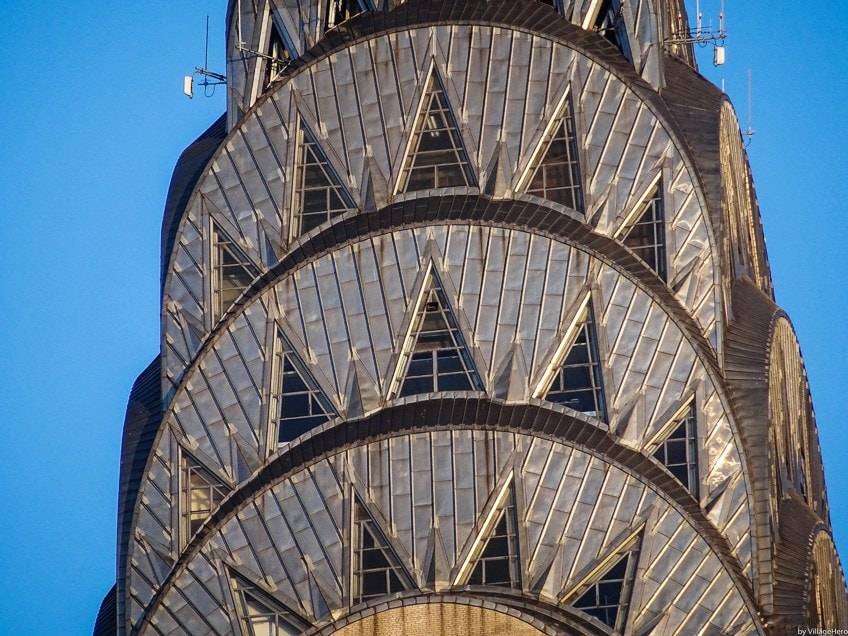
What does this crown borrow? Meet New York’s Chrysler Building, designed by William Van Alen and completed in 1930. 🏙️

Look closely: stepped geometry, triangular windows, and repeated radiating forms turn the crown into ornament with machine-age force. ✨

The named source is ancient Egypt’s winged sun disk, often shown with uraeus cobras: a specific tradition, not vague “Egyptian” styling. ☀️

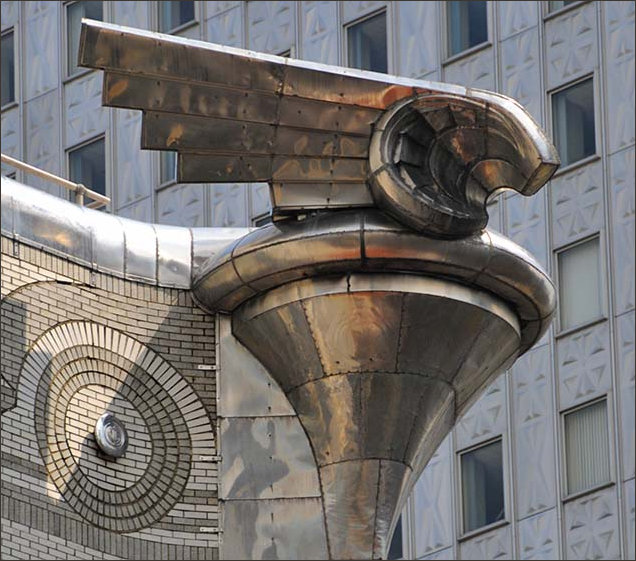
At the 31st floor, the winged form is documented as Van Alen’s automotive radiator-cap and Mercury-wing symbol—not a copied Egyptian sun disk. ⚙️

This was also commercial Manhattan: a competitive skyscraper boom made height, visibility, and distinctive ornament part of the building’s public ambition. 🏙️

Evidence supports a 1930 Van Alen skyscraper and its automotive/Mercury symbolism. An Egyptian sun disk is a visual parallel, not proof of direct borrowing; the wider link remains interpretation. 🔍
1 / 6
One skyscraper, one borrowed motif: trace how Egyptian imagery became machine-age Deco, and what the evidence can and cannot prove. 🏙️
Lo sentimos, Pandi no pudo encontrar una respuesta.
Veamos alternativas:
- Modifica la consulta.
- Inicia un nuevo hilo.
- Eliminar fuentes (si se han agregado manualmente).
Sigue explorando
Explora temas relacionados
Jean Dunand’s lacquered vase, circa 1925Jean Dunand, *A Vase*, circa 1925How the Alhambra was seen in 1896How netlabels and forums built the early 2000s electronic underground. Break down how communities formed around message boards, MP3 releases, and niche micro-genres, and why that infrastructure mattered. Include a timeline feel, key platforms to look up, and how the DIY ethos shaped aesthetics and sound.Art Deco for the MassesOne Sunburst, Three CitiesNormandie: a ship designed to speak for FranceThe Beautiful Seams of Baron Munchausen