Can You Tell the Time by Flowers?
Linnaeus's flower clock
Linnaeus had what Cooke calls “a happy idea”: a “floral clock” whose hours were marked by flowers opening or closing. He also named “meteoric flowers,” those that open and close at about the same time each day, or seem to answer to changes in the weather.[1]
The schedule Cooke reprints, as corroborated by De Candolle, begins in the dark: purple convolvulus at 2 a.m., goatsbeard between 4 and 5, the yellow Arctic poppy at 5.[2] De Candolle even kept some flowers from daylight and found that certain ones still “followed the clock hour” in opening and closing.[3]
Cooke was not persuaded that such a clock could keep time. “Pretty and poetical as such a theory may be,” he wrote, a dull day or a damp morning changes the results, because opening and closing depend more on light and warmth than on the hour.[4] He granted only that certain flowers have “a manifest tendency” to open or close about a certain time.[5]
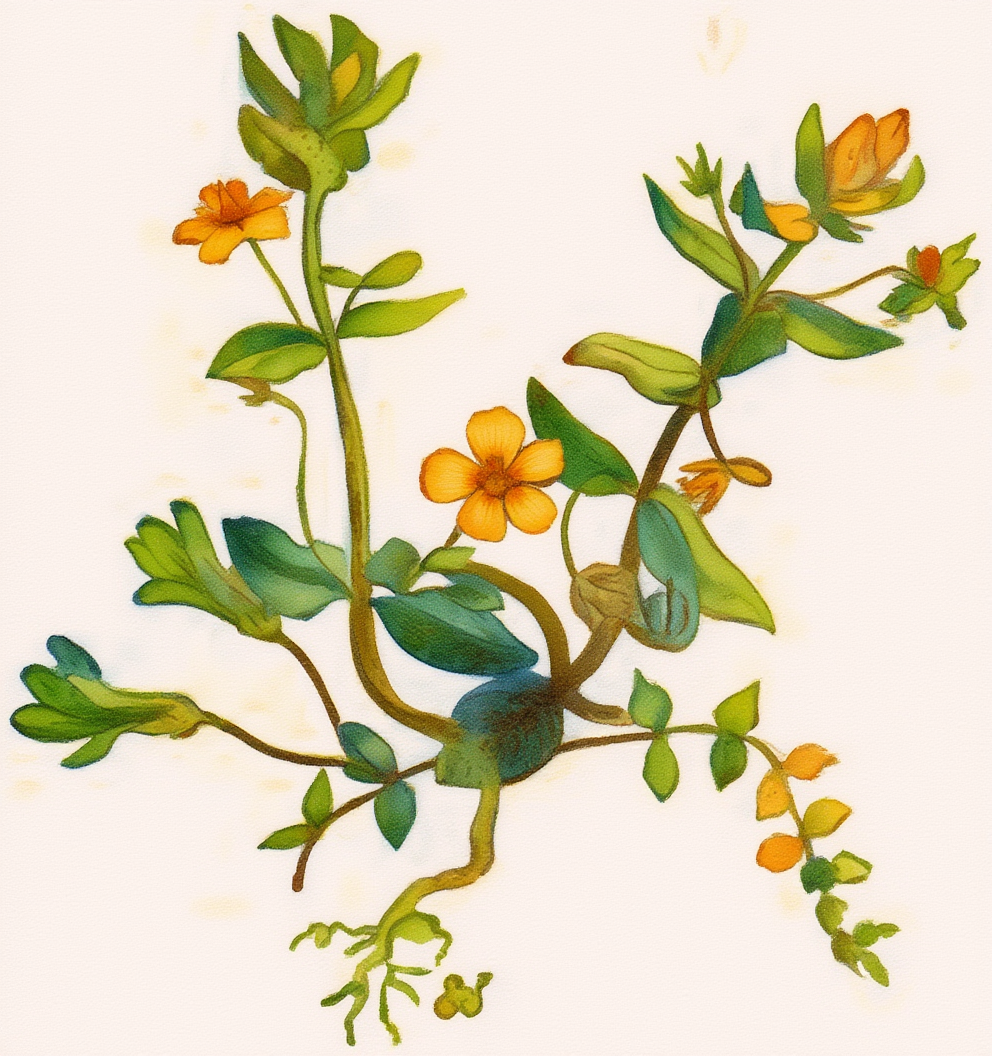
Weather made a better story. The scarlet pimpernel keeps its petals shut on cloudy or rainy days so constantly that it earned the name “Shepherd's weather-glass”; if it opens fully in the morning, the book promises, “the umbrella and the macintosh may be dispensed with.”[6] Goat's beard, meanwhile, closes even before noon, hence its country name, “Go-to-bed-at-noon.”[7]
The weather-glass is country lore that Cooke passes on, not a tested forecast. His larger point is that flowers answer to conditions, which is why, in his words, so many circumstances can “upset any horological arrangement.”[8]
Veamos alternativas:
- Modifica la consulta.
- Inicia un nuevo hilo.
- Eliminar fuentes (si se han agregado manualmente).