Understanding Tectonic Plate Interactions at Convergent Boundaries
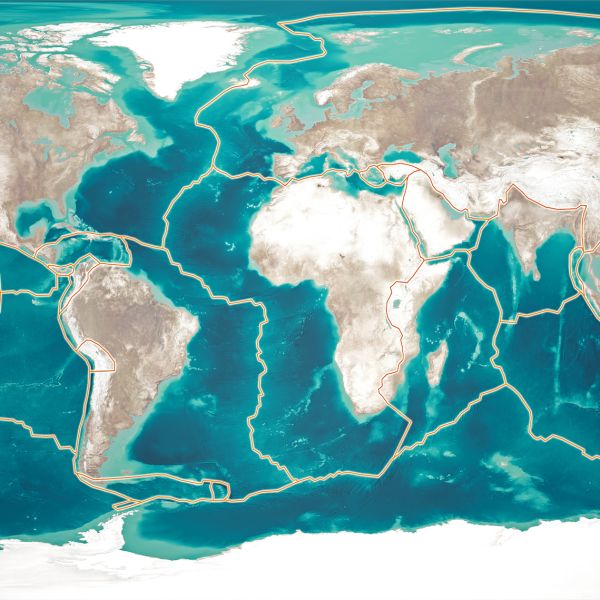
Convergent boundaries are vital regions where tectonic plates move toward each other, leading to a variety of geological phenomena that shape the Earth's surface. This report synthesizes essential information on how tectonic plates interact at these boundaries, including the processes of subduction and collision, and the geological features that result.
Types of Convergent Boundaries
There are three primary types of convergent boundaries distinguished by the nature of the plates involved: oceanic-oceanic, oceanic-continental, and continental-continental. Each type of boundary exhibits unique characteristics and geological activities.
Oceanic-Continental Convergence
:max_bytes(150000):strip_icc():format(webp)/Oceanic-continental_destructive_plate_boundary_LABELED1-56c559c43df78c763fa341bf.png "None")
When an oceanic plate converges with a continental plate, the denser oceanic plate is typically subducted beneath the more buoyant continental plate. This process leads to the formation of features such as deep ocean trenches and volcanic arcs. For instance, the Nazca Plate subducts beneath the South American Plate, leading to the formation of the Andes Mountains and associated volcanic activity[1][2][6]. The subduction of the oceanic lithosphere into the mantle initiates melting, which generates magma that rises to the surface, forming volcanoes along the continental margin[5][9].
Oceanic-Oceanic Convergence
:max_bytes(150000):strip_icc():format(webp)/b8f413db-8bdd-44b8-a0c2-9cc209028ede-56c559863df78c763fa33ff9.png "None")
In oceanic-oceanic convergent boundaries, one oceanic plate is subducted under another, usually the older and denser plate. This subduction can create deep ocean trenches and a chain of volcanic islands known as island arcs. Examples include the Aleutian Islands and the Mariana Islands, formed as a result of one plate descending into the mantle due to its higher density[3][8][10]. The subducting plate also melts, contributing to volcanic activity in the overriding oceanic plate, leading to characteristics similar to those found in oceanic-continental subduction zones.
Continental-Continental Convergence
:max_bytes(150000):strip_icc():format(webp)/Continental-continental_destructive_plate_boundary_LABELED-56c55a0e3df78c763fa34493.png "None")
When two continental plates converge, neither plate is subducted due to their buoyant nature. Instead, they collide and crumple, causing intense deformation and resulting in the formation of large mountain ranges. The Himalayas are a prime example of such a collision, resulting from the convergence of the Indian Plate with the Eurasian Plate. This boundary type is known for producing significant mountain uplift and extensive earthquake activity without accompanying volcanism, as there is no subduction of oceanic lithosphere to generate magma[2][4][7].
Geological Features and Phenomena
Convergent boundaries are characterized by several geological features that arise from the interactions of tectonic plates.
Subduction Zones
:max_bytes(150000):strip_icc():format(webp)/GettyImages-83182638-5c4cd0f246e0fb0001a8e75c.jpg "None")
At subduction zones, the descent of the oceanic plate creates deep oceanic trenches, the deepest parts of the oceans. The Mariana Trench is the most significant example of this phenomenon, reaching depths of nearly 11 kilometers[6][10]. As the oceanic plate subducts, it drags the ocean floor down, resulting in compression and the eventual formation of features like accretionary wedges, where sediments from the ocean floor accumulate at the boundary[9][10].
Earthquakes and Volcanoes
These tectonic interactions frequently lead to powerful earthquakes. Most of the world’s most significant earthquakes occur at or near convergent boundaries due to the immense pressure that builds up as the plates grind against each other before suddenly releasing, consequently generating seismic waves[3][6][7][8]. Volcanism is commonly associated with convergent boundaries, particularly in oceanic-continental and oceanic-oceanic scenarios, where magma produced by the melting of subducting slabs ascends through the crust, often leading to volcanic eruptions[2][3][6][9].
Mountain Building
The collision of continental plates leads to what is known as orogenesis, a process that results in the formation and uplift of mountain ranges. The structural integrity of continental crust makes it challenging for mountains to subside into the mantle, which leads to the horizontal shortening and thickening of the crust, giving rise to high ranges such as the Himalayas and the Alps[1][5][8][9].
Conclusion
Convergent plate boundaries play a crucial role in the dynamic processes of Earth's geology. Through processes such as subduction and collision, these boundaries contribute to the formation of significant geological features, including mountain ranges, oceanic trenches, and volcanic islands. The intense interactions at these boundaries not only reshape the earth's surface but also produce some of the planet's most powerful seismic events, underlining the ongoing transformation of our planet.
Crea el teu compte per conservar aquesta resposta i continuar-hi més tard.
Veiem alternatives:
- Modifica la consulta.
- Inicia un nou fil.
- Elimina les fonts (si s'han afegit manualment).