Descobreix Pandipedia
Un directori creixent de respostes útils seleccionades per la comunitat de Pandi. Cerca a la col·lecció o explora els darrers descobriments.
2292 entrades disponibles

The Carbon Sink Beneath Our Feet
Transcripció
What if one of climate’s quietest tools is under every farm field? Healthy soil can store carbon, support crops, and help farms handle both drought and heavy rain. But it is not an unlimited climate fix. Plants send carbon into the soil through their roots and residues. Microbes transform some of it into soil organic matter. Part of that carbon can be protected inside soil aggregates or attached to minerals. How much stays there depends on the soil, climate, depth, moisture, nutrients, and management. That is where regenerative farming comes in. The term means farming practices focused on rebuilding soil and reducing damage. Cover crops keep living roots in the ground between harvests. Reduced tillage disturbs the soil less. Diverse crop rotations can improve nutrient cycling and water-holding capacity. Carefully managed grazing can support vegetation and nutrient cycling. These practices can reduce erosion and runoff, improve infiltration, and leave more water available during dry periods. That can support more stable food production. But the benefits vary by place, and soil carbon gains are usually modest, slow, and reversible. Storage tends to level off as soil approaches its own capacity. Drought, heat, disturbance, or renewed tillage can release carbon again. Farmers also face the timing problem: equipment, seed, labor, and learning costs arrive first, while benefits may take years. Some transitions bring early yield losses. So the smart takeaway is not that soil replaces emissions cuts. It is that better soil can strengthen farms, protect food security, and provide a useful, limited climate benefit when farmers have the support to make the change.
Veiem alternatives:
- Modifica la consulta.
- Inicia un nou fil.
- Elimina les fonts (si s'han afegit manualment).
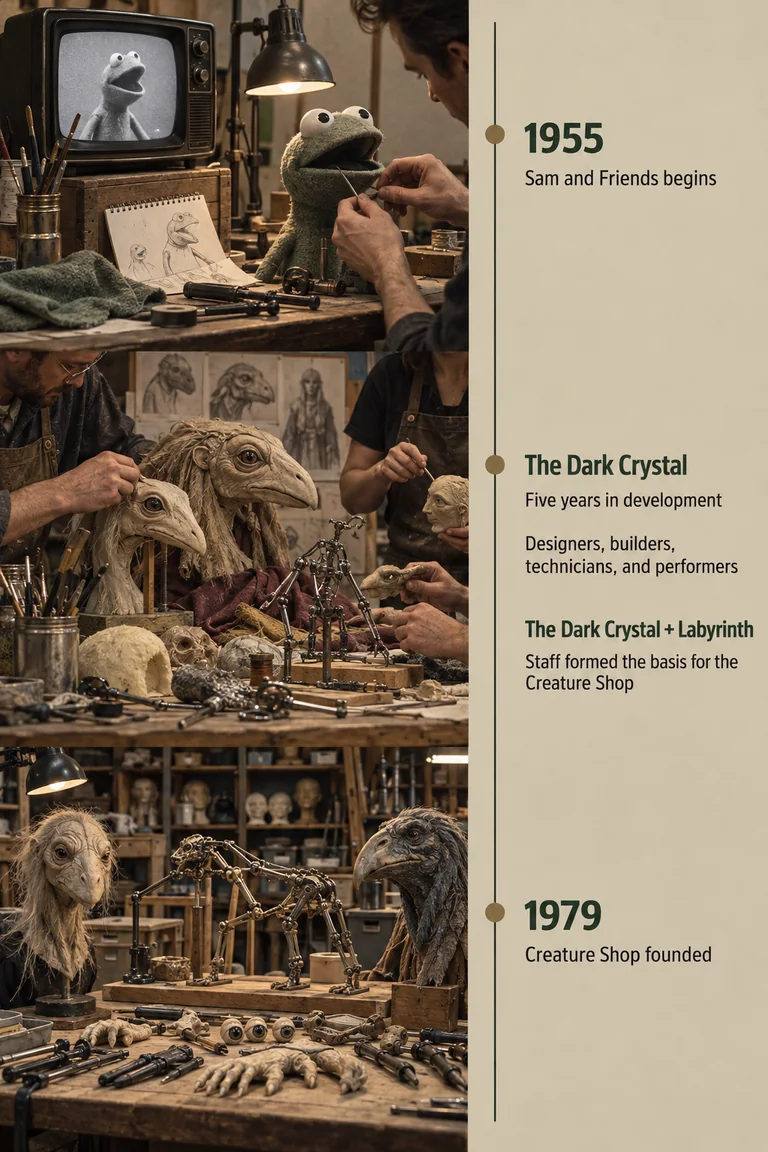
A documented path from television puppetry to the Creature Shop
Veiem alternatives:
- Modifica la consulta.
- Inicia un nou fil.
- Elimina les fonts (si s'han afegit manualment).
Why does cyberpunk make the body a political boundary?

In cyberpunk fiction, human-machine interfaces and body-modifying technologies bring questions of control and identity sharply into focus by erasing the boundaries between biology and digital systems. Technologies ranging from direct neural links to cybernetic prosthetics demonstrate how the human body can function as a site of corporate power, economic coercion, and systemic pressure rather than just personal expression or futuristic decoration.
When digital integration becomes a baseline requirement for daily functioning, accessing a home, attending school, or completing financial transactions, bodily modifications cease to be optional enhancements and instead become mandatory tools for economic survival[1]. For instance, in the Cyberpunk universe, workers and marginalized individuals face immense pressure to adopt specialized cybernetic tools or neural augmentations simply to maintain employment or secure housing[2]. This dynamic turns physical alteration into a political boundary where individuals are disciplined by technological dependencies, corporate surveillance, and unequal access to capital. Rather than offering straightforward liberation, modifying the body often exposes individuals to deep vulnerabilities, institutional control, and the risk of losing agency over their own minds and actions[3].
Would you also like to know how corporations in cyberpunk media exert control through virtual environments?Resposta completada. Hi ha una opció de seguiment disponible.
Veiem alternatives:
- Modifica la consulta.
- Inicia un nou fil.
- Elimina les fonts (si s'han afegit manualment).
Two Posters, Two Styles



Veiem alternatives:
- Modifica la consulta.
- Inicia un nou fil.
- Elimina les fonts (si s'han afegit manualment).
The terrier and the ducklings

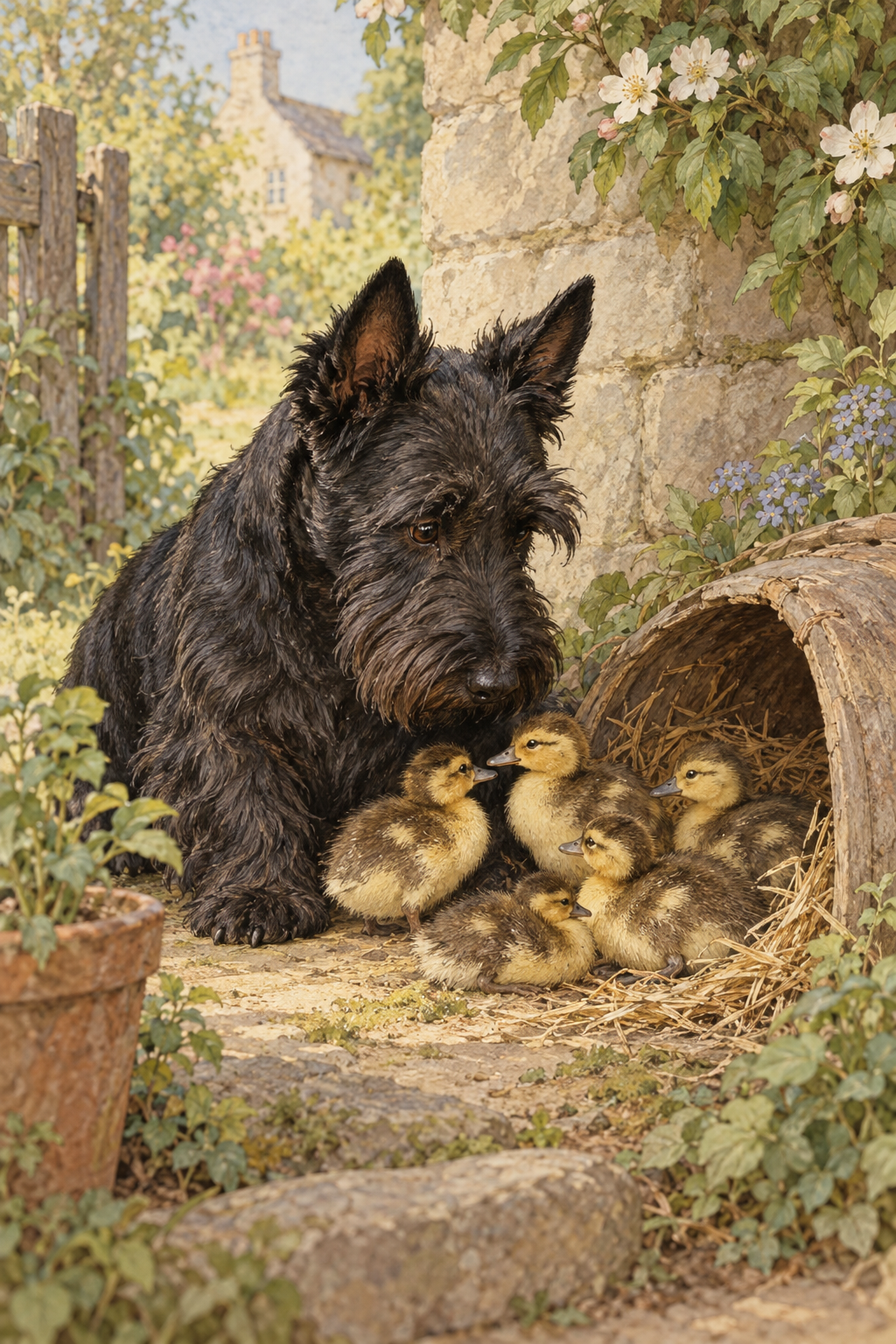
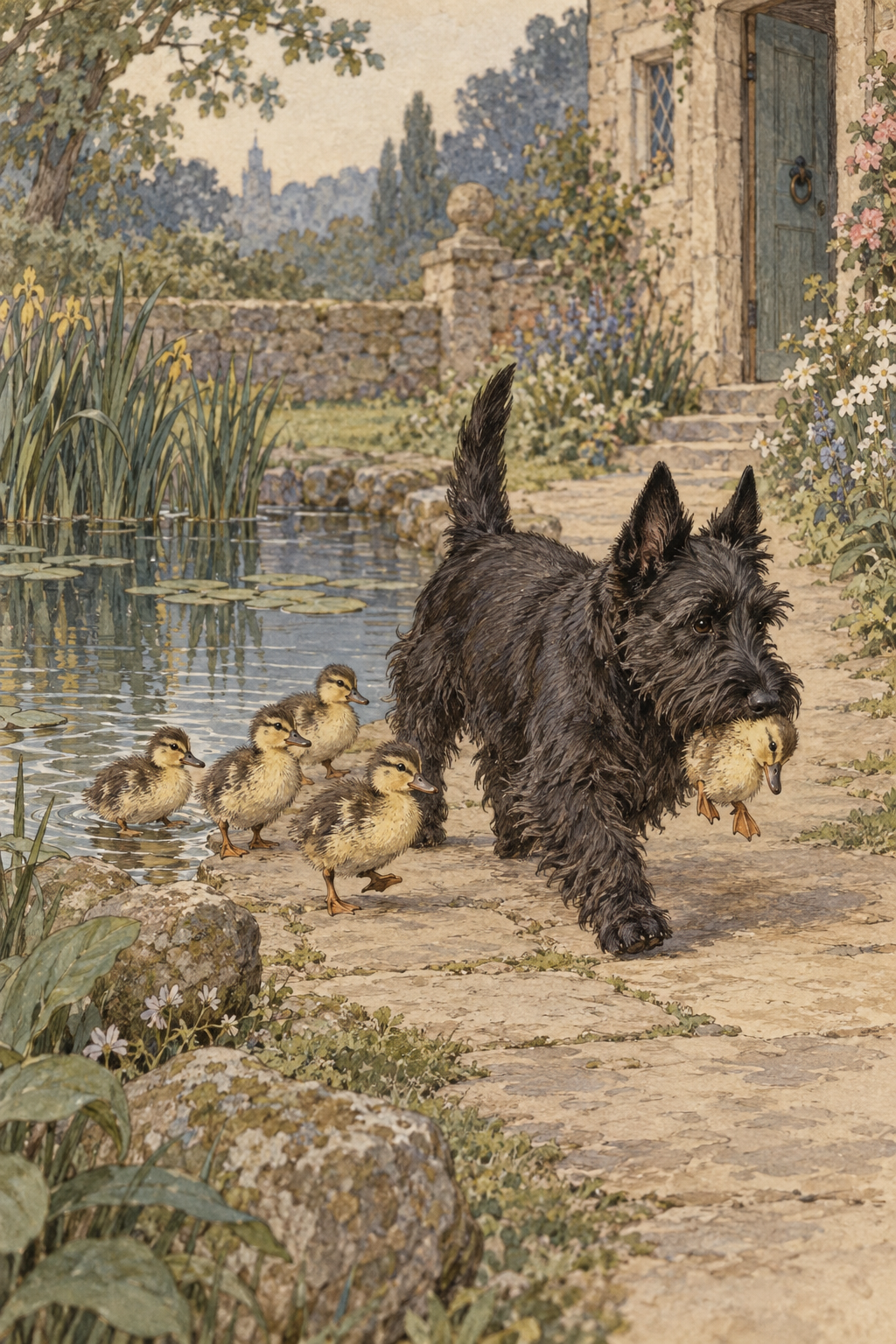
Veiem alternatives:
- Modifica la consulta.
- Inicia un nou fil.
- Elimina les fonts (si s'han afegit manualment).
How far could an earthquake move the ground?
Loudon describes the Calabrian earthquakes as cracking the ground and lowering or levelling hills. She names Sir William Hamilton as an authority who gave a detailed account of the earthquakes[1][2].
One reported scene makes the scale vivid: a piece of ground a mile long and half a mile wide, carrying two cottages and several trees, was said to have travelled about a mile down a valley, with the houses and most trees still upright. That is what Loudon’s historical account claims, not a movement independently verified here as a present-day fact[3].
Veiem alternatives:
- Modifica la consulta.
- Inicia un nou fil.
- Elimina les fonts (si s'han afegit manualment).
A Little Ride Above the Sea

Veiem alternatives:
- Modifica la consulta.
- Inicia un nou fil.
- Elimina les fonts (si s'han afegit manualment).
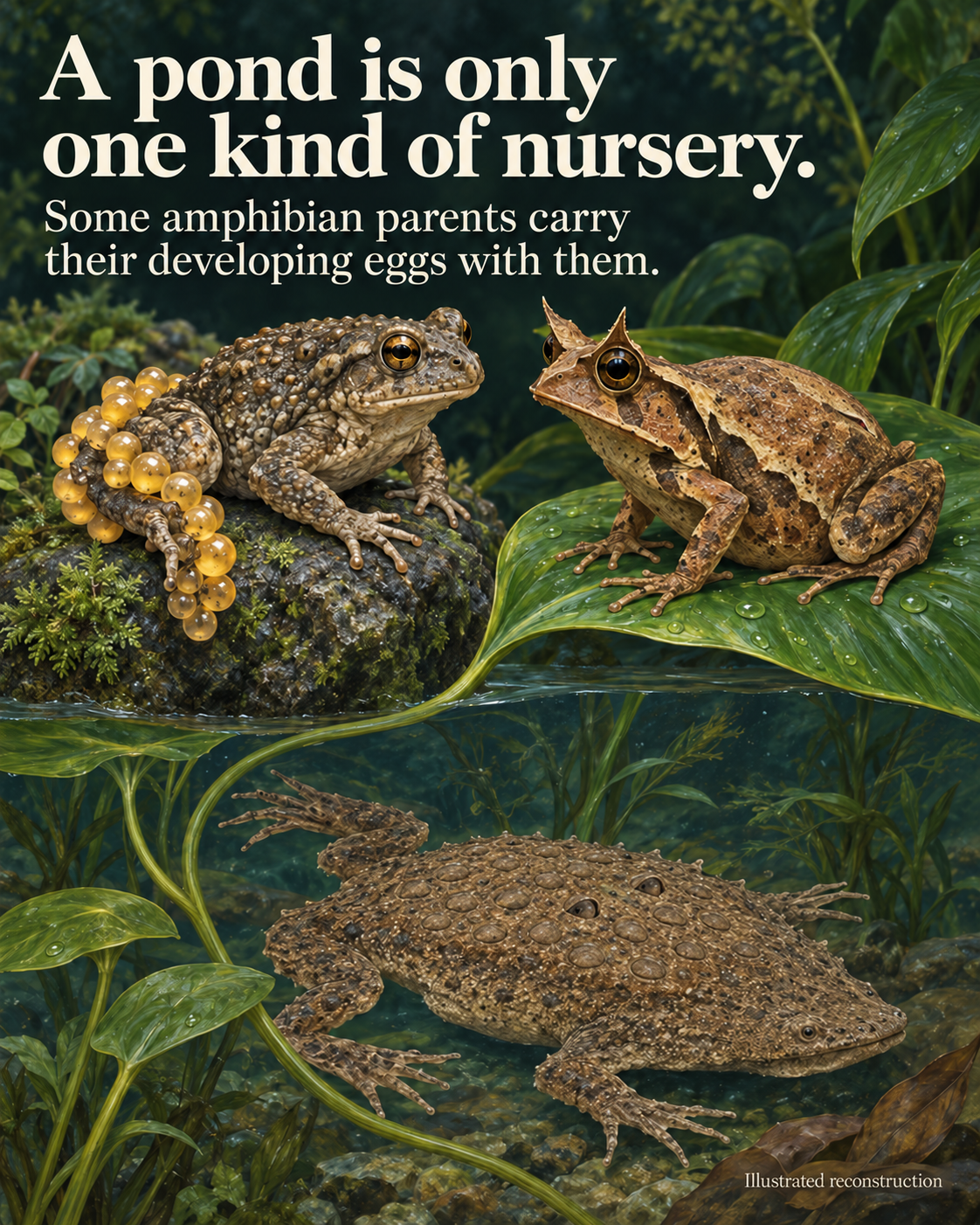
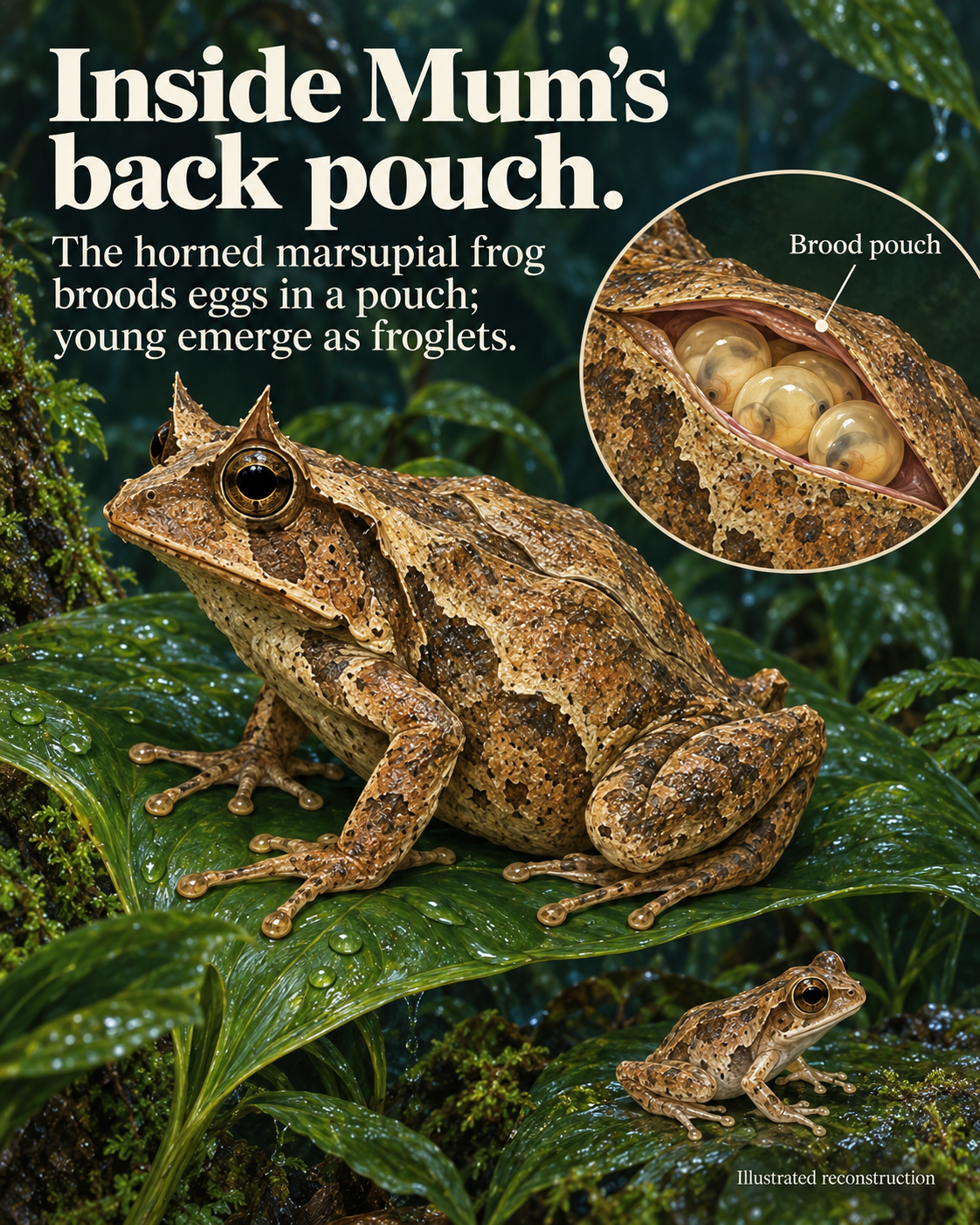
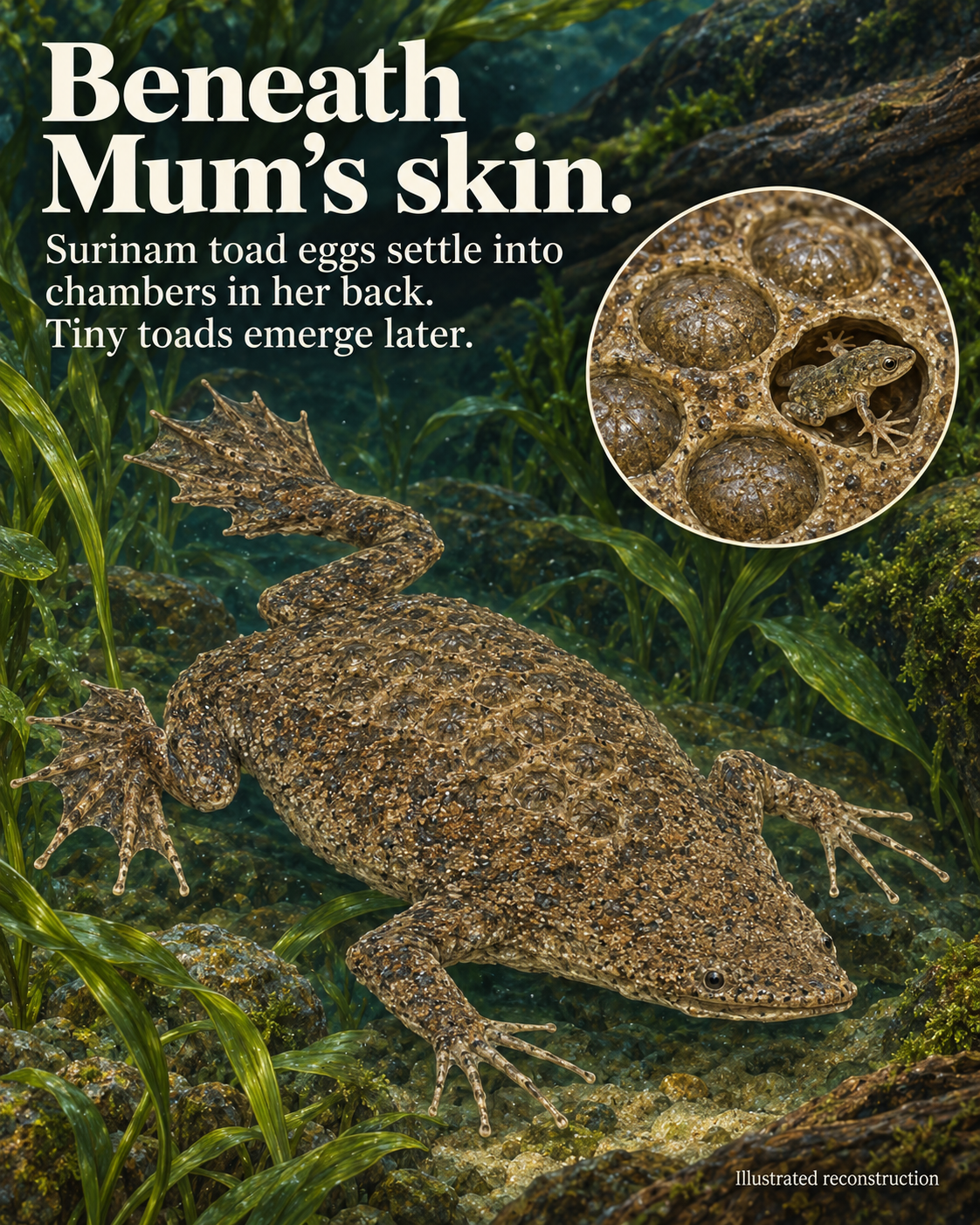
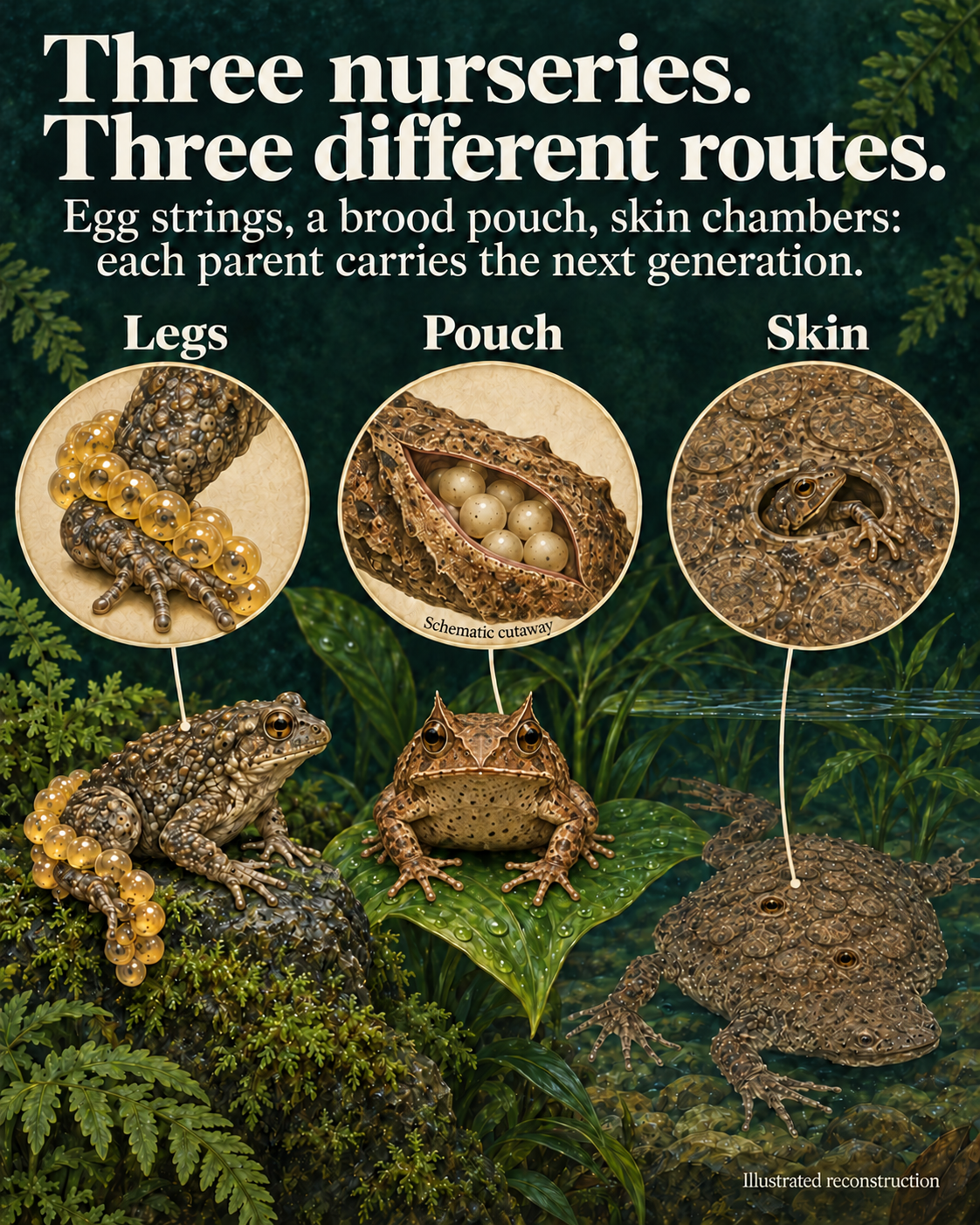
Three places frogs carry their eggs
 1/5
1/5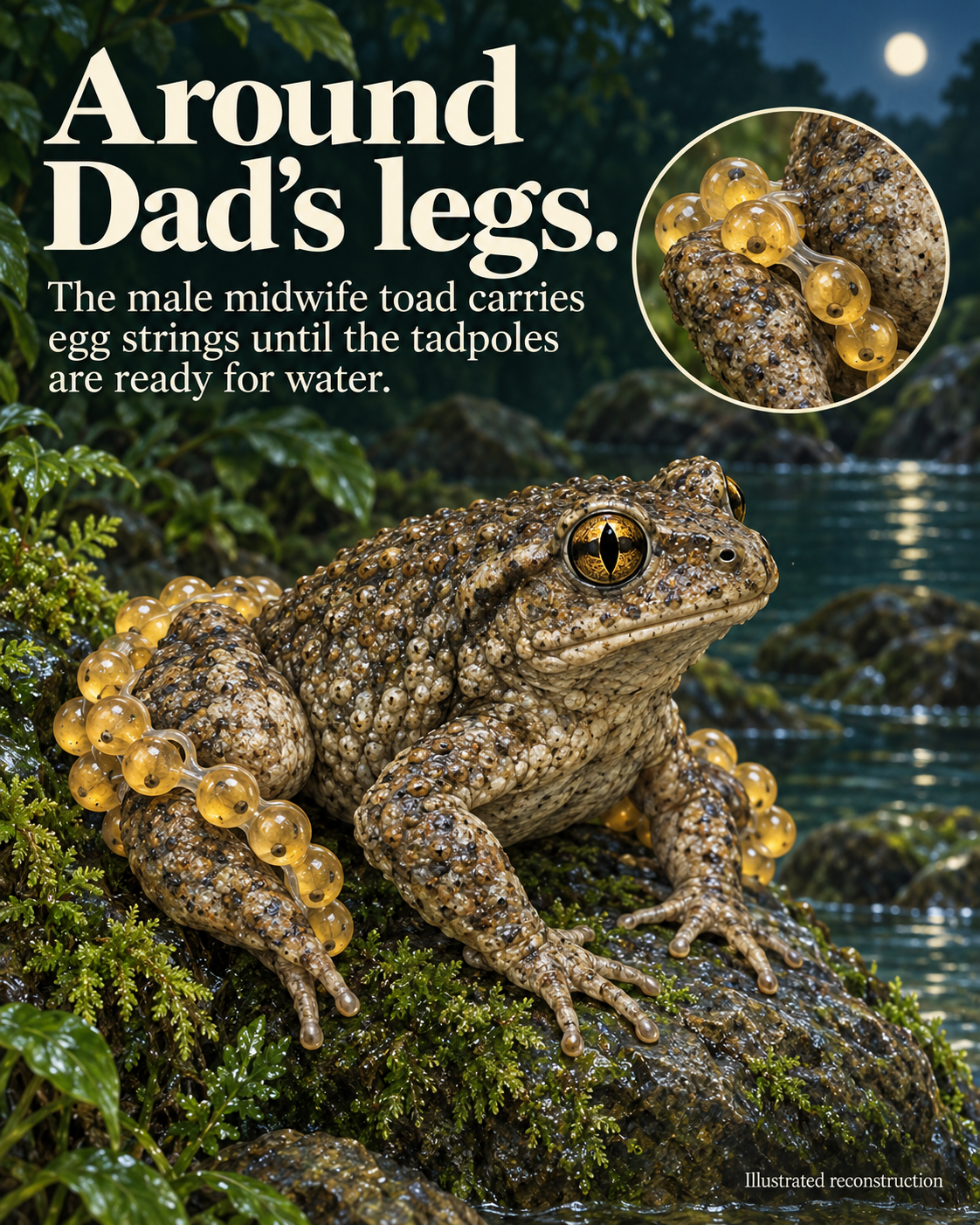
Llegeix el text de les diapositives
- A pond is only one kind of nursery.
Some amphibian parents carry their developing eggs with them.
- Around Dad’s legs.
The male midwife toad carries egg strings until the tadpoles are ready for water.
- Inside Mum’s back pouch.
The horned marsupial frog broods eggs in a pouch; young emerge as froglets.
- Beneath Mum’s skin.
Surinam toad eggs settle into chambers in her back. Tiny toads emerge later.
- Three nurseries. Three different routes.
Egg strings, a brood pouch, skin chambers: each parent carries the next generation.
Veiem alternatives:
- Modifica la consulta.
- Inicia un nou fil.
- Elimina les fonts (si s'han afegit manualment).
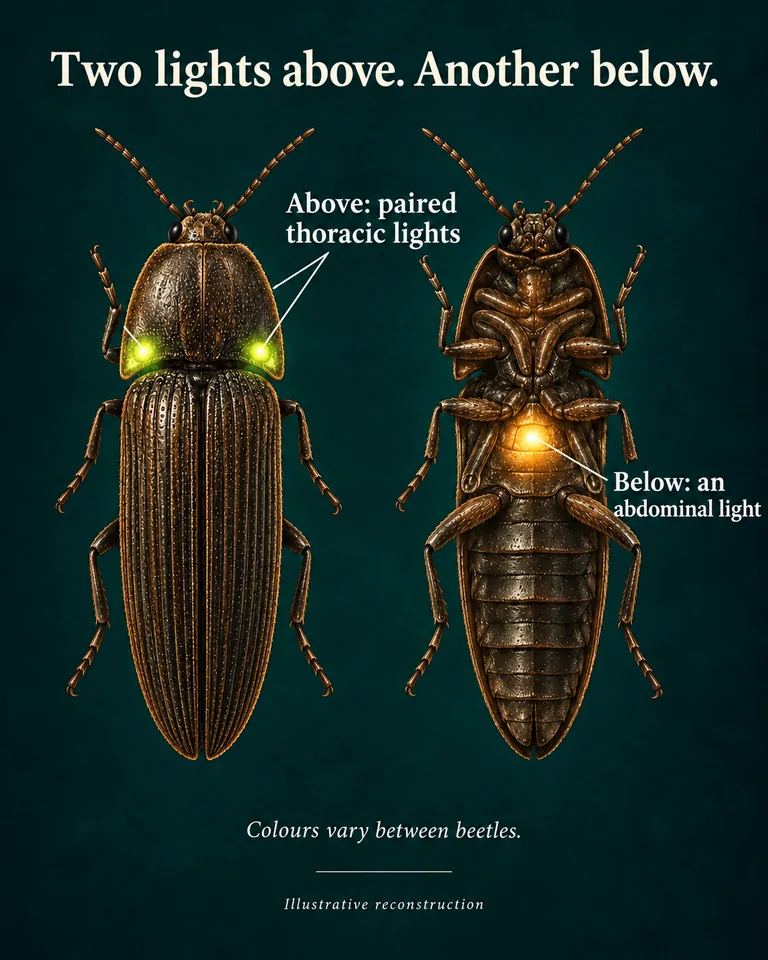
Two lights above. Another below.
Veiem alternatives:
- Modifica la consulta.
- Inicia un nou fil.
- Elimina les fonts (si s'han afegit manualment).
An aphid can carry two generations inside her
A colony of aphids can grow without a mating event for every new generation. During their asexual phase, female pea aphids give birth to live daughters from unfertilised eggs—a process called parthenogenesis.[1]
The surprise is inside the mother. Her developing daughter embryos can already contain embryos of their own. That puts a mother, developing daughters and the beginnings of granddaughters together in one body: telescoping generations.[2]
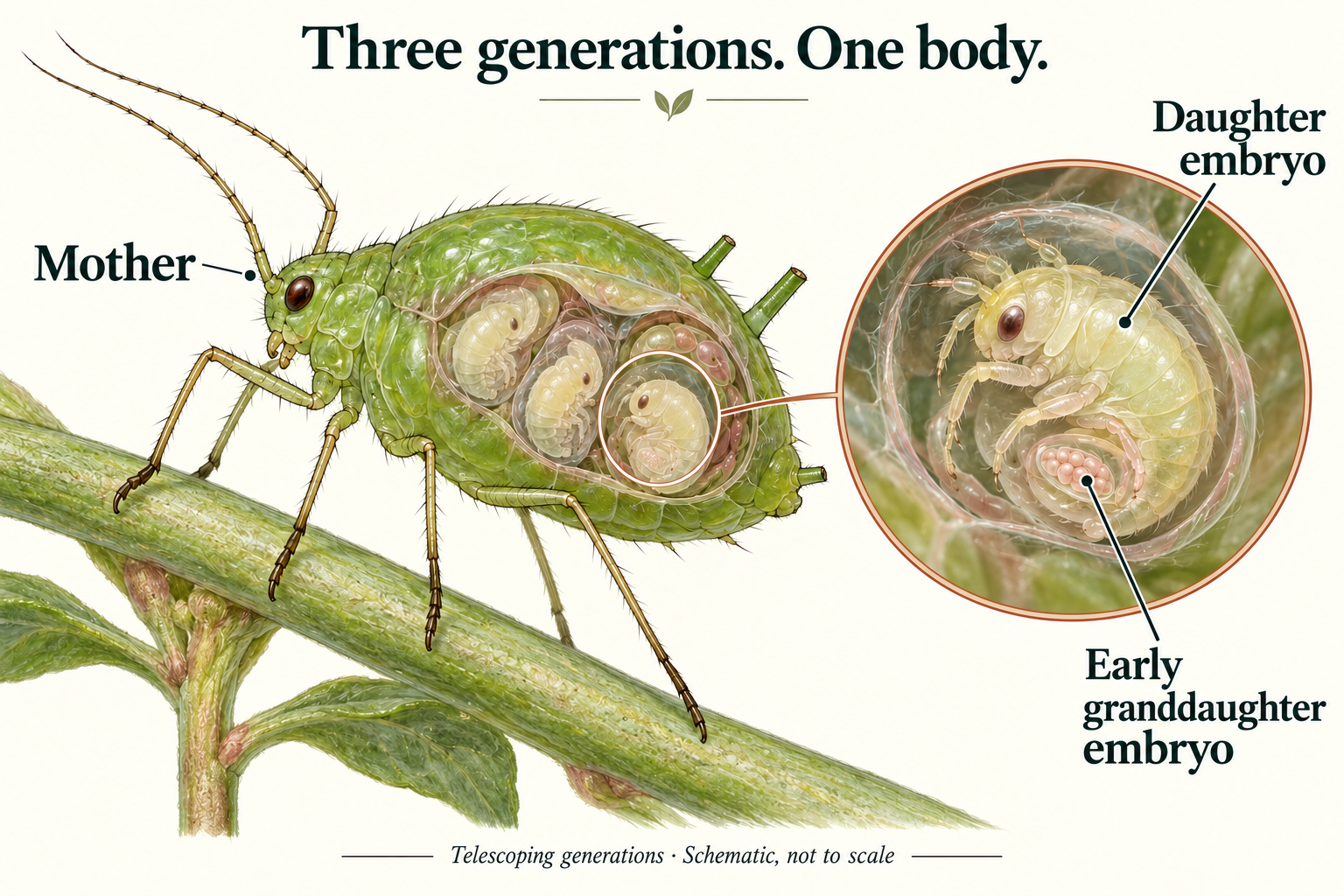
AI-generated explanatory illustration, not a photograph. Schematic details are not to scale. · Source
Overlapping development helps colonies grow quickly when a suitable plant becomes available. The next generation may already be developing before its mother has even been born.[3]
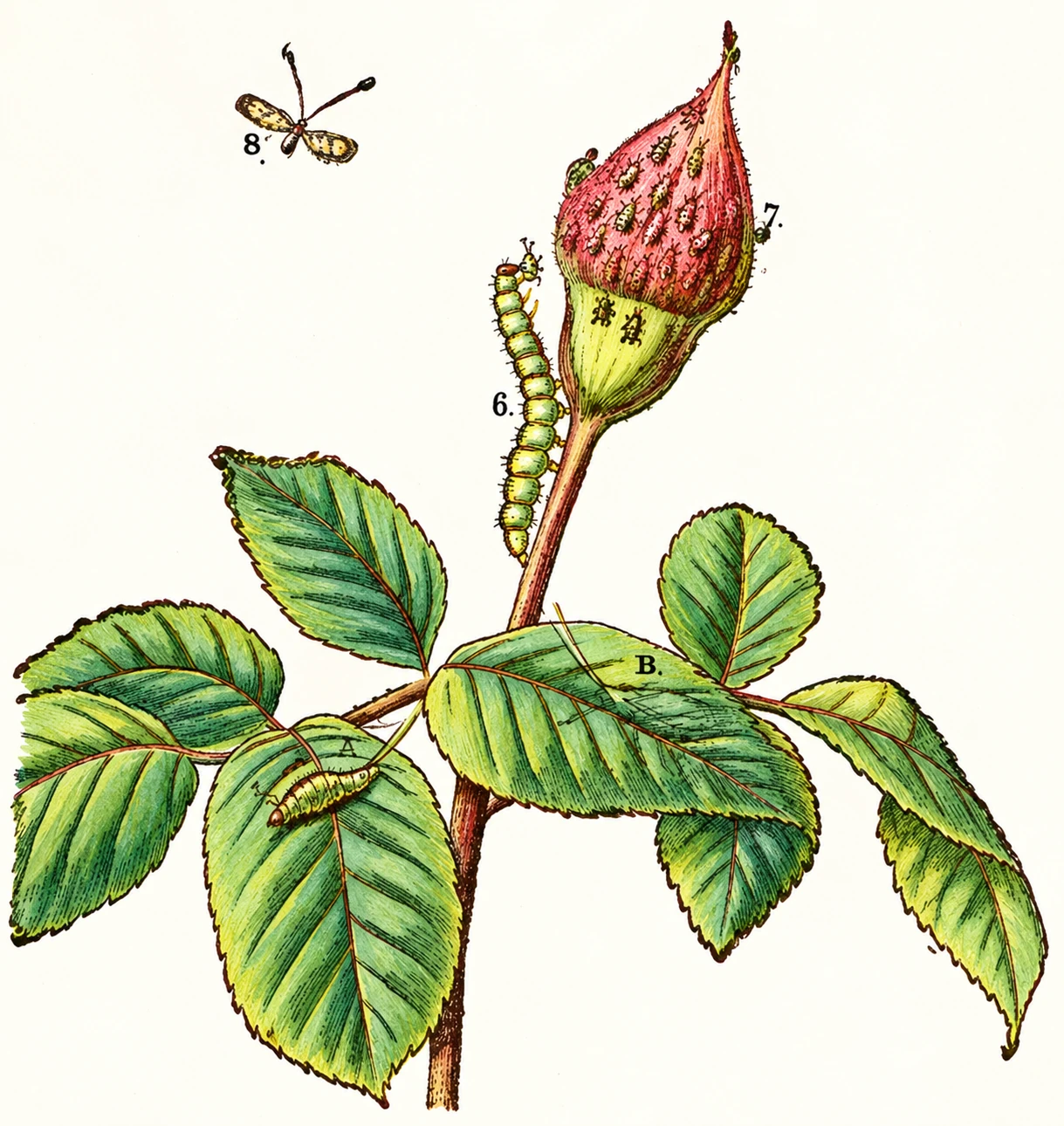
Historical book illustration, AI-assisted colour remaster. Colours are interpretive. · Source
The pattern depends on species and conditions. In many temperate aphids, autumn brings a sexual generation and eggs that survive winter; some populations continue asexual reproduction instead.[4][5]
Buckley noticed the rapid appearance of live young in Life and Her Children. Her comparison with budding is historical language; today we describe the process as live-bearing parthenogenesis.[6][7]
Veiem alternatives:
- Modifica la consulta.
- Inicia un nou fil.
- Elimina les fonts (si s'han afegit manualment).