Descobreix Pandipedia
Un directori creixent de respostes útils seleccionades per la comunitat de Pandi. Cerca a la col·lecció o explora els darrers descobriments.
2272 entrades disponibles
What were Google's original goals?

Google's original goal was 'to organize the world’s information and make it universally accessible and useful.' This vision began to take shape when Larry Page and Sergey Brin, while at Stanford University, developed the search engine initially named Backrub, which used links to determine the importance of individual web pages[2][3][4].
The rebranding to Google reflected their ambition to handle vast quantities of information; the name was derived from 'googol,' a term for the number 1 followed by 100 zeros[1][2]. Their innovative PageRank algorithm revolutionized how search engines could assess page relevance, setting the foundation for Google's future success[4][5].
Veiem alternatives:
- Modifica la consulta.
- Inicia un nou fil.
- Elimina les fonts (si s'han afegit manualment).

investment trends in synthetic biology startups 2025



Veiem alternatives:
- Modifica la consulta.
- Inicia un nou fil.
- Elimina les fonts (si s'han afegit manualment).
Naica Crystal Caves in Mexico: Nature’s Hidden Wonder
Transcripció
Deep beneath Mexico’s Chihuahua landscape, the Naica Crystal Caves house dazzling selenite crystals that stretch over 36 feet, formed by mineral-rich water over half a million years [1][2].
In this extreme environment, temperatures soar to around 136 degrees Fahrenheit and humidity nears 100 percent, creating a hostile yet mesmerizing habitat [2][3].
Discovered by miners in 2000, this underground marvel reveals the slow artistry of nature and offers scientists a glimpse into Earth’s deep, ancient processes [1][9].
The Naica Crystal Caves continue to inspire awe, standing as a testament to nature’s enduring creativity and the secrets of our planet’s past [1][9].
Veiem alternatives:
- Modifica la consulta.
- Inicia un nou fil.
- Elimina les fonts (si s'han afegit manualment).
Fast facts: Spatial audio breakthroughs
Veiem alternatives:
- Modifica la consulta.
- Inicia un nou fil.
- Elimina les fonts (si s'han afegit manualment).

Bagaimana sistem kapitalisme bekerja di negara berkembang seperti Indonesia dan bekerja di Papua

Di Indonesia, sistem kapitalisme beroperasi melalui peran besar sektor swasta dan investasi asing dengan membuka ruang seluasnya bagi perusahaan dalam sektor energi, pertambangan, perbankan, dan industri digital[1][3]. Kebijakan ekonomi ini ditandai dengan penghapusan subsidi, privatisasi BUMN, serta keterlibatan dalam pasar bebas yang bertujuan mengejar keuntungan maksimal[3][5].
Di Papua, kapitalisme hadir dalam bentuk ekstraktif yang mengandalkan eksploitasi sumber daya alam secara intensif[2][4]. Pola ini seringkali meminggirkan hak masyarakat adat, merusak lingkungan, dan menggantikan sistem pengetahuan lokal dengan narasi ekonomi yang menjadikan tanah sebagai komoditas, yang oleh pegiat disebut sebagai pembunuhan ekologi secara sistemik[4][6].
Veiem alternatives:
- Modifica la consulta.
- Inicia un nou fil.
- Elimina les fonts (si s'han afegit manualment).
Understanding the Importance of Order in Sequence-to-Sequence Models
Understanding the Importance of Order in Sequence-to-Sequence Models
Introduction
In recent years, sequence-to-sequence models have gained significant traction in machine learning, particularly in the fields of natural language processing and speech recognition. These models excel at tasks requiring the mapping of sequences of inputs to outputs, often using recurrent neural networks (RNNs). However, the order in which data is presented can dramatically influence model performance. The paper 'Order Matters: Sequence to Sequence for Sets' investigates this aspect and presents a framework for handling unordered input data effectively.
The Challenge of Unordered Data
The primary focus of the paper is on how to deal with inputs that do not have a natural ordering—essentially, when the data can be viewed as a set rather than a sequence. Traditional sequence models assume an intrinsic order, which is not suitable for tasks where inputs are fundamentally unordered. As the authors explain, “an important invariant property that must be satisfied when the input is a set (i.e., the order does not matter) is that swapping two elements xi and xj in the set X should not alter its encoding”[1].
Effective Modeling of Sets
The paper proposes extending the seq2seq framework, which typically organizes input and output data to reflect their order. Instead, it introduces a method that allows the model to learn from unordered sets. This is achieved using specific neural network architectures that consider the unique characteristics of sets: “we propose a loss which, by searching over possible orders during training, deals with the lack of structure of output sets”[1].
Importance of Input Order
An intriguing part of the research demonstrates that the order of input data heavily influences the performance of the model. By investigating various experiments, the authors concluded that, “often for optimization purposes, the order in which input data is shown to the model has an impact on the learning performance”[1]. This finding highlights the importance of organizing input data in a manner that optimizes learning efficiency.
Empirical Evidence
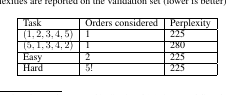
The paper provides empirical evidence showcasing the successes of their proposed methods. For example, they experimented with sorting tasks and found that their models outperformed traditional architectures that lacked this unordered data processing capability. They specifically discuss how the “Read-Process-Write” architecture can adaptively handle information without being constrained to the sequential order of inputs[1].
Implementing Attention Mechanisms
A significant advancement presented in the paper is the integration of attention mechanisms into the seq2seq models. Attention allows the model to focus selectively on different parts of the input data, which is particularly advantageous when dealing with unordered sets. The authors state, “This is crucial for proper treatment of the input set X”[1], emphasizing the model’s ability to dynamically adjust its focus based on the input characteristics.
Memory Networks
Additionally, the discussions extend to memory networks, which can be viewed as a specialized form of neural networks designed for more complex inputs. This facilitates better handling of long-term dependencies in data, which is essential for tasks that require recalling earlier information. The ability to treat inputs as pointers enhances flexibility in data processing, helping the model learn more effectively from unordered datasets[1].
Experiments and Results
The experimentation section of the paper emphasizes how their models handle various tasks compared to baseline models. For instance, in sorting number tasks, the proposed model consistently managed to outperform traditional models by retaining crucial ordering information during training. The authors noted, “the sequence output accuracy was shown to increase significantly” with their approach[1].
Language Modeling and Parsing
Further experiments showcased the model's application in language modeling and parsing. These tasks often require understanding of context and structure, which the authors noted can be heavily influenced by how input sequences are presented. They remarked on the effectiveness of their model in both synthetic and natural text environments, reiterating the significance of having a robust ordering strategy[1].
Conclusion
The paper 'Order Matters: Sequence to Sequence for Sets' contributes vital insights into the handling of unordered data in machine learning. By emphasizing the importance of input order and proposing innovative architectures that incorporate attention mechanisms and memory networks, the authors pave the way for more effective application of sequence-to-sequence models across diverse fields. As machine learning continues to evolve, understanding the nuances of data representation and processing will be essential for improving performance in complex tasks. Their findings not only enhance existing methodologies but also encourage future research into optimizing data handling to maximize learning outcomes[1].
Veiem alternatives:
- Modifica la consulta.
- Inicia un nou fil.
- Elimina les fonts (si s'han afegit manualment).
What makes bioplastics different from compostable plastics?

Bioplastics differ from compostable plastics primarily in their feedstock origins and degradation capabilities. Bioplastics can be non-biodegradable or partially biodegradable, originating from both bio-based and fossil sources. They are defined as being derived from biological materials, regardless of biodegradability[4]. Compostable plastics, however, are specifically designed to break down under industrial composting conditions, adhering to strict standards that ensure they decompose within a defined time frame, typically in such facilities rather than home compost bins[6].
Common misconceptions include the belief that all bioplastics are compostable or that they will biodegrade in any environment; this is not the case, as many require specific conditions to decompose efficiently[4].
Veiem alternatives:
- Modifica la consulta.
- Inicia un nou fil.
- Elimina les fonts (si s'han afegit manualment).
What is "Attention Is All You Need"?

'Attention Is All You Need' is a seminal research paper published in 2017 that introduced the Transformer model, a novel architecture for neural network-based sequence transduction tasks, particularly in natural language processing (NLP). This architecture relies entirely on an attention mechanism, eliminating the need for recurrent or convolutional layers. The authors aimed to improve the efficiency and performance of machine translation systems by leveraging parallelization and addressing long-range dependency issues that plague traditional models like Recurrent Neural Networks (RNNs) and Long Short-Term Memory networks (LSTMs)[1][6].
The Transformer consists of an encoder-decoder structure where the encoder processes the input sequence and the decoder generates the output sequence. Each encoder and decoder layer features multi-head self-attention mechanisms, allowing them to weigh the importance of different tokens in the input sequence[2][5]. This model achieved state-of-the-art results in benchmark translation tasks, scoring 28.4 BLEU on the English-to-German translation task and 41.0 BLEU on the English-to-French task with significantly lower training costs compared to previous models[5][6].
Moreover, the paper predicts the potential of the Transformer architecture beyond just translation, suggesting applications in various NLP tasks such as question answering and generative AI[1][3].
Veiem alternatives:
- Modifica la consulta.
- Inicia un nou fil.
- Elimina les fonts (si s'han afegit manualment).
What makes tardigrades nearly indestructible?
Transcripció
Tardigrades are nearly indestructible due to their ability to enter a cryptobiotic state, expelling most of their body water, which allows them to survive extreme conditions like extreme temperatures, radiation, and even the vacuum of space.
They produce unique proteins that protect their DNA from damage, and when in this dormant 'tun' state, their metabolic activity drops significantly, enabling them to withstand extreme environmental stresses that would typically be fatal to other organisms[1][2][3][6].
Fonts
- What are tardigrades and why are they nearly indestructible?
- How Are Tardigrades So 'Indestructible?' Scientists Finally Have an Explanation
- Scientists Finally Figured Out Why Tardigrades Are So Indestructible
- Cute Little Tardigrades Are Basically Indestructible, and Scientists Just Figured Out One Reason Why
- Are Tardigrades The Most Indestructible Animals on Earth? There's a Close Contender
- Tardigrade Fossils Reveal When ‘Water Bears’ Became Indestructible
- Unusual Labmates: Meet tardigrades, the crafters of nature's ultimate survival kit
- Tardigrades Are Basically Indestructible, But Scientists Just Found Their Weak Point
- Yahoo is part of the Yahoo family of brands
- Tardigrades - Methods
- Tardigrade - Wikipedia
- Rare Fossils Give Clues to How Tardigrades Survived Mass Extinctions by Hitting the Snooze Button
Veiem alternatives:
- Modifica la consulta.
- Inicia un nou fil.
- Elimina les fonts (si s'han afegit manualment).

The Role of Glaciers in Earth's Ecosystem
The Role of Glaciers in Earth's Ecosystem
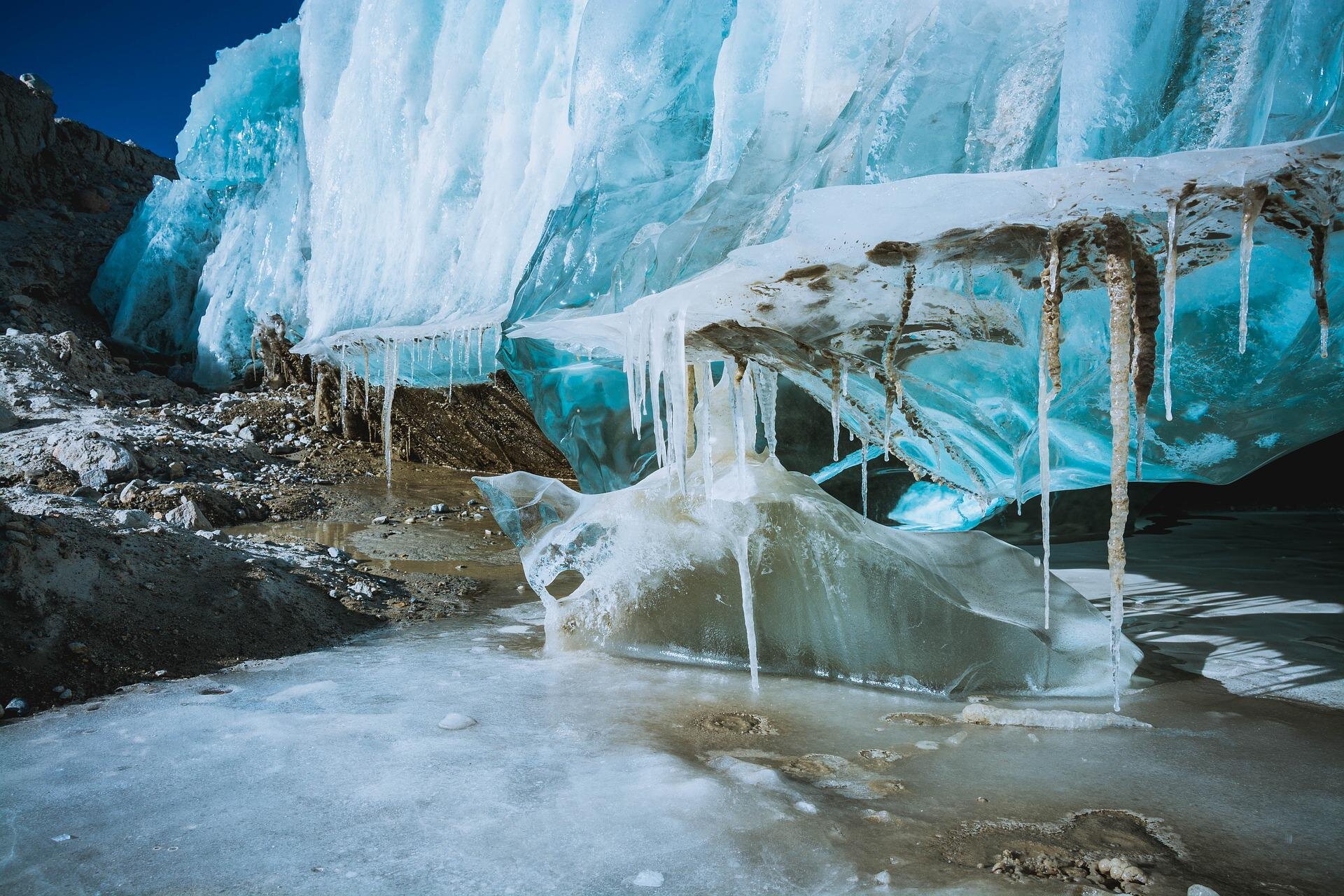
Glaciers play a crucial role in shaping ecological dynamics on Earth. Their retreat due to climate change is not merely a physical alteration of landscapes; it initiates complex biological and ecological processes that influence both local and global ecosystems.
Biodiversity and Ecosystem Formation

As glaciers retreat, they expose previously covered land, creating opportunities for new ecosystems to develop. This transformation leads to a rapid colonization by a spectrum of organisms starting with microorganisms and progressing to more complex life forms. Research has shown that life quickly moves into these new habitats, beginning with microorganisms such as bacteria and algae that thrive in the harsh conditions left behind by melting glaciers. Over time, hardy pioneer species like lichens, mosses, and grasses establish themselves, which pave the way for more diverse plant communities[5].
The retreat of glaciers encourages an intricate process of ecological succession, where an initial increase in biodiversity is observed. For example, studies indicate that in the early stages of glacier retreat, there is a significant rise in plant diversity, which subsequently enhances the diversity of associated animal life, including pollinators[4][5]. Specifically, within the first few decades post-retreat, scientists have documented an increase in both plant and pollinator diversity. Pollinators, such as bees and butterflies, depend heavily on the diversity of flowering plants that emerge in the glacier's foreland, illustrating the interconnectedness of these species within their ecological niche[4].
Impact on Water Resources
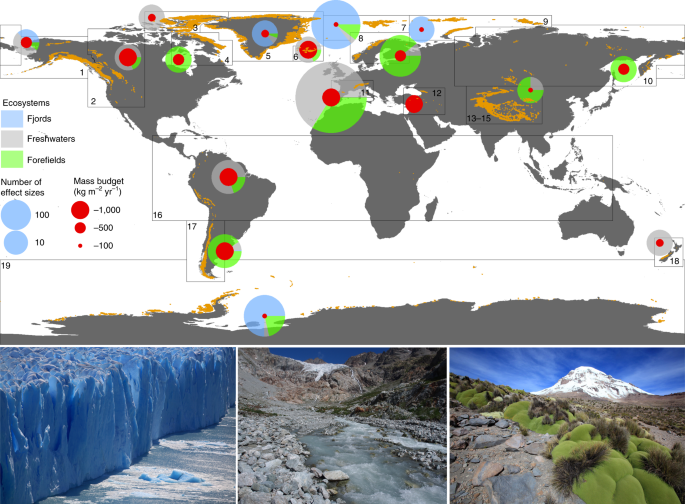
Glaciers also serve as vital freshwater resources. As they encapsulate substantial amounts of freshwater, they are significant for maintaining river flows and ecosystems during warmer months when snowmelt occurs. The meltwater from glaciers feeds rivers, which rely on consistent flow for the survival of numerous species and the health of ecosystems. Their decline poses a direct threat to the water resources of hundreds of millions of people and to biodiversity, especially in regions dependent on glacier-fed streams[2].
Climate Regulation and Soil Development

Moreover, glaciers contribute to Earth's climate regulation. They reflect sunlight and help maintain cooler temperatures in their surroundings. As glaciers shrink, the albedo effect diminishes, leading to increased absorption of heat by the Earth's surface, which further accelerates climate change. This progressive warming impacts not just the immediate area around the glaciers, but also broader climate patterns that affect ecosystems worldwide[1][3].
The newly exposed grounds left by melting glaciers undergo significant changes in soil properties over time. Key environmental traits such as soil temperature and nutrient availability evolve as more complex biological communities establish themselves[3]. Microorganisms play a vital role in this process by breaking down organic matter and aiding the development of fertile soils, which further facilitate the growth of plant life. This biodiversity enhances ecosystem services, such as nutrient cycling and carbon capture, crucial for combating climate change[5].
Plant-Pollinator Interactions
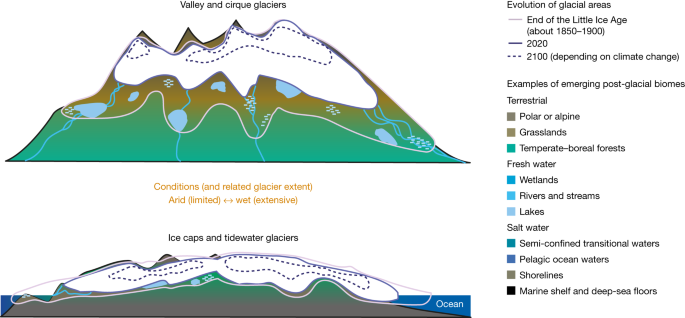
The relationships between plants and pollinators are also significantly influenced by glacier dynamics. Early in the succession process, as pioneer plants establish, they provide critical resources for pollinator species, which in turn help in plant reproduction through pollination. Studies have shown that initial increases in plant diversity stimulate pollinator success, creating robust interactions that foster healthy ecosystems[4][5]. However, as plant communities transition towards a state dominated by woody species, a decline in interaction diversity and overall biodiversity often follows, illustrating the delicate balance maintained within these ecosystems[4].
Conservation Implications
As glaciers continue to recede at alarming rates due to anthropogenic climate change, understanding their ecological role becomes increasingly urgent. The loss of glaciers corresponds to the loss of unique habitats for specialized species, which are often poorly adapted to change, making them vulnerable to extinction. Hence, conservation strategies must consider both the protection of glacial environments and the management of biodiversity in newly formed ecosystems[4].
Efforts to enhance and sustain plant diversity in these ecosystems can help mitigate the negative effects of glacier retreat. By prioritizing areas of high interaction diversity, such as pioneer grasslands, conservation strategies can foster ecological resilience, promoting healthier ecosystems capable of withstanding ongoing climate change impacts[4][5].
Conclusion
Glaciers are not just significant ice formations; they are catalysts for biodiversity and ecological dynamics. Their retreat triggers a cascade of changes that affect species interactions, nutrient cycling, and water resources. Understanding and protecting these processes are crucial in the face of climate change, ensuring the continued resilience and vitality of our planet's ecosystems.
Veiem alternatives:
- Modifica la consulta.
- Inicia un nou fil.
- Elimina les fonts (si s'han afegit manualment).