Freaks and Marvels of Plant Life: Key Points and Insights
Freaks and Marvels of Plant Life: Key Points and Insights
M. C. Cooke’s book presents plants as active, responsive organisms rather than passive scenery. Through examples of carnivory, movement, mimicry, unusual growth and cultural symbolism, it shows how apparently strange structures often have practical biological functions, while reminding readers to distinguish demonstrated facts from speculation.[1][2]
The book’s central themes
- Plants can act in animal-like ways. Sundews, Venus’s fly-traps, butterworts and pitcher-plants capture animal prey. In the strongest examples, plant secretions break down nitrogenous material and the resulting products are absorbed by the plant.[3]
- Movement is widespread. Roots, growing points, leaves, tendrils and floral structures can bend, rotate, close or contract in response to touch, gravity, light, temperature and moisture.[4]
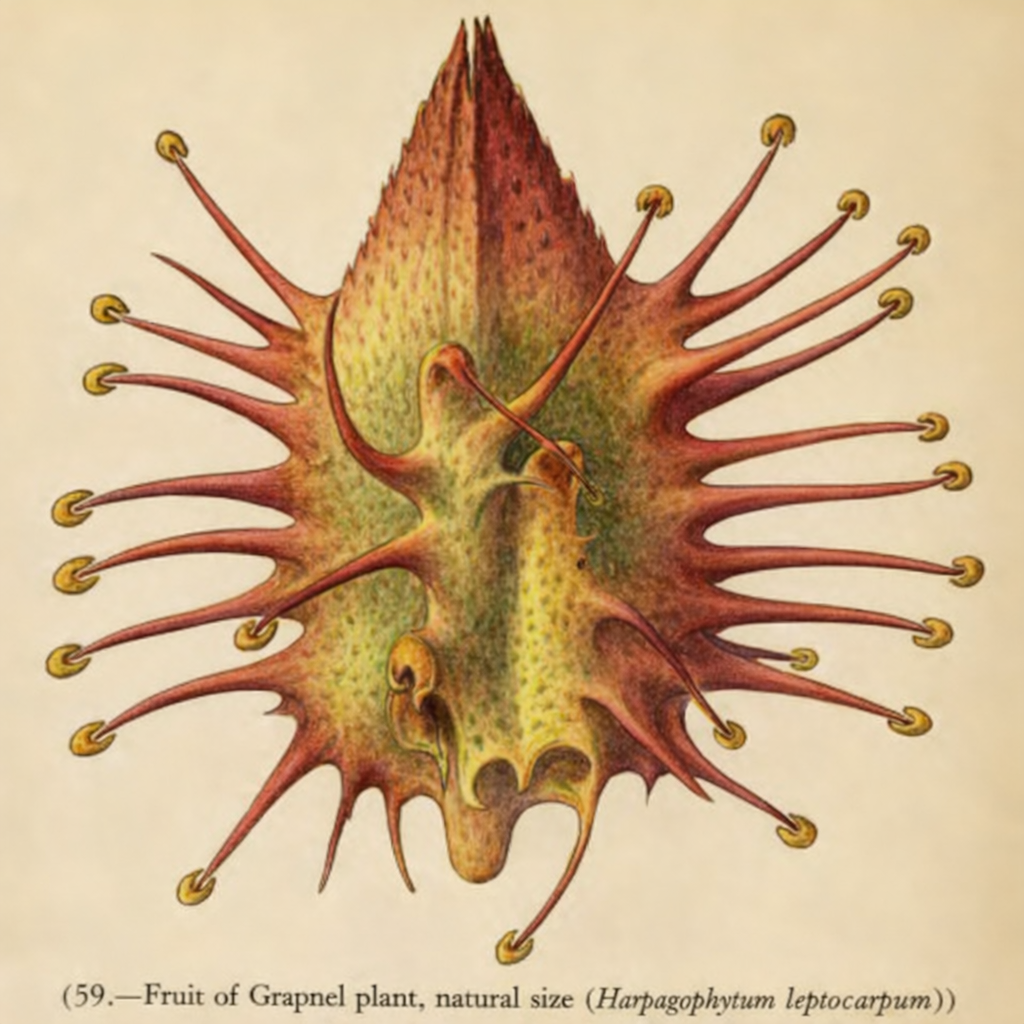
- Structure reflects function. Hooks, hairs, glands, spines, wings, elastic tissues and adhesive surfaces help plants capture prey, climb, protect themselves, bury seeds or disperse offspring.[5]
- Plants continually respond to their surroundings. Light, darkness, humidity, heat, gravity and water availability shape plant behaviour, making vegetation a changing living system rather than a fixed background.[6]
- Wonder requires caution. Cooke separates well-supported observations from uncertain explanations, especially when discussing Sarracenia, bladderworts, plant luminosity and the so-called rain-tree.[7]
- Plants also have cultural histories. The book connects botanical life with folklore, sacred practices, religious symbolism, national emblems and flowers associated with rulers or historical events.[8]
Striking examples
| Example | Key point |
|---|---|
| Round-leaved sundew (Drosera rotundifolia)[9] | Gland-tipped tentacles respond to contact, bend around insects and increase their secretion. Cooke describes the resulting acid fluid as capable of dissolving albumen, meat and cartilage.[10] |
| Venus’s fly-trap (Dionæa muscipula)[11] | Three sensitive filaments trigger the hinged leaf lobes to close. Marginal spines retain larger prey, while glands produce an acidic digestive fluid.[12] |
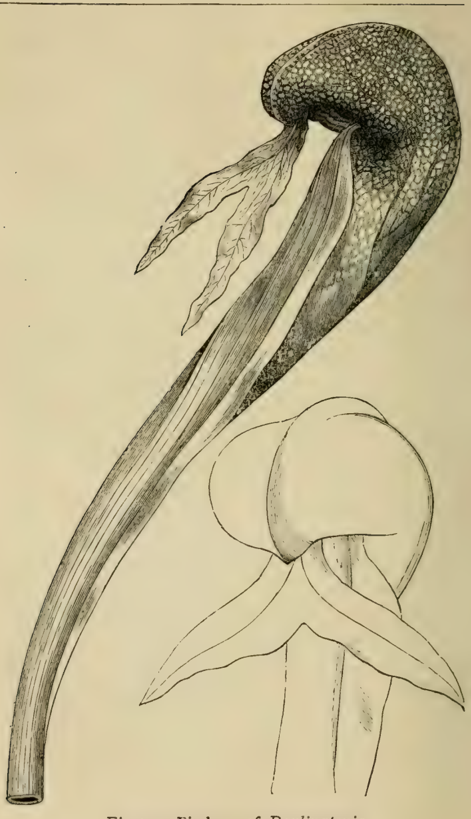
| Pitcher-plants (Sarracenia and Nepenthes)[13] | Modified leaves use lures, slippery inner surfaces, downward-pointing hairs and retaining fluids to trap organisms. In Nepenthes, Cooke reports acidic fluid and evidence consistent with digestion.[14] |
| Bladderwort (Utricularia) | Small bladders admit aquatic organisms through inward-opening valves. Cooke treats capture as clear but digestion as unproven, favouring the more cautious explanation that the plant absorbs products from decaying prey.[15][16] |
| Twining plants and tendrils | Hops, convolvulus, clematis, passion-flowers and Virginia creeper use growth movements, touch-sensitive organs, hooks or adhesive discs to locate and secure supports.[17] |
| “Sleep” movements | Wood-sorrel, clover, acacia, lupin and other plants change leaf position at night. Cooke proposes that this may protect upper leaf surfaces from nocturnal cooling and dew.[18] |
| Hygroscopic seeds and fruits | Wild-oat awns, geranium fruits, the “rose of Jericho” and other structures twist, open or close as moisture changes, helping seeds bury themselves or disperse at suitable times.[19] |
| Giant plants | The survey ranges from exceptionally tall Australian eucalyptus to Rafflesia, giant water-lilies, tree ferns, bamboos and very long marine algae.[20] |
| Luminous fungi | Cooke treats glowing fungi as better supported than many reports of luminous flowers, citing repeated observations of glowing mycelium and agarics, sometimes bright enough to illuminate nearby objects.[21] |
| Plant mimicry | Unrelated plants may converge in appearance, including cactus-like Euphorbia, floating plants, winged fruits and seeds, and flowers resembling insects or other organisms.[22] |
Broader insights
The book’s most important lesson is methodological: unusual botanical claims should be tested through observation, measurement and comparison. A claim should not be accepted simply because it is marvellous, nor rejected simply because it conflicts with familiar ideas about what plants can do.[23]
- Cooke presents adaptation through visible mechanisms: roots avoid obstacles, tendrils search for supports, seeds bury themselves, and carnivorous leaves supplement nutrition in difficult habitats.[24]
- The boundary between plants and animals is shown to be less absolute than ordinary language suggests. Plants have no brains or nerves, yet Cooke describes them as transmitting stimuli, contracting, distinguishing between materials and carrying out processes analogous to digestion.[25]
- Human movement and commerce reshape plant communities. Crops, weeds and introduced trees travel with colonisation and trade, making a purely indigenous flora increasingly difficult to define.[26]
- The book combines scientific investigation with imaginative storytelling, but its strongest sense of wonder comes from discovering mechanisms rather than preserving every romantic explanation. The correction of the “rain-tree” story is one example of this preference for evidence.[27]
Summary
Overall, Freaks and Marvels of Plant Life turns botanical curiosities into evidence of adaptation, responsiveness and ecological relationships. Its lasting insight is that plants are neither inert nor uniform: they sense conditions, alter their forms and movements, interact with animals and people, and reveal their abilities most clearly when observation replaces assumption.[28]
Create your account to keep this answer and continue from it later.
Let's look at alternatives:
- Modify the query.
- Start a new thread.
- Remove sources (if manually added).