How to Meditate: A Comprehensive Guide
Meditation Basics
Meditation is a practice that involves focusing the mind to achieve a state of calm and clarity[26][15]. It is a method to cultivate mindfulness and awareness[15]. At its core, meditation encourages the practitioner to be fully present in the moment, often by observing the breath, repeating a mantra, or simply acknowledging thoughts without judgment[10]. The purpose of meditation is to relax the mind and the body[3]. In a busy world, it gives us the permission to pause, breathe, and reset[1]. It’s simply a way for us to stop for a moment and be calm[1]. Meditation doesn’t require much[4]. It can be done anywhere, any time and in any form[14]. Your eyes can be closed or open, you can be sitting, standing, walking or lying down[14].
Researchers generally classify meditation techniques into two different categories: concentrative and non-concentrative[8]. Concentrative techniques involve focusing on a particular object that's generally outside of oneself, such as a candle's flame, the sound of an instrument, or a mantra[8]. Non-concentrative meditation, on the other hand, can include a broader focus, such as the sounds in your environment, internal body states, and even your own breathing[8]. Many people begin their practice for the purposes of reducing stress, improving sleep, relieving depression and anxiety, and realizing other physical & mental health benefits[11].
Key Elements of Meditation
Though it can be practiced in different ways, a few common threads run through virtually all meditation techniques[8]:
- Focusing the attention of the mind: All forms of meditation share this foundational attribute[11].
- A Comfortable Position: The best posture for meditation is sitting upright, comfortable and alert[9]. As long as your back is straight, your neck and shoulders are relaxed, and your chin is slightly tucked, you can sit wherever you feel comfortable for the length of the meditation[4]. If you're sitting in a chair with a back, try not to lean back or slouch[13]. Stay as straight as possible[13].
- Being Present: Rather than focusing on the past or future, all meditative practices involve focusing on the present[8]. Being in the here and now consists in experiencing each moment, letting it go, and then experiencing the next[8].
Various Meditation Techniques
There are many types of meditation techniques with differing attributes, origins, and purposes[11]. Understanding the many different kinds of meditation practices is vital when first exploring how to meditate, because you will likely find that certain methods are far more effective for you than others[11]. Not all of the techniques are meant for everyone[3]. Here are a few techniques:
- Mindfulness Meditation: The goal of mindfulness meditation is to experience present moment awareness by cultivating a witness perspective of our thoughts, feelings, sensations, and environmental stimuli[11].
- Focused Meditation: You focus on something with intention without engaging your thoughts on it[8]. A focus meditation involves focusing on an object like a flower or a candle and taking the time to examine it to the fullest extent[3].
- Walking Meditation: The idea behind a walking meditation is to walk in silence as you observe everything that is going on all around you[3]. Walking meditations can be very rewarding and relaxing[3]. Walking meditation can be very healing for people who have trouble sitting still for a regular meditation practice[3].
- Progressive Muscle Relaxation: This involves the tightening and loosening of various muscles up and down the body[3]. This type of meditation can be very soothing and relaxing especially before bedtime and it’s a simple practice that even children can do[3].
- Mantra Meditation: Mantra meditation involve the repetition of a sacred sound, known as a mantra, to gain focus or clarity[3]. The mantra can be chanted aloud or repeated silently[3].
- Guided Meditation: Guided meditation is a type of meditation led by a teacher who explains what to do[4]. They cue us when to open and close our eyes, how to breathe, and break down other meditation techniques[4].
How to Start Meditating
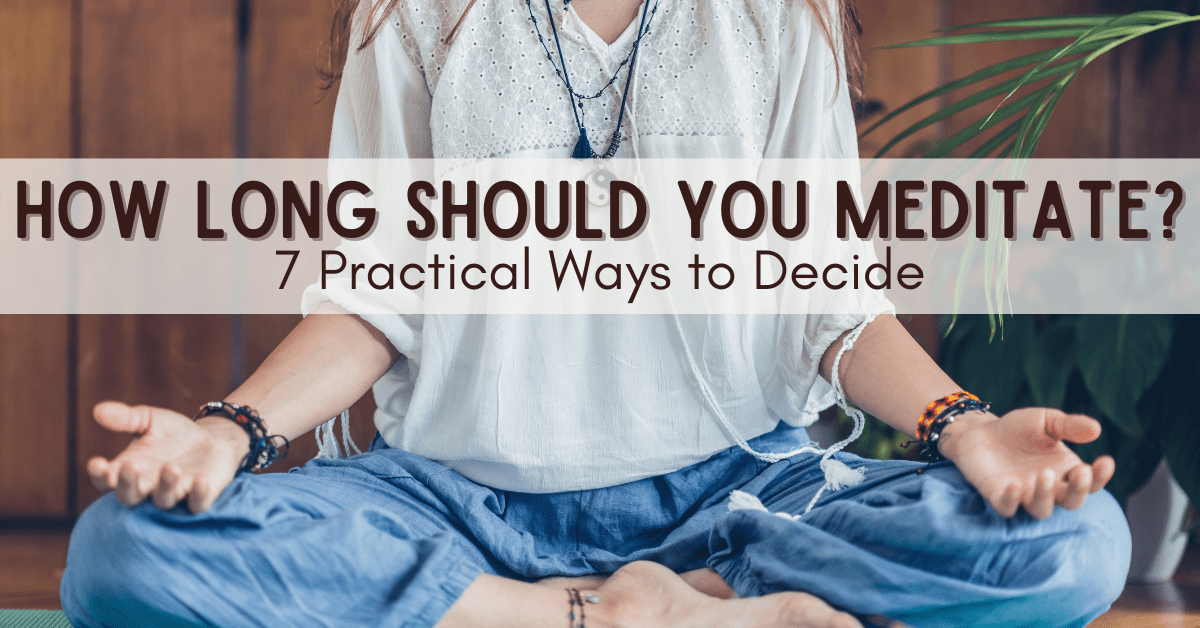
For beginners, starting with shorter sessions of 5–10 minutes is often recommended[10]. An upright posture helps you focus on breathing as you inhale and exhale[13]. With focused meditation, you focus on something with intention without engaging your thoughts on it[8]. This duration is manageable and helps ease new practitioners into the habit of meditating without feeling overwhelmed[10]. The key is to acknowledge this compassionately while bringing the focus back to the breath whenever possible[8]. If you find yourself distracted by other thoughts or find your mind wandering, gently redirect your focus back toward your breaths[8]. It’s best to start by programming your timer for 3 to 5 minutes and then move up from there[13]. If you want to know how to meditate properly, then you need to know how to use your breath to alter your physiology & enter a meditative state[11].
Try 15 minutes 2x per day instead. Or try 5 minutes 3x per day[6]. Or, if the mind is really struggling with this new practice, stick to just 2 minutes once per day[6]. In the end, the best meditation technique and the one that will help you gain the most positive benefits is one you can stick to[8]. As long as we show up to take time for ourselves, we’re doing great[5]. There’s no right or wrong way to meditate[4].
Creating A Daily Habit
It might be helpful to schedule meditation sessions like an exercise class or appointment[4][5]. Or we could tack it onto an existing routine, like every time we shower or brush our teeth[4][5]. A brief thought about paying the electricity bill could spiral into worries about money or work and take your mind off the meditation[1]. We don’t need perfect quiet to meditate[4][5]. We become extra sensitive to every little sound when things are completely quiet[4][5].
Remember: having a totally blank mind is not the goal of meditation[1]. It’s OK if a thought intrudes – just gently try to shift your focus back to your breath[1]. There are many ways you can incorporate meditation into your daily habits, regardless of who you are and what your lifestyle is like[6]. If you are serious about learning to meditate as a total newbie or beginner, take advantage of Breethe's 12-week daily meditation program, which will help you build the habit and progressively bring more calm and clarity to your mind[2].
Tools to Enhance Meditation
:max_bytes(150000):strip_icc()/GettyImages-1023529002-942393b0ad544b4c8a210593bbbd58d1.jpg "6 Must-Try Meditation Apps for Mindfulness in 2025")


:max_bytes(150000):strip_icc()/meditation-1ee44e81bb614760871bd612a95969e8.jpg "Best Meditation Apps of 2024")

There are ways to enhance meditation, for example, try earplugs, noise-canceling headphones, white noise machines, or soothing music[4][5]. There are countless meditation apps out there that can teach you how to tame restless thoughts and restore your sense of inner calm[2]. For beginners, experts often recommend apps for beginners who have no idea where to start with meditation because they provide guided instruction to show you exactly what to do and help you stay accountable[7]. Apps can help you learn and master various meditation skills like focused deep breathing, mental clarity, and being present[12]. Setting up a meditation room or space to meditate can also help[11]. If you don’t have a room to spare, you can create a little meditation corner or a space you can easily set up and put away your meditation equipment[11].
Create your account to keep this answer and continue from it later.
Let's look at alternatives:
- Modify the query.
- Start a new thread.
- Remove sources (if manually added).