How the AIDS Memorial Quilt turned private grief into public activism. Tell the story in four beats: the hook of a quilt as protest, how panels were made and displayed, what it forced the public to confront, and its legacy in memory and health activism today. Use consistent visuals that move from intimate objects to crowd scale to emphasize community and visibility.
Beat 1: Private grief becomes public protest
The AIDS Memorial Quilt transformed intimate mourning into collective action by making loss visible in shared civic spaces and using remembrance as advocacy, documenting lives, humanizing people with AIDS, raising awareness, and pushing for compassionate support for AIDS services[1][2][3].
Its spark came in 1985, when activist Cleve Jones asked marchers at a San Francisco candlelight memorial to write names of the dead on placards and tape them to the Federal Building wall; the grid of names resembled a patchwork quilt and inspired the project[1][4].
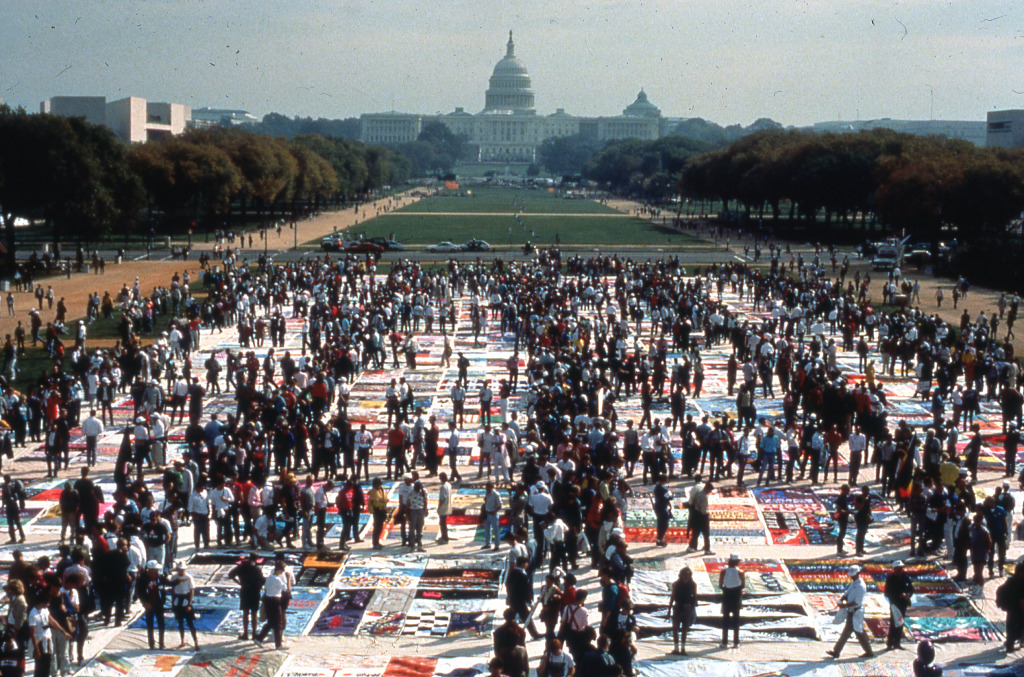
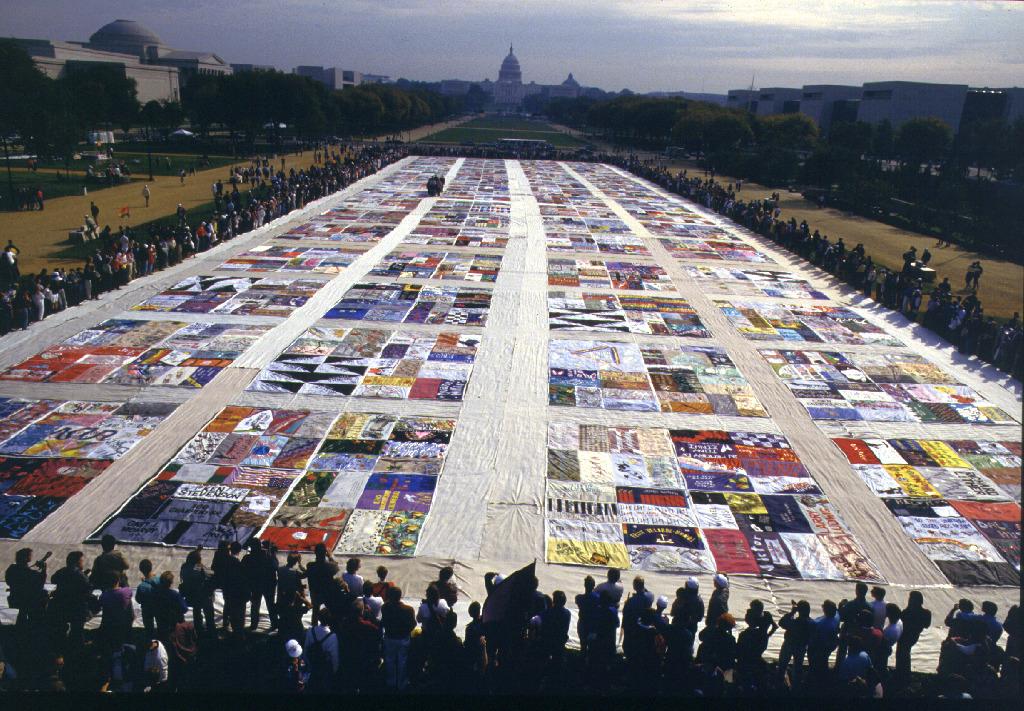
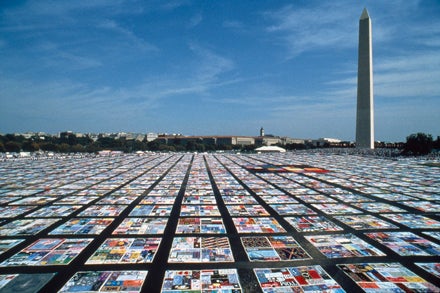
The first major display on October 11, 1987, spread 1,920 panels across the National Mall, covering more ground than a football field and drawing about half a million visitors during the March on Washington, turning mourning into a visible, mass act consistent with the Quilt’s activist purpose[1][2].
A wall of names that looked like a quilt (San Francisco, 1985)
Search for photos of marchers taping name placards to the San Francisco Federal Building, the moment that inspired the Quilt.
Beat 2: From a single panel to ever-larger displays
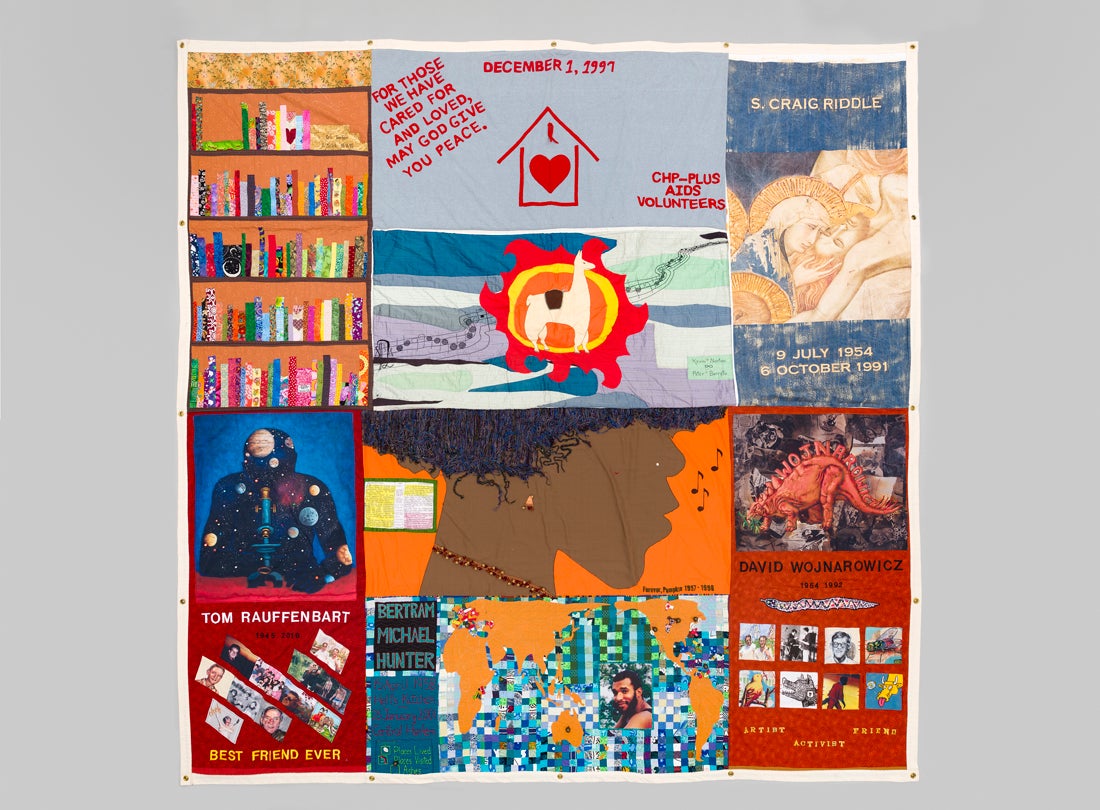
Panels are personal tributes anyone can make, using materials from paint and appliqué to everyday belongings like toe shoes, cooking utensils, teddy bears, clothing, and neckties, so each square carries the textures of a life remembered[5][6].
Each panel measures 3 feet by 6 feet, and eight panels are sewn into a 12-by-12-foot block edged in canvas and assigned a block number for tracking, allowing thousands of individual memorials to be organized into a legible, navigable whole[5].
Makers also contributed details on “Purple Cards,” adding names, contact information, stories, and sometimes letters, deepening the public record of each life commemorated[7].
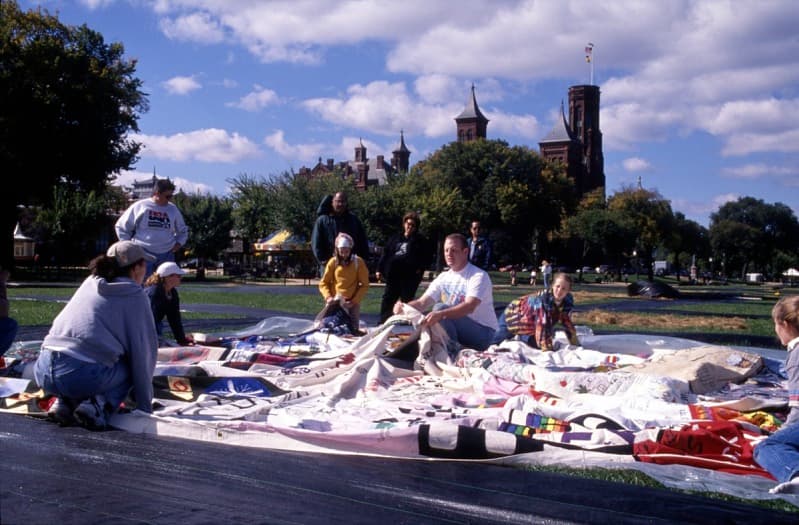
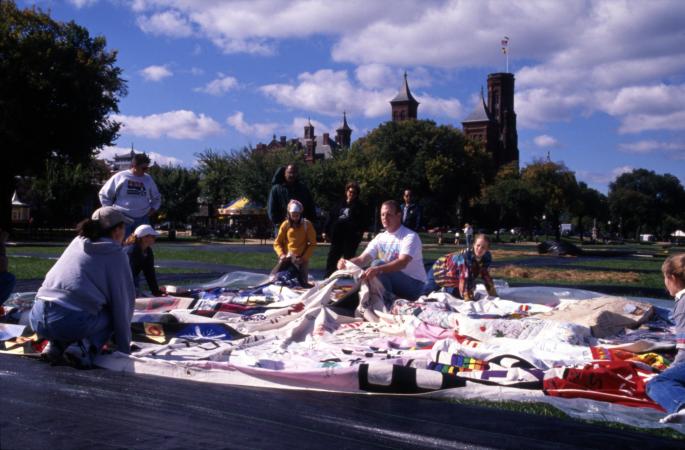
Public unfolding became ritual: at the 1987 Mall display, teams of volunteers carefully opened panels on the grass, and later installations used the Lotus Fold so eight people could ceremonially unfold a patch before aligning it for viewing; names were read aloud, creating a sacred space for collective grief and remembrance[8][7].
As the Quilt toured and returned for additional Mall displays, its scale surged from 1,920 panels in 1987 to more than 6,000 after the 1988 national tour, then more than 12,000 by 1989 and about 40,000 by 1996, approaching nearly 50,000 panels today[1][9][10].
An intimate panel with personal belongings
Close-up views of Quilt panels incorporating personal items like toe shoes, teddy bears, and clothing.


Beat 3: What the Quilt forced the public to see
The Quilt made the epidemic powerfully human by placing names, stories, and belongings in the public eye, so viewers confronted not abstractions but people, love, and loss on a scale that could be walked, touched, and mourned in common[9][7][6].
It countered stigma by insisting that lives often erased by silence be spoken aloud through names readings and visible remembrance, challenging early framings of AIDS as a problem of only certain marginalized groups while activists used the Quilt to demand action[7][11][1].
The installation logistics themselves conveyed the magnitude of loss: as the Quilt outgrew single-venue displays, organizers rotated sections, and by 2012 the Smithsonian Folklife Festival was showing about 1,500 panels per day while the full Quilt exceeded 48,000 panels[8][12].

Beat 4: A living legacy in memory work and health activism
Today the Quilt remains a living memorial and public health tool that raises awareness about HIV/AIDS, supports healing and grief, and keeps stories visible through community displays and online access[1][3].
The Library of Congress now stewards more than 200,000 Quilt records that humanize those memorialized and fix the pandemic’s scope in a public, lasting archive[13].
The National AIDS Memorial partners with hundreds of organizations to stage more than 1,000 community displays each year across schools, universities, places of worship, corporations, and community centers, extending the Quilt’s presence far beyond single national gatherings[1].
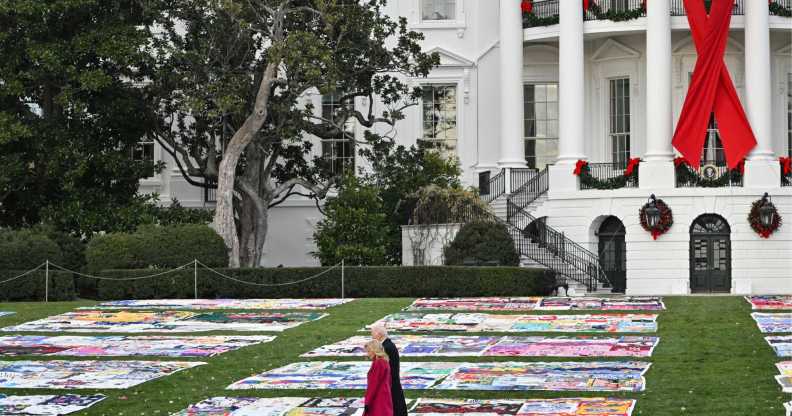
Its visibility continues in high-profile settings such as the Library of Congress and even the White House lawn, underscoring that remembrance and awareness remain ongoing civic work[13][1].
With nearly 50,000 panels honoring more than 110,000 people, the visual arc from a hand-sewn panel to acres of fabric continues to turn mourning into mobilization and to sustain a culture of care[1][14].
Aerial view of the Quilt on the National Mall
Crowd-scale perspective that shows acres of panels and the mass public witnessing of grief and activism.


Get more accurate answers with Super Pandi, upload files, personalized discovery feed, save searches and contribute to the PandiPedia.
Let's look at alternatives:
- Modify the query.
- Start a new thread.
- Remove sources (if manually added).