How bananas reshaped Central America and gave us the term banana republic. Tell a 4-step story from a familiar grocery item to land control, labor, infrastructure, and political influence. Use maps, company-era ads, and worker perspectives to show how a commodity created modern power dynamics.
Bananas, Companies, and Power: How a Grocery Commodity Helped Build “Banana Republics” in Central America
The phrase “banana republic” emerged in the early 1900s to describe countries, especially in Central America, whose economies and politics were dominated by foreign fruit companies and a single export crop[1][2][3]. O. Henry popularized the term in 1904 through a fictionalized Honduras, capturing a reality of concentrated foreign corporate influence on land, infrastructure, and state authority[4][3].
This report traces a four-step story: how a familiar grocery commodity was manufactured as mass demand in the United States, how that demand translated into land control and labor regimes in Central America, how companies built railroads, ports, and shipping corridors to move fruit, and how those logistics and concessions turned into political leverage that shaped modern power dynamics and gave rise to the term itself[1][2][5].
United Fruit’s Great White Fleet routes, 1917
Historical map showing United Fruit’s steamship lines linking U.S. ports with Central America, plus railroads and wireless stations.
![r/MapPorn - Route Map of the Great White Fleet of the United Fruit Company [1024x1050]](https://external-preview.redd.it/5h2HnBLuB5OSWnpDipAYbgkCawyQuH2qMm2IqePOwtU.png?width=640&crop=smart&auto=webp&s=6ff2912c7a210fb2d92e869a3d5d8b18b34e68b4 "r/MapPorn - Route Map of the Great White Fleet of the United Fruit Company [1024x1050]")

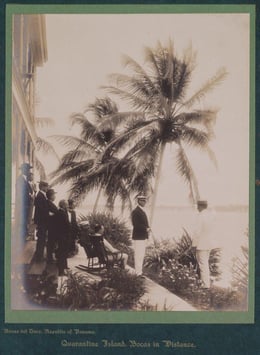
United Fruit Company ports and wharves, early 1900s
Photographs of company-owned wharves, hospitals, and railroads across Central America from the 1906 quarantine tour album.
A Four-Step Flow from Grocery Commodity to Political Power
Commodity-to-Power Flow
Each stage reinforced the next: advertising and shipping created demand, which justified land concessions and labor controls; those were locked in by rail, docks, and steamship lines; and the resulting corporate corridors translated into influence over policy and political outcomes[6][5][7].
Step 1: Making Bananas a Mass Commodity
United Fruit and affiliates promoted bananas as modern, nutritious, and adventurous to grow U.S. demand, creating the consumer pull that would sustain vast plantation systems[6][8].
- Food Value of the Banana (1917) framed bananas with scientific endorsements and nutritional claims, positioning them as a health food[6][8].
- The Great White Fleet campaign marketed cruises to company zones as exotic adventures, fusing tourism with the banana trade and depicting Central America as romantic and exciting[9][10][11].
- Promotional pamphlets such as The New Banana (1931), Serve Bananas in 'Latest Style' (1940), and Banana Salad Bazaar (1940) kept consumption rising in American kitchens[6][8].
- The Chiquita Banana campaign and cookbook extended the brand’s reach, embedding the fruit in U.S. popular culture[6][8][11].
These campaigns linked everyday shopping to distant plantations through the company’s passenger and cargo fleet, which carried both tourists and fruit along routes publicized in maps and advertisements[9][7][5].
Step 2: Land Control and Labor Regimes in Banana Zones
Land concessions underpinned the company’s rise. In Costa Rica, the state granted Minor Keith a 99-year concession in exchange for completing the Caribbean railroad, a model that later informed United Fruit’s regional expansion[12]. In Guatemala the company received railroad and postal-service roles, gained sweeping exemptions from taxes and import duties, and came to control a very large share of land, making it one of the most powerful economic actors in the country[13].
These concessions translated into workplace power. The company’s control over jobs, housing, and transport shaped daily life in plantation towns, while labor conflicts mounted as workers pushed for wages, rights, and benefits within company-dominated corridors[5].
- In the 1954 Honduras banana strike, workers demanded higher wages, including reports of a 50 percent increase in a State Department account and a 72 percent increase in a Swarthmore account[14][15].
- The strike began when dockworkers sought legally required double holiday pay, broadening into demands for better working conditions, medical care for families, vacation and strike pay, and the right to collective bargaining[15][16][17][18].
These worker perspectives show how land concessions and company towns placed labor inside corporate systems where bargaining over wages and rights became political flashpoints[14][13].
Step 3: Infrastructure Corridors that Moved Fruit and Structured Power
Banana zones were networks, not just farms. United Fruit linked plantations to railways, ports, and refrigerated ships, moving perishable fruit rapidly from Central America to U.S. markets[19][5]. The Great White Fleet map from 1917 shows steamship lines and railroads connecting Central America with New Orleans and New York, alongside wireless stations and lighthouses that supported the trade[7][5].
Infrastructure control translated into market control. In Guatemala, independent farmers were reportedly barred from using company rail lines, and United Fruit discouraged highway building that could undermine its transport dominance[13][5]. In Honduras, rail concessions and access to export ports such as Puerto Cortés, Tela, La Ceiba, and Trujillo tied plantations to global markets and entrenched the plantation economy around foreign firms[5].
| Element | What it did | Example sources |
|---|---|---|
| Railroads | Linked inland plantations to docks under company control, reinforcing monopoly over transport[13][5]. | Guatemala rail control and limits on independent access[13]; UFCo network summary[5]. |
| Ports & Wharves | Enabled fast loading of perishable cargo and medical/logistics hubs in company towns[20]. | 1906 quarantine tour album of ports, hospitals, wharves[20]. |
| Steamship lines | Connected Central American ports to New Orleans and New York, sustaining U.S. demand[7][5]. | 1917 Great White Fleet route map[7]; UFCo fleet overview[5]. |
Step 4: From Corporate Corridors to Political Influence
The conditions summarized by “banana republic” include single-crop dependence, foreign corporate control, and weak sovereignty, often enforced through concessions, infrastructure monopolies, and interventions that protected profits or suppressed labor unrest[1][2][3]. United Fruit became a symbol in these struggles, most vividly in Guatemala in the early 1950s, where land reform and labor rights collided with U.S. anti-communist policy[21].
According to the U.S. Office of the Historian, a 1947 labor protection law under President Arévalo implicitly targeted UFCO, and President Árbenz’s 1952 agrarian reform put idle lands into redistribution, which UFCO judged would hit it harder than any other entity in Guatemala[21]. Washington framed the issue as communism and by 1951 the CIA had begun planning to remove Árbenz, treating agrarian reform as proof of a Communist beachhead[21].
Declassified cables show the entanglement of company and state interests. In June 1954, CIA officers worried that U.S. protest over an arms shipment was being tied to United Fruit’s compensation claim, enabling Guatemalan officials to argue that U.S. policy served big capitalists[22]. After the coup, a PBSUCCESS message urged Guatemala’s new leaders to declare independence from UFCO, reassure labor, and promise protection for unions from both communist infiltration and employer intimidation[23]. A 1950 State Department memo had already warned that U.S. alignment with UFCO’s labor stance let communists pose as defenders of labor and sovereignty, aiding them in capturing organized labor[24].
These episodes make concrete what the term “banana republic” denotes: when corporate-built logistics corridors and land regimes give a foreign company leverage over labor law, land policy, and international alignment, political outcomes can move to protect commodity profits over domestic sovereignty[2][21].
What Maps, Ads, and Workers Reveal Together
Maps of the Great White Fleet and company railroads visualize how a grocery fruit required an integrated corridor that stitched Central America to U.S. ports, while travel and nutrition advertising manufactured demand and normalized the company’s presence as adventure and modern science[7][5][6][9]. Worker demands in Honduras in 1954 show how, inside those corridors, wages, benefits, and bargaining rights became central political claims that could trigger national crises[14][15][18].
Taken together, these sources show a feedback loop: consumer desire, corporate promotion, and shipping routes justified land concessions; concessions fostered labor regimes; integrated infrastructure entrenched market control; and all three converted into political leverage that shaped the modern meaning of “banana republic”[1][5][7].
Conclusion
The banana industry reshaped Central America by tying mass U.S. demand to company-controlled land, labor, and logistics, then converting those assets into political influence that helped define the region’s 20th-century power dynamics[2][5]. From 1910s advertising to the Great White Fleet’s mapped routes, from 99-year concessions to postwar labor battles and the Guatemala crisis, the banana trade made a seemingly simple fruit the linchpin of a system where corporate infrastructure often outweighed public sovereignty[12][7][21]. Understanding that chain clarifies why “banana republic” describes not agriculture in general but an enduring structure of dependency and external control[1][3].
References
Get more accurate answers with Super Pandi, upload files, personalized discovery feed, save searches and contribute to the PandiPedia.
Let's look at alternatives:
- Modify the query.
- Start a new thread.
- Remove sources (if manually added).