The Functioning of Thyroid Hormones
The Functioning of Thyroid Hormones
Overview of Thyroid Hormone Function
Thyroid hormones, primarily thyroxine (T4) and triiodothyronine (T3), are essential for regulating various bodily functions[5][16][34]. The thyroid gland produces these hormones, which significantly influence metabolism, growth, and overall hormonal balance[5]. The main job of thyroid hormones is to control the speed of your metabolism, which is how your body transforms food into energy[2][6]. A well-functioning thyroid affects the body by maintaining body temperature, heart rate, and the rate at which you burn calories[1].
Hormones Produced by the Thyroid Gland
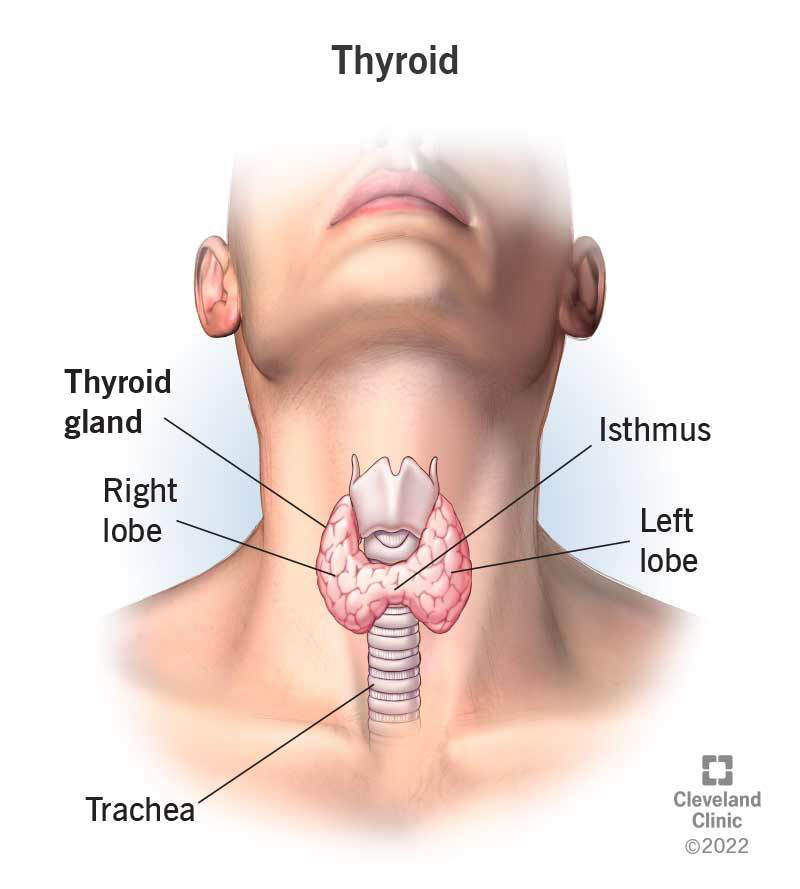
The thyroid gland, located in the anterior neck, produces several key hormones[5]:
- Thyroxine (T4): Also known as tetraiodothyronine, T4 is the primary hormone released by the thyroid[2][5]. It contains four iodine atoms and serves as a precursor to T3[5][6][29]. The thyroid produces most of this hormone, but it has little effect on metabolism[6]. Once released, organs in the body convert it to T3[2].
- Triiodothyronine (T3): Contains three iodine atoms and is more potent than T4[5][6]. It directly influences target tissues and broadly affects metabolic activity[5]. T3 has a much greater effect on your metabolism than T4[6].
- Reverse Triiodothyronine (RT3): The thyroid makes small amounts of RT3, which reverses the effects of T3[6].
- Calcitonin: This hormone helps regulate the amount of calcium in the blood, but it doesn’t impact metabolism like T3 and T4[2].
Production and Regulation of Thyroid Hormones
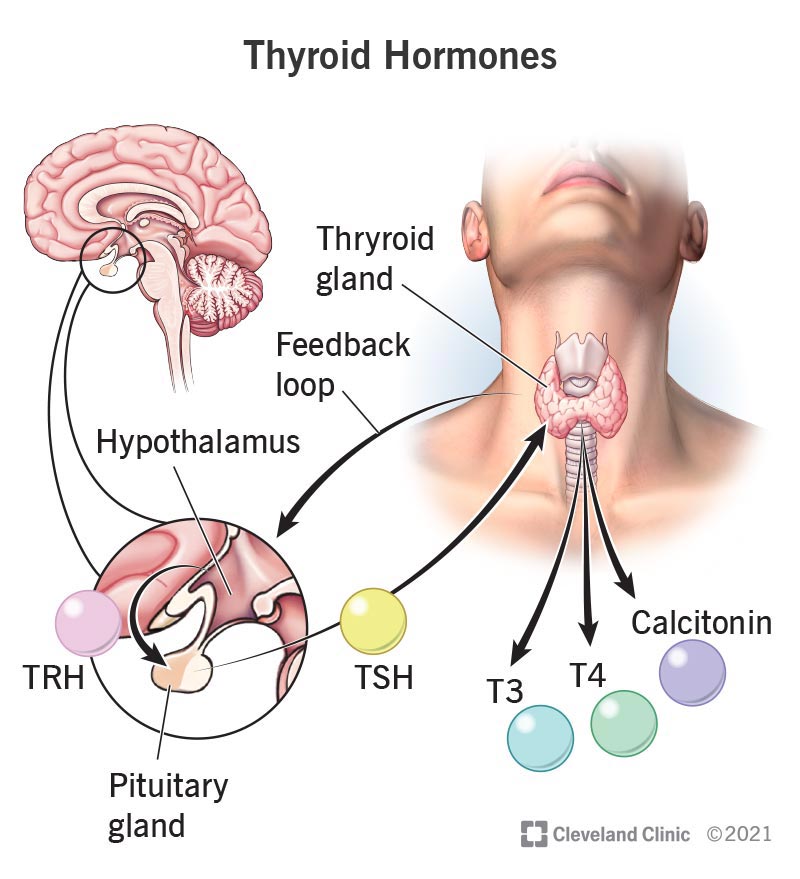
The production and release of T3 and T4 are controlled by a feedback loop involving the hypothalamus, pituitary gland, and thyroid gland[2][5][9]. The hypothalamus releases thyrotropin-releasing hormone (TRH), which signals the pituitary gland to produce thyroid-stimulating hormone (TSH)[2][5]. TSH then triggers the thyroid to produce T4 and T3[2]. Adequate iodine intake is essential for the thyroid to create T4 and T3[2][5]. When T3 and T4 levels increase, they prevent the release of TRH (and thus TSH), and when T3 and T4 levels drop, the feedback loop starts again[2].
The Action of Thyroid Hormones on Cells and Organs
Once released, thyroid hormones affect nearly every cell and organ in the body[2][4][9][14][16]. Thyroxine (T4) enters cells, it is converted to triiodothyronine (T3), which binds to thyroid receptors in the nucleus to regulate the transcription of specific genes[3][9][16]. Thyroid hormone (T3 and T4) affects every cell and all the organs in your body by:
- Regulating the rate at which your body uses calories (energy). This affects weight loss or weight gain and is called the metabolic rate[2].
- Slowing down or speeding up your heart rate[2].
- Influencing the speed at which food moves through your digestive tract[2].
- Controlling the way your muscles contract[2].
- Managing skin and bone maintenance by controlling the rate at which your body replaces dying cells[2].
Impact on Metabolic Rate
Thyroid hormones, particularly T3, increase the basal metabolic rate (BMR), which is the amount of energy the body uses while at rest[4][5][12][16]. They stimulate metabolic activity in almost all tissues of the body, increasing oxygen consumption and heat production[5][16]. T3 facilitates the synthesis of proteins, including enzymes, which boosts the basal metabolic rate[5]. Thyroid hormones stimulate metabolic cycles involving fat, glucose, and protein catabolism and anabolism[3].
Effects on Specific Body Functions
Thyroid hormones influence various physiological processes[4][5][16][34]:
- Growth and Development: Thyroid hormones are essential for normal growth and development, especially in skeletal tissues[5]. Adequate amounts of thyroid hormones are also needed for brain tissue development in children[5].
- Cardiovascular System: Thyroid hormones help regulate blood pressure, heart rate, and the force and vigor of the heart's contraction[4].
- Nervous System: Thyroid hormones are also vital for neurological function[4]. Too much or too little thyroid hormone can cause mood changes, such as depression or anxiety[1].
- Digestive System: Thyroid hormones affect how food moves through your digestive system[4].
- Reproductive System: If your thyroid isn’t working properly, it can cause irregular menstrual periods and issues with fertility[4].
Conditions Related to Abnormal Thyroid Hormone Levels
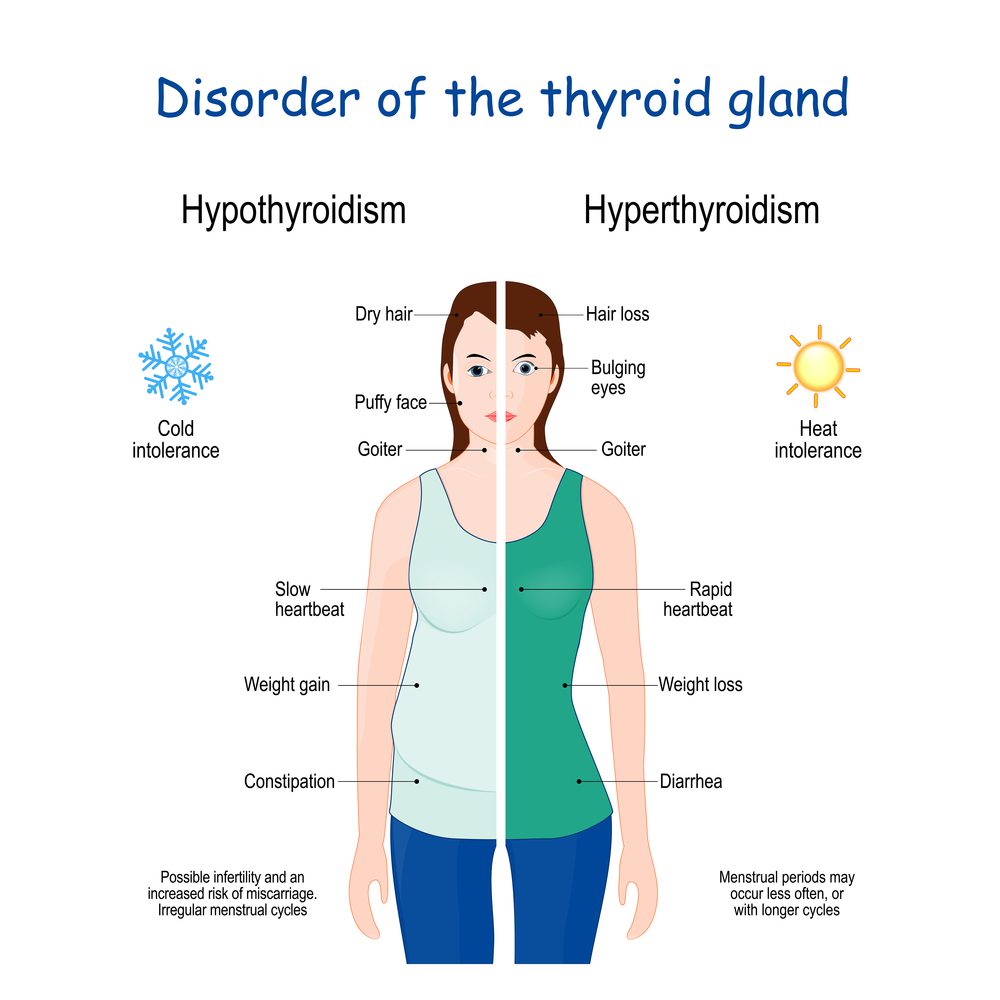

Abnormal thyroid hormone levels can result from several conditions[2][6][10][11][24]:
- Hyperthyroidism: Occurs when the thyroid gland produces too much thyroid hormone, speeding up metabolism and potentially causing weight loss, rapid heart rate, and nervousness[1][4][24]. Graves’ disease is the most common cause[1][4][11].
- Hypothyroidism: Occurs when the thyroid gland does not produce enough thyroid hormone, slowing down metabolism and potentially causing tiredness, weight gain, and depression[1][4][24]. Hashimoto’s thyroiditis is a common cause[1][4][11][24].
- Goiter: An enlargement of the thyroid gland[4][11]. It can result from iodine deficiency, thyroid nodules, or autoimmune diseases[4][5][11][19].
- Thyroid Nodules: These are lumps or swelling in the thyroid gland, which are often benign[1][4][19][24]. However, they can sometimes be cancerous or cause hyperthyroidism[1][4][19].
- Thyroid Cancer: Cancer that forms in the tissues of the thyroid gland[1][4].
Testing and Treatment
If you experience potential thyroid problem symptoms, a doctor can help you know if you have a thyroid problem[1][6]. A doctor can order blood tests to check the levels of thyroid hormones in your body[1][6]. A doctor might also give you radioactive iodine by mouth or as an injection to measure how much of it your thyroid gland takes up, as taking in a lot of radioactive iodine is a sign that your thyroid is overactive[1]. Treatment options include:
- Medications: Thyroid hormone pills (synthetic thyroxine (T4)) can treat an underactive thyroid[1][4]. Antithyroid medications block the thyroid's ability to make hormones[6].
- Radioiodine therapy: A large dose of radioactive iodine damages your thyroid gland[1].
- Surgery: Surgery can be performed to remove your thyroid gland[1].
Examinons les alternatives :
- Modifier la requête.
- Démarrer une nouvelle conversation.
- Supprimer des sources (si elles ont été ajoutées manuellement).