
Tarantasio: The Monster Beneath the Water
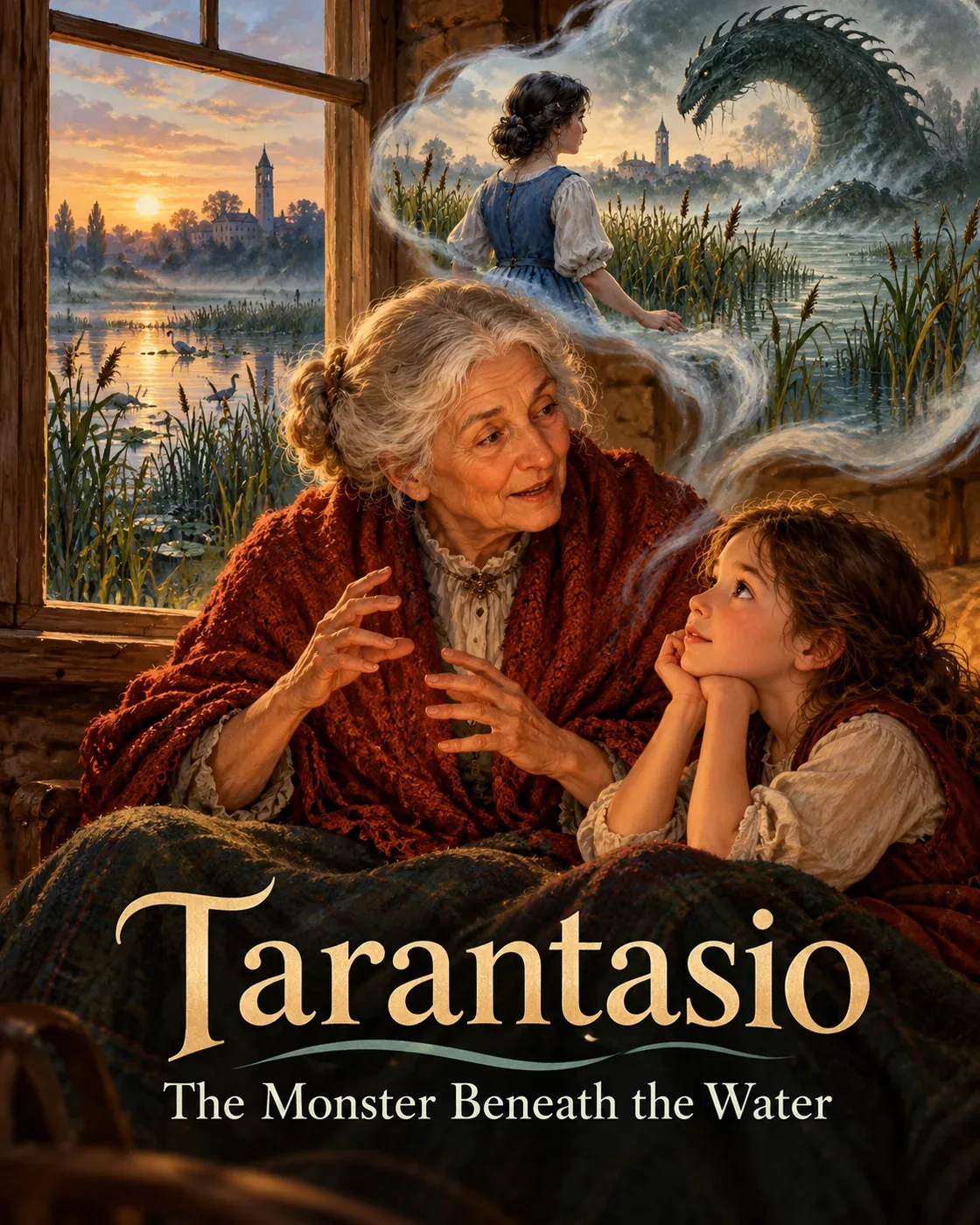

My grandmother told it this way: when the mist rose, her father called her home. “Tarantasio,” he said. She searched the reeds for its head.
She had grown up with the old story of Lake Gerundo: a dragon beneath the water, a breath that spoiled the air, a body too large to see at once.
“Who killed it?” she had asked. At one house, they named a noble warrior. At another, a saint. Everyone seemed sure of a different man.
She imagined a sword striking the water. Her father pointed instead to the channel beside their path. “Look where it goes,” he said.
The water passed through banks repaired with shovels and muddy hands. Farther on, people were clearing another blocked stretch. No banners. No cheering.
The work had begun long before them. Monks, labourers, and later generations had changed the wet ground piece by piece. No single afternoon had emptied it.
Her father still called her in when the mist rose. The dragon had outlived the lake in the things people said to keep their children close.
“So there wasn’t a dragon?” I asked. My grandmother looked toward the fields. “There were people afraid of the water. And people who worked in it.”
She told me there were several endings to the tale. I could choose a favourite. But she would not give me one hero’s name and call it the whole story.
Later, when I told it, I kept the monster. I liked the monster. I also kept the muddy boots.
Examinons les alternatives :
- Modifier la requête.
- Démarrer une nouvelle conversation.
- Supprimer des sources (si elles ont été ajoutées manuellement).