Découvrir Pandipedia
Un répertoire grandissant de réponses utiles sélectionnées par la communauté Pandi. Cherchez dans la collection ou parcourez les dernières découvertes.
1782 entrées disponibles

Regulatory updates for brain-computer interfaces, 2025–2026
Regulatory updates for brain-computer interfaces, 2025–2026
This source set helps policy analysts track direct BCI and neurotechnology oversight actions, alongside one clearly labeled broader framework that may apply indirectly. It prioritizes official legislation, intergovernmental guidance, regulator material, and a legal analysis documenting recent Chinese measures.
Direct neurotechnology and BCI oversight
Official and intergovernmental materials addressing neurotechnology ethics, BCI clinical development, or neural-data governance. The UNESCO item is adopted guidance, the FDA item is regulator guidance, and the U.S. bill is proposed legislation rather than enacted law.

China: approvals, standards, and consultation
A 2026 legal analysis documenting Chinese BCI actions, including a commercial device approval, an in-force clinical research framework, an industry policy, a technical terminology standard, and draft classification guidance under public consultation. These are reported by a law firm rather than presented as primary government documents.
Broader framework with indirect BCI relevance
An official European Commission consultation on classifying high-risk AI systems. It is not BCI-specific, but may be relevant where BCI software or neurotechnology incorporates regulated high-risk AI functions; treat it as an indirect framework and verify applicability to the device or use case.

Examinons les alternatives :
- Modifier la requête.
- Démarrer une nouvelle conversation.
- Supprimer des sources (si elles ont été ajoutées manuellement).
Which polymer is often used for breathable, flexible ECG electrodes?
Examinons les alternatives :
- Modifier la requête.
- Démarrer une nouvelle conversation.
- Supprimer des sources (si elles ont été ajoutées manuellement).
Créez votre compte pour façonner ce Feed autour de ce que vous cherchez et aimez.
Analog Hobbies in the Smartphone Age
Analog Hobbies in the Smartphone Age
Knitting, film photography, and board games are gaining cultural visibility because they offer deliberate attention, physical materials, and face-to-face participation in a life shaped by constant digital access. Their revival is not a rejection of technology: online platforms teach skills, promote products and events, and connect hobbyists, while the activities themselves take place largely away from screens.[1][2]
This profile examines the cultural forces behind the comeback, the strongest available signs of community growth, and what can responsibly be said about personal, social, and creative benefits. The evidence is uneven: board games have the clearest market and event data, film photography has notable but opaque demand indicators, and knitting statistics often measure the wider crafts sector rather than knitting alone.[3][4][5]
Why Analog Activities Feel Relevant Again
The common attraction is what the research describes as a search for useful friction. Smartphones make communication and entertainment immediate, repeatable, and easy to consume in fragments. Analog hobbies impose limits, such as the time required to complete a row of knitting, the finite exposures on a roll of film, or the shared rules and duration of a board game. Those limits can make attention feel intentional rather than endlessly interrupted.[6][7][8][9][10]
| Activity | What digital saturation makes attractive | Cultural drivers | How technology supports participation |
|---|---|---|---|
| Knitting | Slow, repetitive, tactile work with visible progress, contrasting with notifications and fragmented attention.[11][12] | DIY self-expression, inherited skills, sustainability, resistance to fast fashion, and the reframing of knitting as contemporary art and identity.[13][14] | Blogs, videos, podcasts, patterns, troubleshooting communities, and social networks help beginners learn and find local groups.[15] |
| Film photography | Limited exposures and delayed feedback counter unlimited smartphone images, instant previews, and easy deletion.[16][17] | Nostalgia, authenticity, visible imperfection, physical photographs, and renewed interest in photographic craftsmanship.[18][19] | Online tutorials and specialist communities combine with renewed labs, film services, and scan-and-share workflows.[20][21] |
| Board games | Cards, boards, dice, and pieces create bounded, face-to-face activity instead of passive scrolling or multitasking.[22][23][24] | Nostalgic family rituals, cooperation, storytelling, and a desire for more engaged leisure.[25][26][27] | Online discovery, livestreams, crowdfunding, remote play, and hybrid app-supported games expand access.[28][29][30] |
Nostalgia is therefore a starting point rather than the whole explanation. Younger participants may experience a mediated nostalgia for family albums, table gatherings, or inherited craft skills, but they also adapt these practices to current identities and aesthetics. Contemporary knitting can be expressive or activist; film users can scan and share images digitally; and modern board games can incorporate campaigns, complex narratives, cooperative play, and design ideas associated with video games.[31][32][33][34][35]
Three Profiles of the Revival
Knitting: Making, identity, and local connection
Knitting fits the broader return to visible making, repair, durable materials, and personal expression. Its appeal is partly practical and partly symbolic: the maker can see time and labor accumulating in a physical object, while contemporary communities have recast knitting as fashionable, creative, and socially meaningful rather than merely domestic.[36][37]
The available participation evidence is broad rather than knitting-specific. Mintel's 2025 U.S. Arts and Crafts Consumer Report found that 71% of U.S. consumers identified as crafters, while retailers and partner venues were reported to host Stitch Nights, Knitting Nights, and Knit and a Movie events.[38] These findings indicate an active craft environment and organized community activity, but they do not establish a knitting-specific participation rate, year-over-year growth rate, event attendance figure, or store-level sales trend.[39]
Film photography: Deliberate images and material authenticity
Film photography makes process part of the experience. A limited roll encourages decisions before pressing the shutter, while the absence of an LCD preview removes the immediate check-and-reshoot cycle. Grain, color variation, light leaks, negatives, and prints can be valued as signs of human involvement and as physical objects rather than disposable files.[40][41][42][43]
Reported indicators point to renewed interest, particularly among younger users. In 2025, a reported 35% of 42 million active film-camera users worldwide were aged 18 to 30; online searches for analog photography rose 41% in 2024; disposable-camera sales had increased steadily since 2023; and more than 30% of respondents to an Ilford Photo survey in 2024 were aged 25 to 34.[44] Major brands were also reported to have introduced new cameras or revived classic models, and AnalogCon took place in Los Angeles in April 2026 with vendors, exhibitions, panels, demonstrations, and tours.[45]
These are promising demand and community signals, not a transparent industry time series. The supplied evidence does not provide the underlying datasets, survey samples, search-data provider, sales totals, production volumes, or event attendance. The event account also has a potential conflict of interest because the source's author was connected institutionally to the organizer.[46]
Board games: Structured social leisure
Board games turn physical components and shared rules into a social setting. The contemporary form extends beyond classic family games to include cooperation, campaign progression, storytelling, strategic complexity, and imaginative play, making table-based leisure feel current rather than technologically backward.[47][48][49]
Board games have the strongest visible revival infrastructure. Mordor Intelligence estimated the global market at $17.22 billion in 2025 and $18.95 billion in 2026, forecasting $30.06 billion by 2031 and a 9.67% compound annual growth rate from 2026 to 2031.[50] Essen Spiel attracted 162,000 visitors and generated €15 million in sales in 2023, while conventions in Tokyo and Seoul were reported to draw 30,000 to 40,000 attendees annually.[51] Board-game cafés, tournaments, demonstrations, organized community-play partnerships, and approximately 1,200 dedicated game shops in North America further indicate a substantial ecosystem.[52]
The market figures are proprietary estimates and forecasts, not independently documented point-of-sale totals. Attendance, sales, revenue share, and shop counts use different denominators and cannot be treated as equivalent measures of unique players; the source also does not disclose its datasets, company coverage, or method for separating board games from adjacent tabletop and hybrid products.[53]
What Benefits Can Be Claimed?
The cultural logic suggests possible benefits, but the retrieved evidence does not justify presenting them as proven effects. The most directly relevant leads were an international survey titled The Benefits of Knitting for Personal and Social Wellbeing in Adulthood: Findings from an International Survey, an article titled Analog Photography in the Digital Age: Examining Transformation, Alienation and Authenticity in Modern Photographic Practice, and a paper titled The Effects of Board Games on Creative Potential. The full findings of these publications were unavailable in the research record, so their samples, measures, results, and limitations could not be verified.
| Activity | What is plausible from the practice | Evidence status |
|---|---|---|
| Knitting | Relaxation, accomplishment, social connection, skill development, and creative expression are plausible areas of benefit. | Not established here. The international survey explicitly concerns adult personal and social wellbeing, but the available record does not show whether any association came from knitting, group participation, online communities, or pre-existing differences. |
| Film photography | Patience, deliberate attention, identity, satisfaction, and creative engagement are plausible topics for study. | Evidence gap. The identified article is conceptually relevant to authenticity and photographic practice, but no verified participant data, methods, creativity measures, or outcomes were available. |
| Board games | Enjoyment, cooperation, communication, problem-solving, learning, and creative potential are plausible areas of benefit. | Promising but unverified. The creativity paper directly addresses creative potential, but its games, intervention, tests, results, and limitations were unavailable. Findings from one format would not automatically apply to all board games. |
The responsible conclusion is that these hobbies may create conditions people value, such as sustained attention, shared activity, and visible progress, but the supplied research does not establish causal personal, social, or creative benefits. Claims about improved wellbeing, mindfulness, communication, executive function, or creativity should therefore be treated as hypotheses for further research, not settled outcomes.
Community Growth and Cultural Meaning
The revival is best understood as a hybrid system. Digital media supply discovery, instruction, social coordination, and distribution; analog practices supply the slower, material, and communal experience that users may feel is missing from screen-saturated routines.[54][55][56][57]
- Knitting shows visible local activity and broad craft participation, but the available statistics do not isolate knitting well enough to quantify a comeback.[58]
- Film photography shows converging indicators of youth interest, search growth, product activity, and event formation, but its market and community data remain difficult to audit.[59]
- Board games show the most developed combination of commercial estimates, conventions, specialist retail, cafés, and organized play, although proprietary market methods and mixed event denominators limit precision.[60]
Across the three activities, community is not simply an offline alternative to the internet. It is built through an online-to-offline loop: people discover a pattern, camera, game, tutorial, or event online, then gather around a physical practice. That combination helps explain why analog hobbies can grow in the smartphone era rather than despite it.[61][62][63][64]
Key Takeaways
Analog hobbies are returning because they make limits, process, and shared presence feel valuable. Knitting offers tactile making and identity; film photography offers deliberate image-making and physical artifacts; and board games offer structured social time. The strongest evidence concerns renewed visibility and participation infrastructure, especially for board games, while evidence for measurable personal, social, or creative benefits remains incomplete.
The most defensible story is therefore cultural rather than medical: people are selectively recovering older forms of attention and togetherness, then using contemporary technology to learn, organize, and share them. Stronger conclusions about wellbeing or creativity would require directly inspecting the identified studies and collecting hobby-specific, longitudinal participation and outcome data.
Examinons les alternatives :
- Modifier la requête.
- Démarrer une nouvelle conversation.
- Supprimer des sources (si elles ont été ajoutées manuellement).
Fake vs Real Checkout Pages
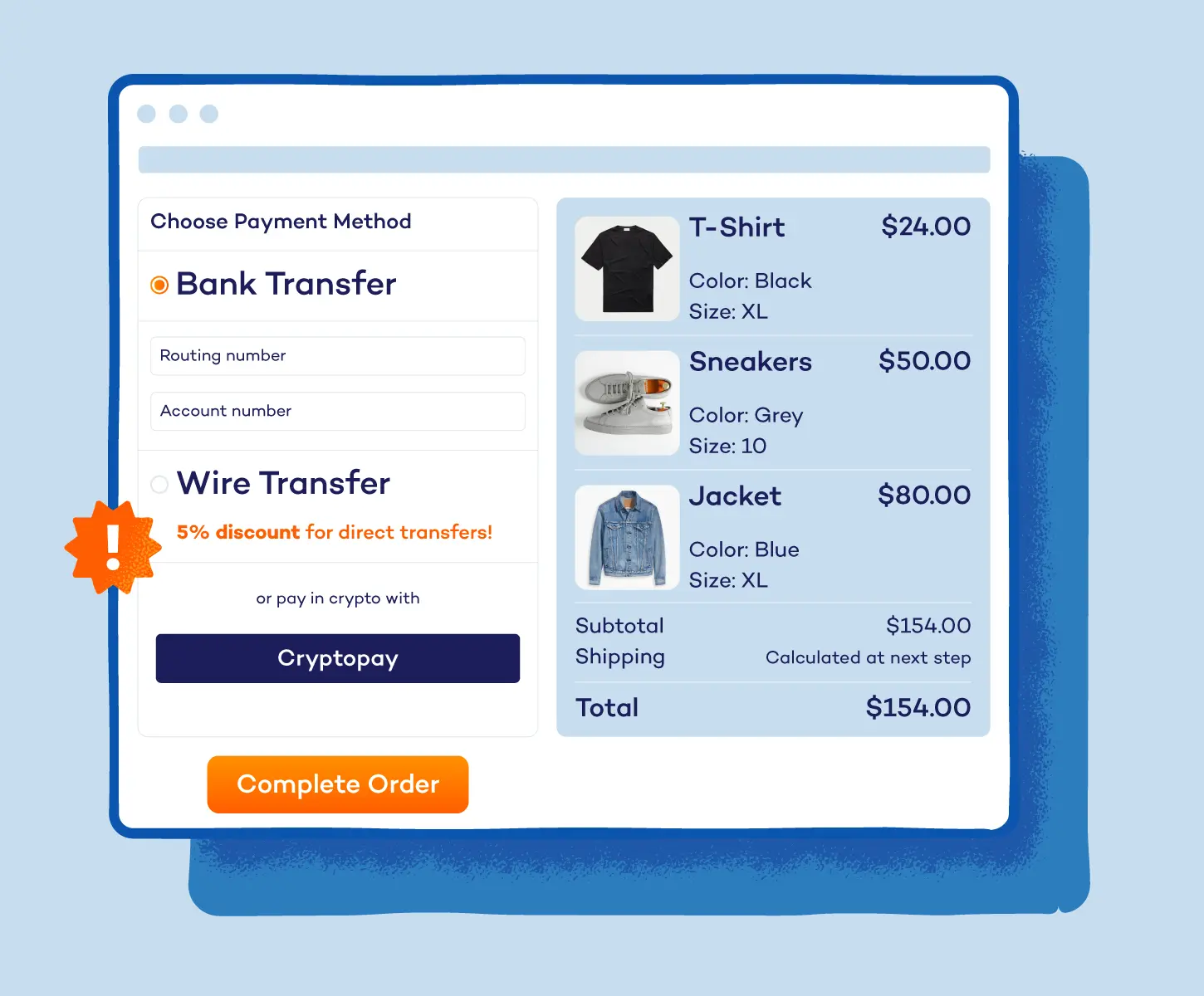




Examinons les alternatives :
- Modifier la requête.
- Démarrer une nouvelle conversation.
- Supprimer des sources (si elles ont été ajoutées manuellement).
What makes PPG sensors vulnerable to motion artifacts during workouts?

Photoplethysmography (PPG) is a non-invasive optical technique used to measure blood-volume pulses and derive vital signs by illuminating the skin and detecting changes in light absorption [1]. During workouts, wrist-worn PPG sensors are highly vulnerable to motion artifacts [2] because user movement alters the tissue-contact-sensor stack and creates baseline drift alongside time-varying system parameters [3]. Physical activities such as walking and running cause distortions [4] that compromise the reliability of parameters like heart rate [5], oxygen saturation, blood pressure, and respiration [6].
Current mitigation techniques include advanced signal processing and hardware-level adjustments:
* Adaptive Noise Cancellation (ANC): Algorithms utilizing methods such as the least mean squares (LMS)-Newton algorithm compensate for preliminary motion artifacts [7].
* Frequency Estimation and Filtering: Techniques combine heart rate frequency estimation with notch filters to restore the quasi-periodic PPG signal [8] and use band-pass filters to cancel DC-current drift [9].
* Convolutional Neural Networks: One-dimensional convolutional neural networks (1-D-CNNs) can classify continuous raw PPG segments into clean or artifact-affected data without needing complex manual feature engineering [10].
* Dual-Channel and Multi-Wavelength Hardware: Readout systems can incorporate an additional reference channel—such as a secondary organic photodetector channel—to effectively cancel DC drifts and ambient lighting interference without needing auxiliary motion sensors [11]. Hardware configurations also explore specific light source wavelengths, brightness levels, and multi-site arrays to optimize performance [12].
Would you also like to know how different LED wavelengths affect PPG signal quality?Réponse terminée. Une option de suivi est disponible.
Examinons les alternatives :
- Modifier la requête.
- Démarrer une nouvelle conversation.
- Supprimer des sources (si elles ont été ajoutées manuellement).
Pandemic Inflation: What Labour-Force Participation Revealed
Examinons les alternatives :
- Modifier la requête.
- Démarrer une nouvelle conversation.
- Supprimer des sources (si elles ont été ajoutées manuellement).
Créez votre compte pour façonner ce Feed autour de ce que vous cherchez et aimez.
WHO guidelines on gaming disorder
WHO guidelines on gaming disorder
This curated set answers which official WHO documents define gaming disorder, place it in ICD-11, and provide the detailed clinical diagnostic guidance needed to assess it.[1][2][3]
Official definition and diagnostic features
These WHO pages explain the condition in plain language, including impaired control over gaming, gaming taking priority over other activities, continued or increased gaming despite negative consequences, and resulting significant impairment.[[cite:4]][[cite:5]][[cite:6]][[cite:7]]
Gaming disorder
ICD-11 classification
Use the official ICD-11 browser to locate the classification entry for gaming disorder and its placement within WHO's international disease classification system.[[cite:10]][[cite:11]]

ICD-11
Detailed clinical diagnostic manual
The ICD-11 Clinical Descriptions and Diagnostic Requirements manual is the most relevant WHO source for fuller clinical guidance beyond the brief public definitions. The publication page is the preferred link; the duplicate direct file is omitted.
WHO classification and policy context
These official WHO documents explain the decision to include gaming disorder in ICD-11 and provide background on the classification and its use.
Inclusion of “gaming disorder” in ICD-11
Examinons les alternatives :
- Modifier la requête.
- Démarrer une nouvelle conversation.
- Supprimer des sources (si elles ont été ajoutées manuellement).
When Artificial Intelligence Designs the Next Space Material
Transcription
Picture a rocket crossing the darkness of space, built from materials that did not exist in any catalogue. MatterGen begins with a question: what should a material do? Stronger, stiffer, magnetic, or electronically precise. Then, instead of screening only known compounds, it generates candidate inorganic crystal structures from those desired properties. It assembles possible atom types, positions, and repeating crystal lattices, exploring chemical space beyond existing databases. The result can include multiple structures within a chemical system, some potentially resembling alloys or solid solutions with different compositions. But this is a launchpad, not a launch vehicle. A computer-generated crystal is not a flight-ready aerospace alloy. Candidates still need to be synthesized, tested, characterized, and evaluated for durability and manufacturability, followed by rigorous engineering qualification. Even a measured property near its target is only an early proof of concept. MatterGen offers a new way to imagine materials from the properties we want, rather than the materials we already know. The future of space hardware may begin not in a furnace, but in a prompt.
Examinons les alternatives :
- Modifier la requête.
- Démarrer une nouvelle conversation.
- Supprimer des sources (si elles ont été ajoutées manuellement).
Which chemical element is primarily used in perovskite solar cells?

The chemical element primarily used as the key metal enabling high-efficiency perovskite solar cells is lead ([4][9]). Most efficient perovskite solar cells utilize metal-halide perovskites where lead acts as the main inorganic cation in the crystal structure's active layer [1][2]. While researchers explore alternative compositions to address environmental concerns, lead-based perovskite devices consistently achieve superior electronic performance and power conversion efficiencies compared to other alternatives [3].
Would you also like to know what power conversion efficiencies lead-based perovskite solar cells have reached?Réponse terminée. Une option de suivi est disponible.
Examinons les alternatives :
- Modifier la requête.
- Démarrer une nouvelle conversation.
- Supprimer des sources (si elles ont été ajoutées manuellement).
Approximately how many calories can VR boxing burn per hour for an average
Examinons les alternatives :
- Modifier la requête.
- Démarrer une nouvelle conversation.
- Supprimer des sources (si elles ont été ajoutées manuellement).