Descobreix Pandipedia
Un directori creixent de respostes útils seleccionades per la comunitat de Pandi. Cerca a la col·lecció o explora els darrers descobriments.
2322 entrades disponibles

Which U.S. state passed the first right to reskill bill?
Veiem alternatives:
- Modifica la consulta.
- Inicia un nou fil.
- Elimina les fonts (si s'han afegit manualment).
The Lake You Can Farm in Summer

Every June, the Lake of Cirknitz in Illyria empties itself. The water drains away through fissures in its own basin, and the peasants move in behind it, sowing a crop on the lake bottom and pasturing herds on the rich herbage its oozy bed soon produces. The harvest is carried off by the end of September[1].
Around the middle of October the water comes back, spouting up with great force through several openings in the earth, and it brings fish with it. It also brings a stranger animal, which the book calls the Syren: the pale, blind creature that lives in the underground river running through the Cavern of Adelsberg. Its arrival in the returning flood was taken as proof that the lake and the cavern draw on the same hidden water.
Veiem alternatives:
- Modifica la consulta.
- Inicia un nou fil.
- Elimina les fonts (si s'han afegit manualment).
Where a Stone Is a Souvenir
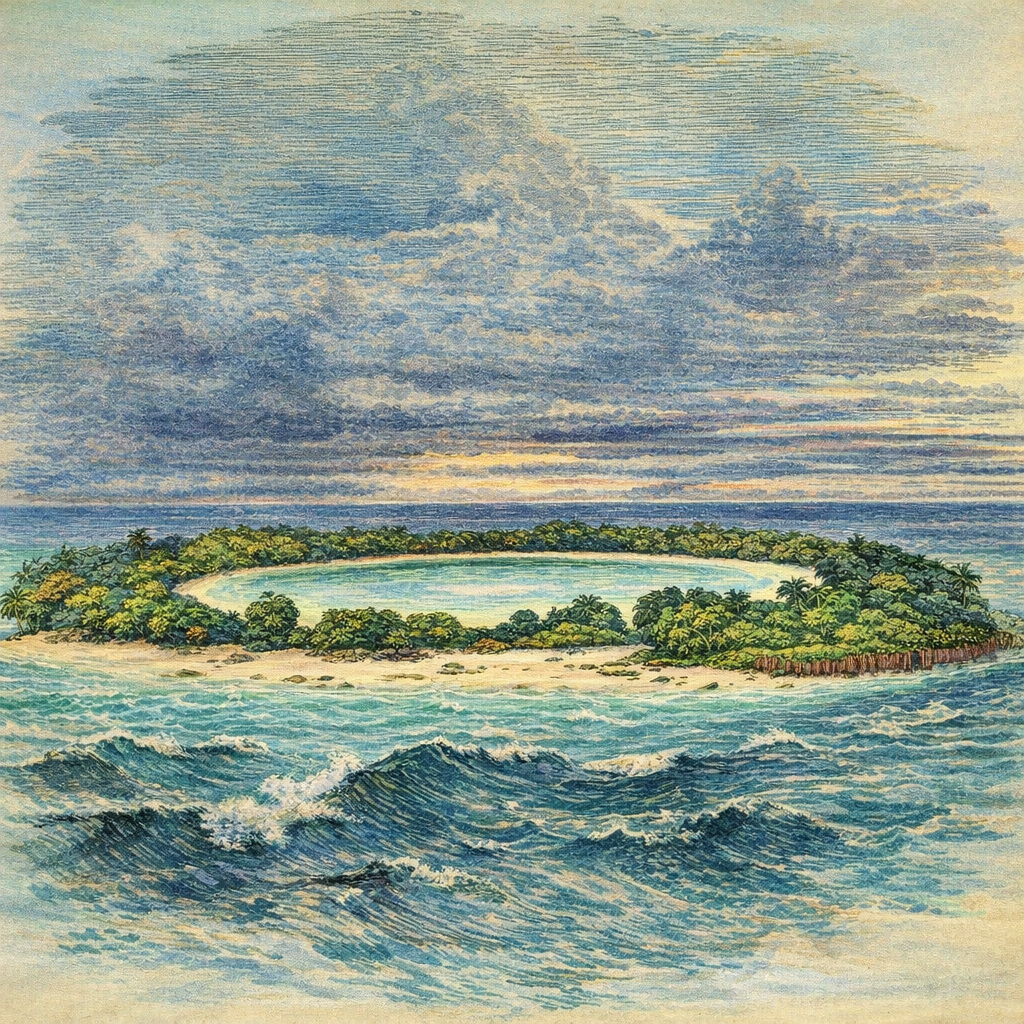
A coral island contains no stone. It is built by polyps out of their own skeletons, topped with sand and cocoa-palms, and the few loose rocks ever found in its mud arrived by accident, drifted in on the ocean currents and, the book suggests, "probably entangled in the roots of some tree."
So when Kotzebue carried a group of Pacific lagoon-islanders north to Kamchatka, they did something that only makes sense to a person born on coral. They collected stones there, to take home with them[1].
Veiem alternatives:
- Modifica la consulta.
- Inicia un nou fil.
- Elimina les fonts (si s'han afegit manualment).
A Book That Did Not Know Yet
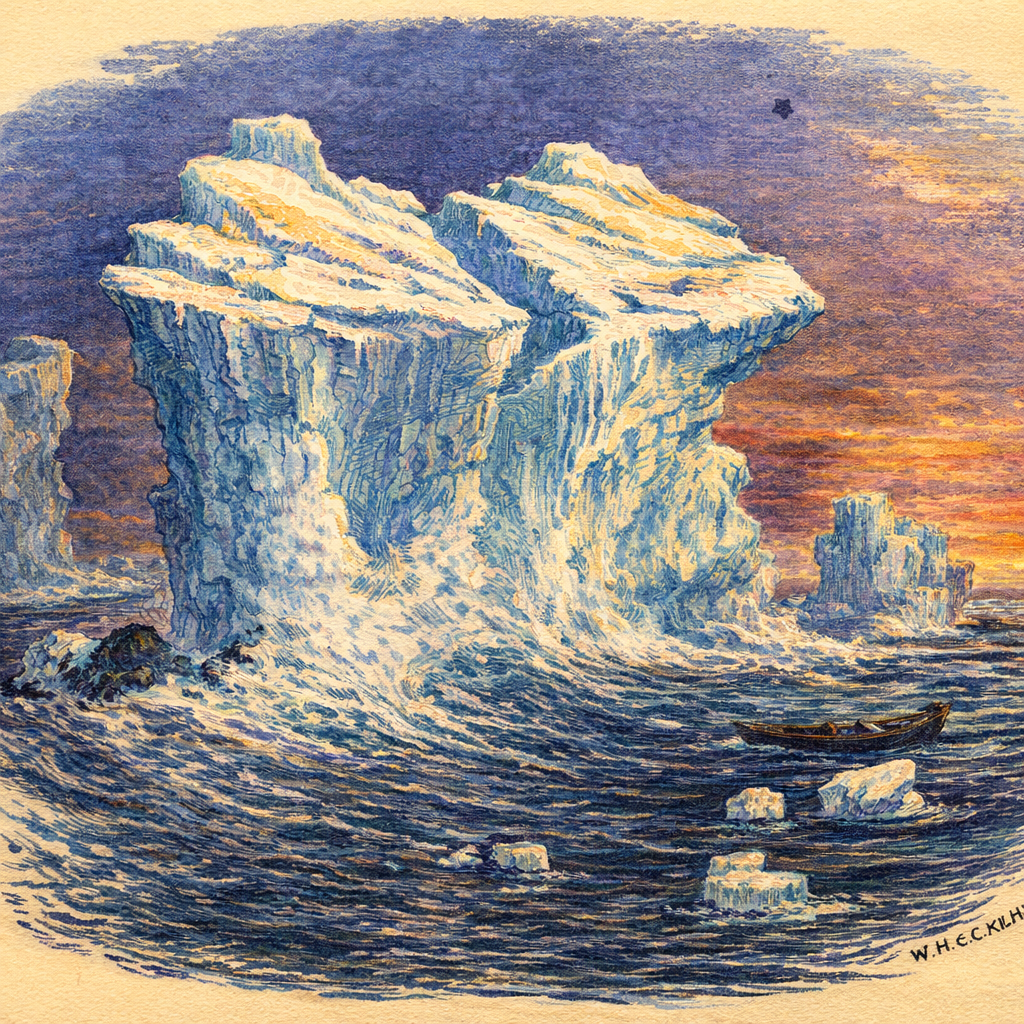
Describing ships that become locked into drift ice and can neither advance nor retreat, the book adds that this "is supposed by some persons even now to be the case with the expedition under Sir John Franklin."
That sentence was printed in 1848. Franklin had sailed in 1845 with two ships and 129 men to find the North-West Passage, and nothing had been heard from them since. The book files him under a natural hazard, as a vessel that might still be out there, still drifting, still waiting on the ice to let go[1].
What the author could not know, writing it, was that the expedition would never come back at all. Not one man of the 129 survived.
Veiem alternatives:
- Modifica la consulta.
- Inicia un nou fil.
- Elimina les fonts (si s'han afegit manualment).
A Charm Made of Tears
Sir Thomas Stamford Raffles, writing on the dugong from Sumatra, recorded a belief among Malay women that made the animal worth hunting for reasons that had nothing to do with its meat. A captured dugong calf, they held, always sheds tears for the loss of its mother, and those tears, if preserved, were "an infallible charm to recover lost affections."[1]
The book records the mother's side of it too. She is devotedly attached to her young, and is said to follow them even through a crowd of people. Raffles's own verdict on the charm: "as poetical as the fable of the siren's song."
Veiem alternatives:
- Modifica la consulta.
- Inicia un nou fil.
- Elimina les fonts (si s'han afegit manualment).
The Mouth That Cannot Swallow a Bread Roll
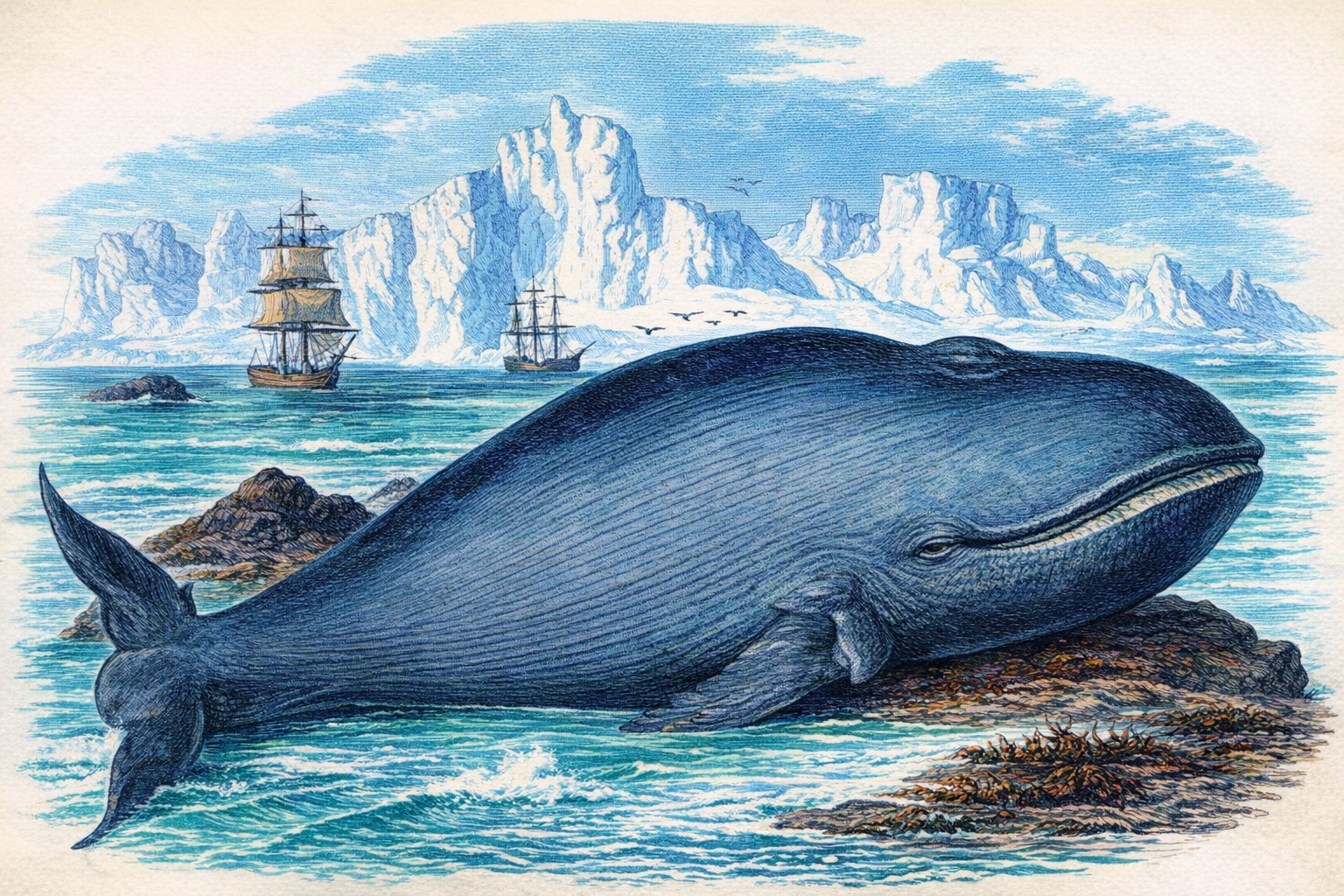
The Greenland whale reaches a hundred feet in length and cannot swallow anything much larger than a shrimp. Its throat measures "not exceeding an inch and a half in width" — so narrow, the book says, that the animal "would be choked by a penny roll."[1]
It feeds by straining instead. More than three hundred plates of baleen hang on each side of the upper jaw, so thickly haired inside that nothing escapes them, "even of the size of the smallest grain."
And its size hides one more vulnerability. Because it breathes air, a whale can drown. Tie a weight to it so that it cannot reach the surface, the book notes, and it "might be as easily drowned as a dog."
Veiem alternatives:
- Modifica la consulta.
- Inicia un nou fil.
- Elimina les fonts (si s'han afegit manualment).
Cold Water That Catches Fire
At Wigan in Lancashire there is a sulphureous spring that burns. Hold a lighted candle to the surface and a large flame springs up and burns vigorously, while the water itself stays perfectly cold[1]. Earth soaked by the spring will burn the same way once it has dried.
The better story is Broseley in Shropshire, June 1711. The spring announced itself in the middle of the night with a noise witnesses described as a thunderstorm underground. Neighbours went out and found the ground shaking and a little water bubbling up through the grass. One of them had the nerve to force a spade into it. The water flew up to a great height, somebody put a candle to it, and it caught — burning fiercely, going out soon after, and proving on examination to be entirely cold.
Veiem alternatives:
- Modifica la consulta.
- Inicia un nou fil.
- Elimina les fonts (si s'han afegit manualment).
Lisbon, Felt in a Derbyshire Mine
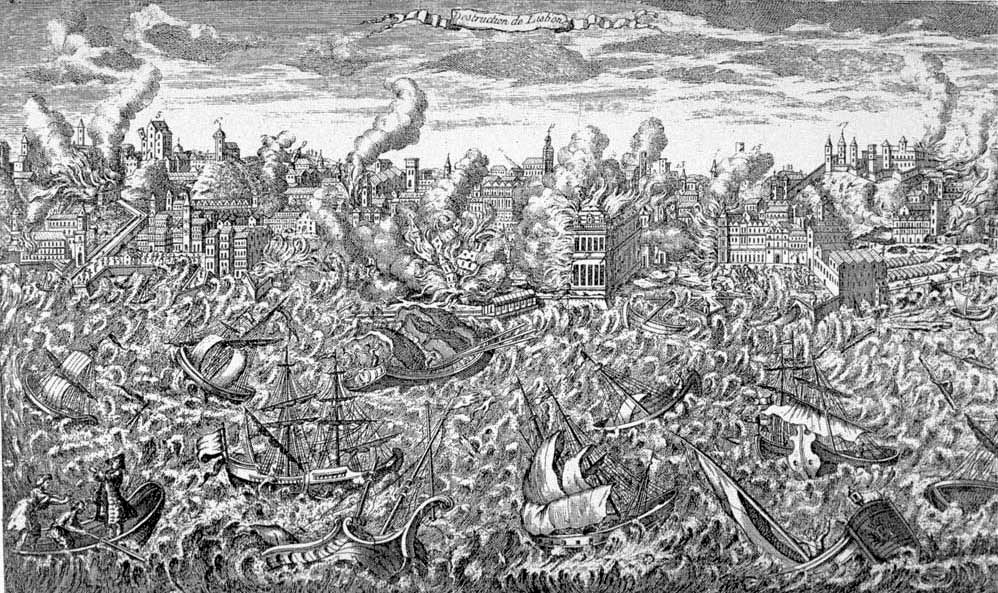
The Lisbon earthquake of 1755 lasted six seconds in the city and threw down every church and large building in it. What is stranger is where else it surfaced.
At Eyam Bridge in Derbyshire, the overseer of the lead mines was sitting in his writing-room when the chair beneath him was raised up and set down again, distinctly enough that he felt his feet leave the floor[1]. He ran outside and met the miners coming up in terror. One had seen the rocks move, another had heard them grind against one another, and all had heard a rumbling like groans out of the ground.
That evening at White Rock in Glamorganshire, about two hours after the ebb, water came roaring up out of the riverbed, floated two vessels — the smaller of two hundred tons — clean off their moorings and drove them down the river. The whole rise and fall took under ten minutes, and it was felt nowhere else along the river, "so that it seemed to have gushed out of the earth at that place."
Veiem alternatives:
- Modifica la consulta.
- Inicia un nou fil.
- Elimina les fonts (si s'han afegit manualment).
The Island That Comes and Goes
Derwentwater in Cumberland has an island that is not always there. A section of the lake's peaty bottom rises to the surface from time to time, floats for a while, and later settles back down.
The explanation the book offers is unglamorous and entirely convincing: the mass is swollen and buoyed up by gas produced as the vegetable matter in it decomposes. Push a boat-hook into the island and carburetted hydrogen comes up out of it in abundance[1].
Veiem alternatives:
- Modifica la consulta.
- Inicia un nou fil.
- Elimina les fonts (si s'han afegit manualment).
The Petrified Wig
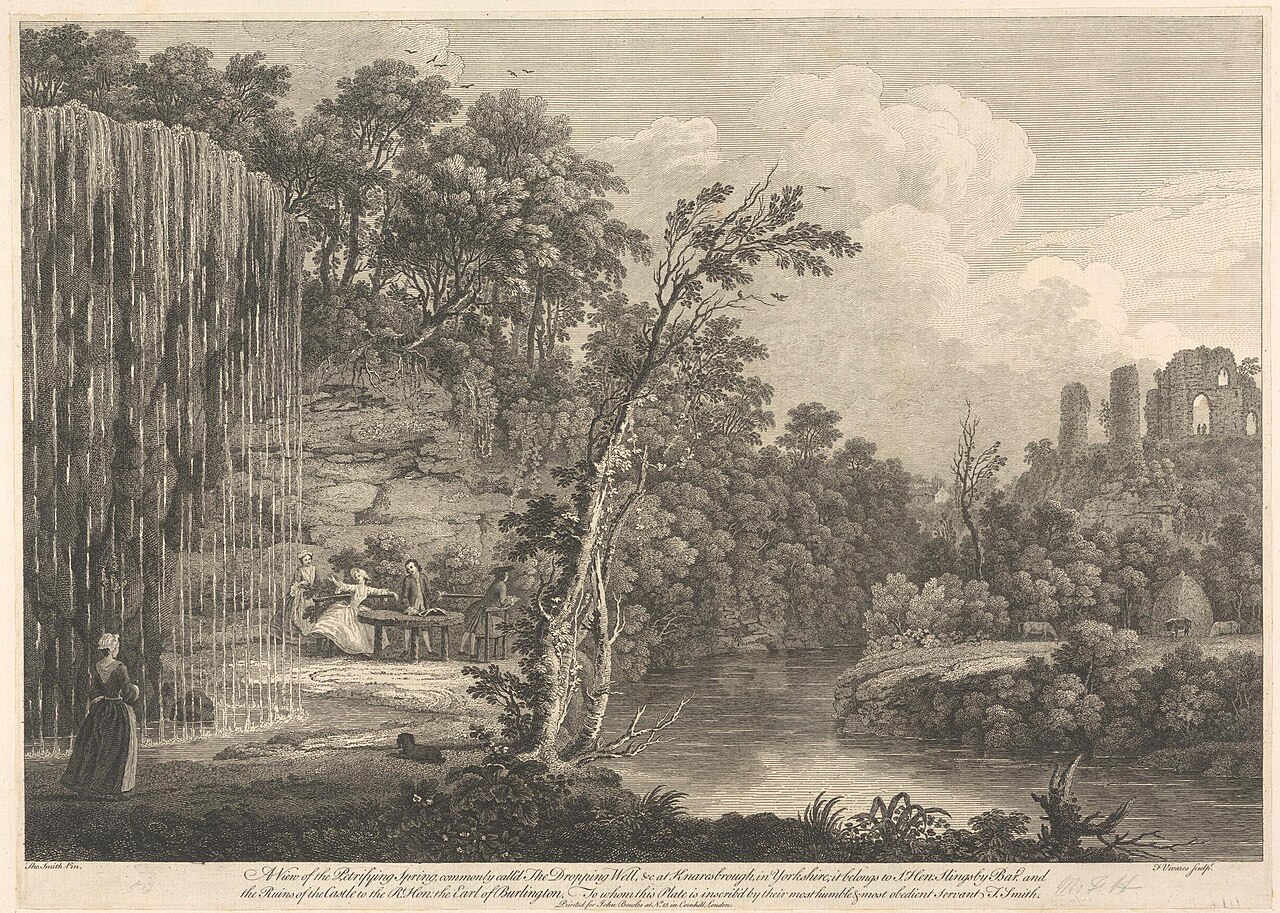
The dropping well at Knaresborough rises at the foot of a limestone rock, runs about sixty feet, then spreads over the brow of the rock and falls from thirty or forty separate places into a channel below. The rock overhangs by some fifteen feet, and each drop makes a small musical tinkling against the hollow.
The water is loaded with mineral matter, which it lays down on anything left under the drip until the object is crusted over and looks like stone. The people who show the well keep a collection of things treated this way. The two prize exhibits are a bird's nest, and an old wig[1].
Veiem alternatives:
- Modifica la consulta.
- Inicia un nou fil.
- Elimina les fonts (si s'han afegit manualment).