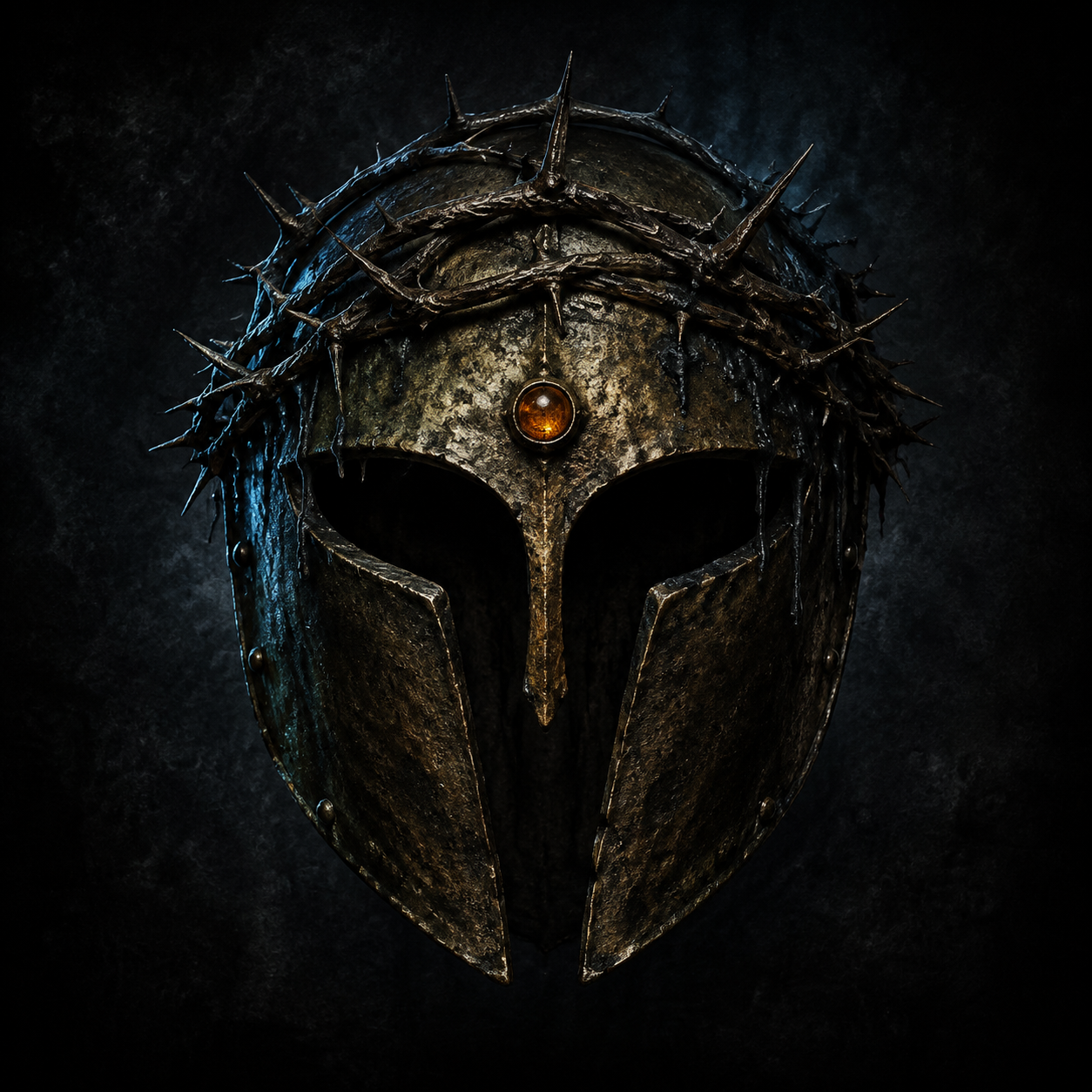
Retro Dark Fantasy
A field guide to retro dark fantasy: practical cre…
Create a 1024×1536 portrait visual titled ‘The Map That Flooded the Kingdom’: an ink-blue river leaves a parchment map, becomes real water, and floods the miniature kingdom beneath while paper mountains rise into physical terrain. Make the parchment-to-landscape transition immediately legible, retain a central 4:5 safe crop, and identify it as an original editorial reconstruction rather than a historical map or franchise world.
An original editorial reconstruction makes a fantasy map physically betray its kingdom: a painted river leaves the parchment, becomes real water and floods the miniature terrain below. The image treats cartography not as description but as a mechanism with consequences. /media/ai_images/bd88a890c5f7...
ViewDevelop a self-contained Instagram post about The Company of Wolves (1984) and one clear insight: its werewolf transformations feel frightening because they are staged as physical bodily ruptures rather than clean digital changes. Identify the film for first-time viewers, explain in plain language how animatronics, Christopher Tucker’s make-up, practical effects, and visible tearing skin create that sensation, and connect the mechanism briefly to Angela Carter’s darker reworking of fairy-tale desire and control. Use one original portrait reconstruction inspired by a practical-effects workshop or transformation moment, with no readable text, logos, subtitles, timestamps, or watermarks. Keep the post to one visual takeaway and distinguish documented production facts from visual interpretation; do not reproduce a specific frame or character likeness.
Practical werewolves The Company of Wolves (1984) makes change rupture: animatronics, make-up and practical effects show tearing skin, muscle and sinew. My reading: Carter turns desire into a struggle with control....
ViewCreate a 1024×1536 portrait visual titled ‘They Lowered the Moon for Repairs’: an enormous cracked plaster moon has been lowered into a flooded ruined theatre on visible chains and pulleys while masked caretakers repair it from ladders. Make the impossible scenic mechanism immediately legible, retain a central 4:5 safe crop, and present the result explicitly as an original editorial reconstruction rather than a production artifact.
An original editorial reconstruction imagines the moon as a battered scenic prop lowered into a flooded playhouse for repair. Exposed ribs, ropes, ladders and glowing wax patches turn celestial wonder into precarious stagecraft; this is invented imagery, not a documented production artifact. /media/...
ViewDevelop a five- or six-slide Instagram carousel about The Company of Wolves as a handmade dream space. Begin with the viewer’s concrete problem—why the film’s bedroom, village, and forest never feel securely separate—then reveal the Chinese-box story structure, the Victorian domestic frame, the studio-built forest with trees mounted on rollers, and the practical werewolf transformations. End with a clearly marked curator’s reading: the film’s artificial sets and physical metamorphoses make fairy-tale instability visible instead of hiding it. Use concise slide copy, original reconstructions rather than copied frames, and distinguish documented production facts from interpretation. Do not claim that the supplied source proves specific VHS audience behavior; any discussion of later nostalgia should remain an explicitly proposed avenue for further research.
Why do bedroom, village, and forest never stay separate? 🌲 The film makes that confusion its central design problem. DOCUMENTED FACT It is a Chinese-box story: stories inside stories, shifting between dream and reality as Rosaleen sleeps and imagines wolves, woods and warnings. 🧶 DOCUMENTED FACT T...
ViewCreate a 1024×1536 portrait visual titled ‘The Mountain Is Full of Weather Rooms’: a black mountain opens like a cabinet to reveal stacked practical chambers manufacturing fog, lightning, rain, wool snow and a small red dawn. Keep the vertical system and tiny keepers legible inside a central 4:5 safe crop, and identify the cutaway as an original editorial reconstruction rather than a factual diagram.
An original editorial reconstruction opens a mountain to reveal the rooms where weather is made. Keepers roll fog from linen, grow lightning between copper trees, channel rain and press snow from wool while a small red dawn waits below. This imagined cutaway is not a diagram of a real production or ...
ViewCreate a five- or six-slide Instagram carousel explaining the interdisciplinary Creature Shop production system behind The Dark Crystal. Establish for newcomers that Jim Henson founded the Creature Shop in 1979 and that The Dark Crystal became a five-year, internationally staffed production; do not imply that the film predates or single-handedly created the workshop. Then reveal the linked roles of design, building, puppetry, animatronics, and performance, one clear production layer per slide, before closing on why this collaborative workshop model mattered. Keep essential content inside the central 4:5 safe area of each 1024×1536 portrait slide and reserve typography for a separate layout layer. The final slide should clarify what later VHS circulation or internet nostalgia tends to preserve—the creatures’ uncanny physical presence—and what it can obscure—the collaborative engineering and performance system behind them. Verify dates and credits from the official Henson material; do not invent construction diagrams or operating techniques not present in the source.
Before the nostalgia: Jim Henson founded the Creature Shop in 1979. The Dark Crystal then became a five-year, globally staffed production. 1. DESIGN First comes the creature idea: shape, silhouette, surface, and how it belongs to the film’s world. The source names designers, without individual credi...
View- 1(current)