Découvrir Pandipedia
Un répertoire grandissant de réponses utiles sélectionnées par la communauté Pandi. Cherchez dans la collection ou parcourez les dernières découvertes.
2272 entrées disponibles

Issun-bōshi - Story Book

One Sun Tall

















Examinons les alternatives :
- Modifier la requête.
- Démarrer une nouvelle conversation.
- Supprimer des sources (si elles ont été ajoutées manuellement).
UNWTO 2021 74% 2020 1.3 trillion

Secondo i rapporti UNWTO, l’industria del turismo globale nel 2021 ha continuato a operare a livelli ben inferiori rispetto ai dati pre‐pandemici, con gli arrivi internazionali che sono rimasti tra il 70% e il 75% inferiori rispetto al 2019[3][7]. Inoltre, i dati indicano che il prodotto lordo diretto del turismo è cresciuto nel 2021, raggiungendo circa 1,9 trilioni di dollari, anche se questo risultato rimane significativamente al di sotto dei livelli pre-pandemici (circa 3,5 trilioni di dollari)[2][7].
Per quanto riguarda la cifra di 1,3 trilioni di dollari riferita al 2020, nessuna delle fonti in nostro possesso menziona esplicitamente tale valore, quindi non è possibile confermare quel dato sulla base dei testi disponibili.
Examinons les alternatives :
- Modifier la requête.
- Démarrer une nouvelle conversation.
- Supprimer des sources (si elles ont été ajoutées manuellement).
Challenges in UI Navigation for AI Agents
Challenges in UI Navigation for AI Agents
The integration and effective operation of AI agents within user interfaces (UIs) present a variety of challenges. As AI technology advances, understanding these challenges is critical for improving user-agent interactions across diverse platforms. This report synthesizes key issues identified in recent studies regarding UI navigation difficulties faced by AI agents.
Limitations in Data and Training

One of the significant hurdles in developing efficient UI navigation capabilities for AI agents is the reliance on datasets that often do not encompass the multifaceted nature of real-world tasks. Many existing AI models are trained on datasets that center around simple, app-specific tasks, hindering their performance in scenarios requiring cross-application navigation where workflows are complex and varied[5]. The lack of comprehensive datasets designed for cross-application navigation significantly impairs the development of robust AI agents[5].
The fine-tuning of AI models on task-specific demonstrations is essential for enhancing their success rates. Reports indicate that without this fine-tuning, tasks in desktop applications may only achieve success rates as low as 12%, while mobile applications fare slightly better at 46%[4]. This stark contrast underscores the necessity of high-quality training data for effective model performance.
Furthermore, the challenge of ensuring consistent and accurate annotation across multiple applications is substantial, as inconsistent human annotator contributions can result in ambiguities and errors that affect the overall performance of AI navigation systems[4].
Technical Limitations and Functional Understanding

Another pressing issue relates to the technical capabilities of AI agents themselves. Many models struggle to comprehend images and graphical elements accurately. The ability of AI to perform Optical Character Recognition (OCR) and effectively ground its understanding in user interfaces is often inadequate. Issues arise when AI needs to locate and interpret designated text or UI components due to poor grounding abilities[1]. Furthermore, essential non-textual information such as icons, images, and spatial relationships are challenging for AI systems to process and convey effectively through text alone[7][8].
AI models often lack a comprehensive understanding of website widgets and their functional mechanisms, limiting their ability to interact appropriately with dynamic GUI elements[1]. The reliance on visual signals for complex tasks can also be problematic; for instance, tasks reliant on animations or intricate visual cues are frequently mismanaged, as current AI models focus primarily on textual instructions rather than visual interpretative skills[3].
Complexity of Task Execution
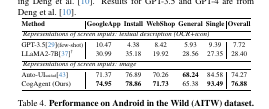
High-level planning and execution of tasks within UIs represent a significant challenge for AI agents. Current models face difficulties reconstructing procedural subtasks from visual conditions without adequate language descriptions, leading to poor performance in high-level planning benchmarks[3]. Action execution remains an area of concern as well, where models often fail to execute actions such as clicking and dragging with the required precision, thus missing critical interactions necessary for successful navigation[3][4].
Moreover, the high openness of some tasks adds to the complexity, as users may approach these tasks in various ways. Capturing a specific sequence of actions during data collection may fail to represent all possible execution strategies, limiting the agent's flexibility in addressing real-world scenarios[5].
Generalization and Domain Transfer
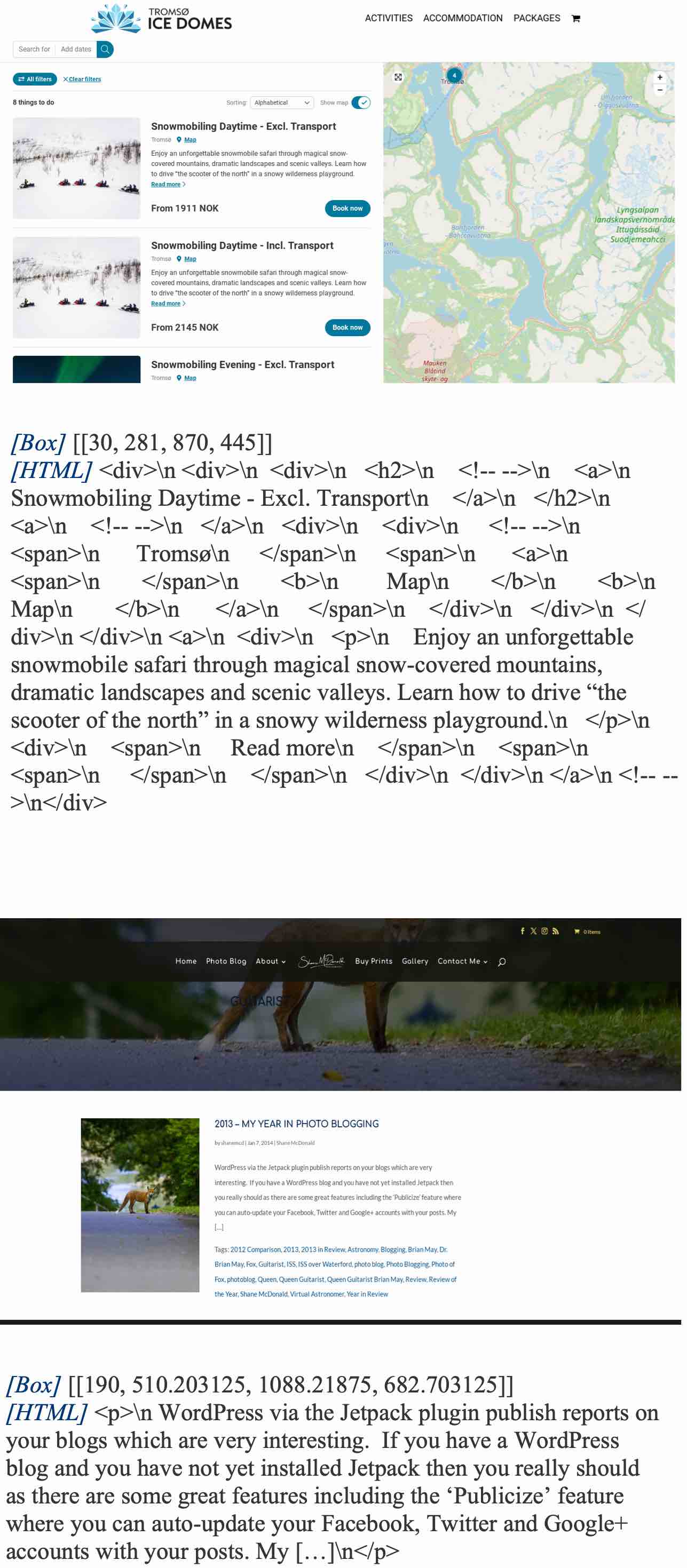
The ability of AI agents to generalize their learning and effectively adapt to new scenarios is crucial for their application in diverse environments. However, current models considerably struggle with generalizing knowledge to unseen applications, tasks, and devices[5]. This limitation is exacerbated by the focus on web-based interfaces in existing research, leading to deficits in robustness across various platforms, including desktop and mobile operating systems[2].
AI agents also face challenges in navigating dynamic GUI content, where unexpected elements like pop-up advertisements can disrupt task flow. This issue demonstrates a broader gap in how AI handles dynamic sequential tasks without prior annotated keyframes or operational histories[2].
Modal Alignment and Precision
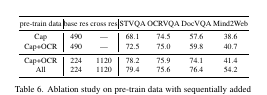
For effective UI navigation, alignment across different modalities is essential. Many models experience difficulties in accurately correlating entities between various modalities, leading to imprecise bounding boxes for GUI elements. Such precision issues present significant complications when dealing with tasks that demand accurate interaction with UI components[8].
Additionally, the transformation of essential details like icons and their spatial relationships into text embeddings can lead to misrepresentation. This loss of critical information hampers the AI's decision-making capabilities and ability to engage with UIs effectively[8].
Conclusion
The challenges faced by AI agents in UI navigation are multifaceted, involving limitations in training data, technical capabilities, task execution complexity, generalization issues, and precision in modal alignment. As AI continues to evolve, addressing these challenges is imperative for enhancing the functionality and effectiveness of agents in navigating complex user interfaces across various platforms. Through continued research and innovation, the goal of achieving seamless human-agent interactions can be realized, paving the way for more sophisticated and adaptable AI solutions in everyday applications.
Examinons les alternatives :
- Modifier la requête.
- Démarrer une nouvelle conversation.
- Supprimer des sources (si elles ont été ajoutées manuellement).
Elephantnose Fish Electric Vision
Transcription
Observe the remarkable elephantnose fish that emits a weak electric field from its tail to ‘see' in dark, murky waters<sup class='text_citation' source_id='1' start_phrase='The goofy-looking elephantnose' end_phrase='little shimmy'></sup>.
Watch as it moves gracefully, using body motions to collect multiple two-dimensional electric images that combine into a three-dimensional map of its surroundings<sup class='text_citation' source_id='1' start_phrase='stacked together, the' end_phrase='3-D objects'></sup>.
This extraordinary adaptation illustrates nature's ingenious methods, where even a small brain can achieve astonishing performance<sup class='text_citation' source_id='5' start_phrase='the elephantnose fish explores' end_phrase='tiny brain, the'></sup>.
Examinons les alternatives :
- Modifier la requête.
- Démarrer une nouvelle conversation.
- Supprimer des sources (si elles ont été ajoutées manuellement).
The Selkies
Transcription
The Selkies /media/short_movies/ideas/75180/233560_movie.mp4 Poster: /media/short_movies/ideas/75180/233560_poster.png
Examinons les alternatives :
- Modifier la requête.
- Démarrer une nouvelle conversation.
- Supprimer des sources (si elles ont été ajoutées manuellement).

according to this website: https://cheapholidayhacks.com/posts/easyjet-holidays/ how do you save on holidays?
To save on holidays with Easyjet Holidays, UK travellers can employ several strategies. Booking early or during shoulder seasons often yields the best rates[1]. Midweek departures tend to be cheaper than weekends[1].
Additionally, paying attention to baggage rules and using board basis filters can help manage costs effectively[1]. By following these tips, travellers can maximize their savings while enjoying a hassle-free booking experience.
Examinons les alternatives :
- Modifier la requête.
- Démarrer une nouvelle conversation.
- Supprimer des sources (si elles ont été ajoutées manuellement).

The Remarkable Indus Valley Civilization
Transcription
In the ancient river valleys of South Asia, a remarkable culture known as the Indus Valley Civilization, or Harappan Civilization, emerged over 5000 years ago<sup class='text_citation' source_id='3' start_phrase='In the ancient' end_phrase='years ago'></sup><sup class='text_citation' source_id='9' start_phrase='a remarkable' end_phrase='Harappan Civilization'></sup>.
This culture flourished from around 3300 BCE to 1300 BCE, building well-planned cities with grid streets, advanced drainage systems, and impressive public structures<sup class='text_citation' source_id='4' start_phrase='flourished from around' end_phrase='public structures'></sup><sup class='text_citation' source_id='6' start_phrase='well-planned cities' end_phrase='drainage systems'></sup>.
Its citizens traded with distant lands and pioneered innovations in art, metallurgy, and urban organization, leaving a legacy shrouded in mystery and achievement<sup class='text_citation' source_id='2' start_phrase='traded with distant' end_phrase='urban organization'></sup><sup class='text_citation' source_id='8' start_phrase='legacy shrouded' end_phrase='achievement'></sup>.
Let us journey into this ancient marvel as we uncover the secrets of its enduring influence and sophisticated design<sup class='text_citation' source_id='5' start_phrase='journey into this' end_phrase='sophisticated design'></sup><sup class='text_citation' source_id='9' start_phrase='uncover the' end_phrase='sophisticated design'></sup>.
Sources
- Features of Indus Valley Civilization (IVC): A Detailed Guide
- What was the Indus Valley Civilization?
- Indus Valley Civilization
- All About The Characteristic Features Of IVC
- Town Planning and Structures in Indus Valley Civilization
- Indus Valley Civilization(3300 BCE-1300 BCE), Location, Sites, Map, Society & Economy, Decline!
- The Indus River Valley Civilizations
Examinons les alternatives :
- Modifier la requête.
- Démarrer une nouvelle conversation.
- Supprimer des sources (si elles ont été ajoutées manuellement).
according to this website: https://cheapholidayhacks.com/posts/best-countries-for-honeymooners/ name the best countries for honeymooners.
According to the website, the best countries for honeymooners include Portugal, Croatia, Mexico, Bali, and Thailand[1]. Each destination offers a mix of romance, adventure, and affordability, making them ideal for creating memorable experiences[1].
In Europe, Portugal is highlighted for its charm, while Croatia is noted for its accessible beauty. Outside Europe, Mexico and Bali provide cultural richness and scenic shorelines, and Thailand offers both affordability and stunning nature[1].
Examinons les alternatives :
- Modifier la requête.
- Démarrer une nouvelle conversation.
- Supprimer des sources (si elles ont été ajoutées manuellement).
Tam Lin
Transcription
Tam Lin /media/short_movies/ideas/75176/233520_movie.mp4 Poster: /media/short_movies/ideas/75176/233520_poster.png
Examinons les alternatives :
- Modifier la requête.
- Démarrer une nouvelle conversation.
- Supprimer des sources (si elles ont été ajoutées manuellement).
D.B. Cooper's Daring Flight Path and Jump
Transcription
On November 24, 1971, a mysterious man known as D.B. Cooper hijacked a Boeing 727, ordering a flight from Portland to Seattle before diverting toward Reno<sup class='text_citation' source_id='3' start_phrase='On November 24, 1971' end_phrase='to Reno'></sup>.
After obtaining the $200,000 ransom and four parachutes, the plane's route took unexpected, sharp turns that some experts believe mirror the maneuvers of military chase jets<sup class='text_citation' source_id='2' start_phrase='After obtaining the' end_phrase='chase jets'></sup>.
At roughly 10,000 feet and traveling near 196 miles per hour, Cooper bravely leapt from the rear stairs into a cold, dark night<sup class='text_citation' source_id='4' start_phrase='At roughly 10,000 feet' end_phrase='dark night'></sup>.
The erratic yet calculated flight path continues to spark debates and fuel the enduring legend of his daring jump<sup class='text_citation' source_id='6' start_phrase='The erratic yet' end_phrase='daring jump'></sup>.
Examinons les alternatives :
- Modifier la requête.
- Démarrer une nouvelle conversation.
- Supprimer des sources (si elles ont été ajoutées manuellement).