Descobreix Pandipedia
Un directori creixent de respostes útils seleccionades per la comunitat de Pandi. Cerca a la col·lecció o explora els darrers descobriments.
2323 entrades disponibles
Norway’s Population Future Has No Verified Single Path
Veiem alternatives:
- Modifica la consulta.
- Inicia un nou fil.
- Elimina les fonts (si s'han afegit manualment).

Assessing long term ecological risks of gene drive mosquitoes. Review modeling frameworks, containment trials, and monitoring protocols for ecosystem wide interventions. Present contrasting expert opinions and policy scenarios.
Assessing Long-Term Ecological Risks of Gene-Drive Mosquitoes
Gene-drive mosquitoes could produce effects that extend beyond the release site and persist across generations. The central risk-assessment problem is therefore not only whether a drive can spread or suppress a target mosquito, but whether its evolutionary dynamics, geographic movement, ecological interactions, and social consequences remain controllable over time. The evidence reviewed supports cautious, phased research, but does not establish the safety of environmental release or provide a validated ecosystem-wide risk model.
This assessment reviews four linked areas: population and spatial modeling, containment trials, monitoring and remediation, and competing policy positions. A consistent evidence gap runs through all four: laboratory suppression has been demonstrated, while long-term effects on food webs, biodiversity, ecosystem services, and connected natural mosquito populations remain insufficiently tested.
1. Modeling Frameworks and Their Limits
The retrieved literature identifies modeling work on four principal dimensions: population genetics, spatial spread, persistence, and resistance evolution. Examples include models of homing endonuclease gene spread in mosquito populations, spatial persistence of genetically modified mosquitoes, and the evolution of resistance against CRISPR-Cas9 drives. These frameworks are relevant building blocks, but the available evidence does not expose enough equations, parameter assumptions, sensitivity analyses, or quantitative results to treat any one model as a complete ecological-risk framework.
A credible long-term assessment should audit, at minimum, the following assumptions:
- Genotype-specific inheritance, drive conversion, resistant-allele formation, fitness costs, mating behavior, and stochastic loss at low frequency.
- Age, sex, life-history, density dependence, seasonal variation, and environmental variability.
- Dispersal and connectivity represented through an appropriate spatial structure, such as a lattice, reaction-diffusion model, metapopulation network, or individual-based simulation.
- Pre-existing resistance, de novo resistant alleles, incomplete conversion, resistance fitness, and the possibility that suppression fails or is replaced by resistant populations.
- Persistence, recolonization, immigration, delayed ecological recovery, and the performance of any proposed reversal or mitigation strategy.
The most important modeling gap is ecosystem integration. No directly validated gene-drive mosquito model was identified that quantifies effects on food webs, biodiversity, ecosystem services, or ecosystem-wide community dynamics. A stronger framework would link mosquito population-genetic outputs to empirically parameterized consumer-resource, pathogen-transmission, and ecosystem-service models. It should test predator switching, functional redundancy among mosquito species, larval-resource changes, pathogen-host substitution, and compensation by non-target or replacement species. Absence of such evidence should be treated as uncertainty, not as evidence that ecological effects will be negligible.
The National Academies recommends that ecological risk assessments consider effects from the genome through the ecosystem, including empirical estimates of gene flow, population change, trophic interactions, and community dynamics where possible. [1] It also recommends estimating immediate and long-term harms and benefits, comparing alternative strategies, and identifying important uncertainties. [2]
2. What Containment Trials Demonstrate
The clearest direct evidence comes from contained laboratory cage experiments using CRISPR-Cas9 drives in Anopheles mosquitoes. In the principal Anopheles gambiae doublesex experiment, the drive began at a low frequency in two laboratory cages, transmitted at close to complete efficiency under the tested conditions, reached fixation within roughly seven to eleven generations, and was followed by cage-level population collapse. The experiment therefore demonstrates strong inheritance and suppression in a controlled population, not environmental safety, field persistence, or resistance-proof behavior.
Resistance-associated target-site mutations were detected, but the variants observed in that experiment did not appear to produce a functional female doublesex transcript and did not prevent suppression during the study period. This does not establish that the drive is resistant to future resistance evolution. Other contained Anopheles drive experiments provide a contrasting result: functional resistant alleles emerged in some target-gene contexts, preventing complete introduction or allowing population persistence.
The experiments also show why fitness assumptions matter. A fertility-targeting drive can impose severe reproductive effects in particular genotypes while allowing heterozygous carriers to retain enough reproductive capacity for rapid spread. Competition, mating success, predators, environmental stress, resource limitation, genetic background, and population structure could all change these dynamics outside insectary cages. The retrieved evidence does not establish any semi-field or open-field release of a gene-drive mosquito system.
Containment guidance recommends using multiple confinement strategies where feasible, combining molecular, ecological, reproductive, and physical barriers. It also emphasizes authorized access, physical separation, screen and building-penetration inspections, escape reporting, baseline monitoring of free-flying insects, validated waste treatment, and predefined breach responses. Traps are described as supplementary rather than complete monitoring tools, with PCR diagnostics available when genotype identification is required. These are safeguards for research facilities, not evidence that an escaped self-spreading drive could be retrieved.
3. Monitoring, Staged Testing, and Remediation
The strongest monitoring recommendation is a phased, ecosystem-specific program rather than a universal field protocol. The National Academies proposes a sequence of preparation, laboratory research, field-based research, staged environmental release, and post-release surveillance. [3] Movement between phases should depend on predefined standards, decision points, and site-selection criteria that address ecological risk, scientific objectives, ethics, public perceptions, and regulatory requirements. [4]
Before any environmental release, a sponsor should establish a baseline for mosquito abundance, geographic distribution, genetic diversity, population structure, relevant biotic interactions, and abiotic conditions. Baselines should be capable of distinguishing intervention effects from natural variation and should account for multiple generations and heterogeneous genetic backgrounds. The release plan should define intended outcomes, such as suppression or altered pathogen transmission, together with possible non-target, dispersal, related-species, and social effects.
During staged testing or release, surveillance should combine genetic, demographic, ecological, and social indicators:
- Construct frequency, inheritance patterns, resistant alleles, persistence, and spread beyond the approved area.
- Mosquito abundance, age and sex structure where relevant, geographic expansion, recolonization, and changes in population structure.
- Interactions with predators, competitors, prey, pathogens, related mosquito species, and other ecosystem components.
- Observed outcomes compared with model predictions and the approved risk assessment.
- Community concerns, livelihood effects, governance problems, and evidence of cross-border impacts.
Targeted amplification and metagenomic sequencing are possible tools for detecting the construct in mosquitoes and environmental samples. However, the reviewed evidence does not establish fixed sampling frequencies, boundary distances, numerical stopping thresholds, or a mandatory monitoring duration. Monitoring should therefore be designed as a decision process: progression pauses when dispersal, ecological effects, resistance, or social consequences materially diverge from the approved assessment, or when controllability cannot be demonstrated. This is a proposed safeguard, not a universally binding numerical rule.
Monitoring and surveillance must be planned before research advances because they are necessary to determine whether an intervention continues to work over time. The National Academies also warns that monitoring can be costly and logistically difficult, especially in low- and middle-income settings, so methods and timeframes should be useful and sustainable. [5] Reversal drives, restoration of wild-type organisms, construct-stability testing, guide-RNA optimization, fitness testing, and visible markers are mitigation options for evaluation, not guaranteed means of recovery. [6][7][8]
4. Contrasting Expert and Policy Scenarios
There is no settled expert consensus. One position supports cautious, stepwise research that can stop before environmental release. Another supports eventual release if environmental impacts, malaria benefits, transparency, community involvement, and international cooperation are addressed. More restrictive participants question whether a self-sustaining drive can ever be safely field-tested and favor locally confined systems, isolated settings, moratoria, or prohibition.
- Prohibition or indefinite moratorium: appropriate where reversibility, transboundary governance, or ecosystem consequences cannot be demonstrated. This scenario gives priority to avoiding potentially irreversible effects but also forecloses benefits that proponents associate with malaria reduction.
- Containment-first research: continue laboratory, large-cage, and highly confined studies while developing ecological baselines, resistance models, monitoring capacity, and remediation plans. This is consistent with the National Academies conclusion that evidence was insufficient to support environmental release, while continued laboratory research and controlled field trials remained supportable. [9]
- Conditional staged deployment: permit geographically bounded releases only after organism-specific risk assessment, independent review, community participation, demonstrated spatial and temporal controllability, and predefined pause or termination criteria.
- Benefits-versus-risks deployment: compare potential malaria-eradication benefits with extinction, ecological, livelihood, and governance risks, while requiring transparency and cooperation among affected nations. This position remains conditional rather than an endorsement of unrestricted release.
International policy materials emphasize precaution, case-by-case assessment, risk management, monitoring, horizon scanning, and attention to centres of origin and genetic diversity. They also raise the importance of prior and informed participation where releases could affect traditional knowledge, livelihoods, or land and water use. The unresolved issues are substantial: who has authority across borders, whether affected communities have veto power, how consent is defined, and which institution is responsible for remediation if a drive spreads beyond the approved area.
Public engagement should begin before deployment decisions are made and should have a clear connection to research priorities, risk assessment, and policy outcomes. [10][11] The governance pathway should be proportionate to the specific mosquito, drive design, ecosystem, and intended objective rather than applying one uniform standard to every proposal. [12]
Conclusion and Evidence Gaps
The evidence supports a cautious conclusion: gene-drive mosquitoes have demonstrated rapid inheritance and strong suppression in contained laboratory populations, but those results do not establish long-term ecological safety. The principal unresolved risks concern resistance evolution, geographic spread, persistence and reversibility, effects on non-target and replacement species, trophic interactions, biodiversity, ecosystem services, and the capacity of institutions and communities to monitor and govern cross-border consequences.
The most defensible policy approach supported by the reviewed evidence is phased research with explicit stop points, independent assessment, ecosystem-specific baselines, transparent models, genetic and ecological surveillance, and credible contingency planning. Before any ecosystem-wide intervention, research should close the gap between mosquito population models and ecosystem models, validate monitoring under realistic field conditions, and demonstrate not merely that a drive can spread, but that its spread and consequences can be detected, governed, and mitigated.
Key institutional source
National Academies recommendations on phased testing, ecological risk assessment, monitoring, mitigation, and public engagement.

Veiem alternatives:
- Modifica la consulta.
- Inicia un nou fil.
- Elimina les fonts (si s'han afegit manualment).
Discover Your Digital Habit Archetype
Veiem alternatives:
- Modifica la consulta.
- Inicia un nou fil.
- Elimina les fonts (si s'han afegit manualment).
Factory Floors, Rebuilt in 3D




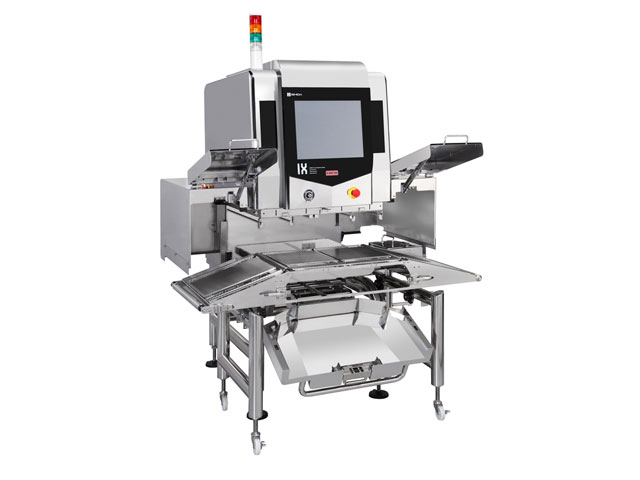

Veiem alternatives:
- Modifica la consulta.
- Inicia un nou fil.
- Elimina les fonts (si s'han afegit manualment).
new grants for rural broadband training. Fetches updates on funding that supports connectivity and digital skills in rural areas.
New grants for rural broadband training
Curated official-page leads are grouped into rural broadband connectivity and digital-skills or workforce training. The search results identify relevant 2026 opportunities, but eligibility, award amounts, supported activities, and deadlines require confirmation on the linked pages.
Rural broadband connectivity
Official USDA and NTIA sources covering rural telecommunications programs, broadband infrastructure, technical assistance, and Tribal connectivity funding. Treat current availability and deadlines as requiring confirmation.
Digital-skills and broadband workforce training
Official U.S. Department of Labor sources covering 2026 community-college and workforce-training grant materials. These are discovery leads; confirm rural eligibility, funding terms, and application deadlines in the linked notices.
Some retrieved pages were discovery results rather than fully verified funding notices. Confirm whether each opportunity is open as of August 5, 2026, and verify applicant eligibility, rural targeting, funding, and deadlines before applying.
Veiem alternatives:
- Modifica la consulta.
- Inicia un nou fil.
- Elimina les fonts (si s'han afegit manualment).
What is the history and future of brain computer interface regulation?. Trace key milestones from early medical trials to emerging consumer proposals. Analyze regional regulatory frameworks, ethical debates, and forecasts for harmonized global standards.
The History and Future of Brain-Computer Interface Regulation
Brain-computer interface regulation has developed indirectly: scientific advances and clinical experiments have generally been governed through existing medical-device, clinical-investigation, privacy, cybersecurity, and consumer-protection systems rather than through a single BCI statute. The central regulatory divide is between an investigational device, a product authorized for marketing, a consumer proposal, and nonbinding governance guidance. The evidence reviewed does not establish a marketing authorization, clearance, or approval for a named implanted BCI, nor does it provide reliable dates for the earliest BCI clinical trials.
The policy trajectory is nevertheless clear. Regulators first addressed implanted BCIs through medical-device and clinical-trial pathways; they are now confronting neural-data privacy, software and AI, cybersecurity, disability rights, enhancement, and consumer products. International organizations have supplied principles and implementation guidance, but a binding global BCI code remains unlikely in the near term.
1. Key Regulatory Milestones
| Date | Milestone | What it established |
|---|---|---|
| 2017 | EU Regulation 2017/745, the Medical Device Regulation | Created the EU framework for device classification, conformity assessment, clinical investigations, and market access. It does not assign one universal BCI class; classification depends on characteristics and intended purpose. |
| 1 January 2021 | Post-Brexit UK divergence | Northern Ireland continued to align with EU device rules, while Great Britain followed a separate UK route for clinical investigations and market access. |
| 20 May 2021 | US FDA implanted-BCI guidance | The FDA issued recommendations for nonclinical testing and feasibility or pivotal studies under the Investigational Device Exemption pathway for implanted BCIs intended for patients with paralysis or amputation. This was guidance, not product approval. |
| 26 May 2021 | EU MDR became applicable | This was the MDR transition point for legacy devices, not a BCI-specific authorization. |
| 2023-2024 | EU staged legacy-device transition | Eligible legacy devices received conditional transition routes, with quality-management and conformity-assessment deadlines. These were general device rules, not evidence that a BCI was approved. |
| 2024 | US FTC Cerebral enforcement proposal | The FTC proposed restrictions on disclosure and advertising uses of sensitive health data, illustrating the relevance of consumer privacy enforcement even outside BCI-specific regulation. The proposal was not a BCI-specific rule and required federal-court approval. |
| 29 September 2025 | US MIND Act of 2025, S. 2925 | The bill was introduced, read twice, and referred to the Senate Committee on Commerce, Science, and Transportation. It remained a legislative proposal, not enacted law. |
| 26 May 2026 | EU conditional transition milestone | Certain class III custom-made implantable devices may use a specified Article 120 transition route without an MDR quality-management-system certificate, subject to application and notified-body conditions. The evidence does not establish that any BCI qualifies. |
2. Regional Regulatory Frameworks
BCIs are regulated according to intended purpose, invasiveness, medical function, risk, and the handling of identifiable or inferential neural data. The same hardware may therefore face different rules when marketed as a therapeutic device, wellness product, gaming accessory, research system, or enhancement technology.
| Jurisdiction | Established pathway | Regulatory limitation or gap |
|---|---|---|
| United States | FDA’s 2021 guidance addresses nonclinical testing and IDE feasibility and pivotal studies for implanted BCIs intended for patients with paralysis or amputation. | The evidence does not establish a universal FDA BCI classification, predicate, approval route, or complete requirements for AI decoding software. Noninvasive consumer products may fall outside the implanted-device guidance unless their claims or functions make them medical devices. |
| European Union | The MDR is the principal medical-device framework, supplemented where relevant by GDPR and the AI Act. Product treatment depends on intended purpose and the interaction among these instruments. | The reviewed evidence does not support a product-specific MDR classification or detailed BCI conclusion under GDPR or the AI Act. The 26 May 2026 date is a conditional transition route for a defined class of custom-made implantable devices, not a general BCI transition period. |
| United Kingdom | In Great Britain, clinical investigations of unmarked devices require ethics approval and MHRA non-objection; the manufacturer or UK Responsible Person provides 60 days’ prior notice, after which the investigation may proceed if no written objection is issued within the relevant period. UK guidance covers software forming part of a medical device and active, invasive, and implantable devices. | The evidence does not establish a BCI-specific classification or detailed UK AI and data-protection requirements. Great Britain and Northern Ireland must be analyzed separately. |
| Brazil | ANVISA’s medical-device and software-as-medical-device materials, including RDC 657/2022, are relevant regulatory starting points. | The retrieved evidence is insufficient to state BCI-specific classification or clinical-trial requirements. LGPD, AI proposals, and consumer-protection rules require further verification rather than assumption. |
| Japan | PMDA, the Ministry of Health, Labour and Welfare, the PMD Act, and Japan’s medical-device and clinical-research systems are the relevant framework targets. | The retrieved material does not establish BCI-specific classification or approval requirements, so detailed conclusions would be premature. |
3. Ethical and Governance Debates
Mental privacy and autonomy. Neural signals can reveal or support inferences about mental states, making ordinary personal-data concepts incomplete. OECD analysis identifies mental privacy, cognitive liberty, agency, identity, dignity, and freedom from manipulation as central concerns; UNESCO recommends protections for autonomy, freedom of thought, and mental and physical integrity. Regulation may therefore need to cover raw neural data, inferred profiles, and non-neural data used to infer mental states, with purpose limitation, minimization, access, correction, erasure, and suspension rights.
Safety, security, and accountability. Implant safety includes biocompatibility and device reliability, but governance must also address psychological effects, software failure, maintenance, hacking, connected-device misuse, vulnerability disclosure, and post-market monitoring. UNESCO’s proposed controls include encryption, secure-by-design practices, risk assessments, red-team exercises, and lifecycle human-rights and impact assessments.
Consent, control, equity, and disability rights. The core issue is less formal ownership than enforceable control over collection, inference, access, reuse, sharing, deletion, and security. UNESCO proposes treating neural and mental-state-inference data as sensitive personal data where appropriate, requiring a valid legal basis for sharing, and prohibiting access to goods or services from being conditioned on disclosure of such data; these principles are especially relevant to disabled users who may depend on assistive BCIs. Enhancement raises a further unresolved question: whether rules designed for therapeutic risk should also govern cognitive optimization, workplace use, advertising, and social pressure to adopt or disclose BCI technologies.
4. Consumer Proposals and International Initiatives
Consumer BCIs fall into two broad categories: noninvasive EEG headsets marketed for gaming and other direct-to-consumer uses, and invasive implanted systems proposed for communication, control, or enhancement. A consumer claim is not a regulatory authorization. Noninvasive products may primarily face consumer-protection rules unless they make medical claims or perform a medical function, while implanted systems raise surgical, biocompatibility, electrical, wireless, software, cybersecurity, and post-market questions.
The OECD Recommendation on Responsible Innovation in Neurotechnology was adopted on 11 December 2019, and the OECD Neurotechnology Toolkit was published in July 2025. They are nonbinding guidance, not a worldwide BCI law. The Recommendation emphasizes responsible innovation, safety, inclusion, scientific collaboration, public deliberation, oversight, brain-data protection, stewardship, and anticipation of misuse; the Toolkit translates these into proposals such as safety by design, phased assessment, cybersecurity testing, incident reporting, informed and revocable consent, edge processing, and limits on secondary use.
UNESCO’s Recommendation on the Ethics of Neurotechnology is another important global normative instrument, but it is a recommendation rather than a binding treaty or uniform regulatory code. The International Brain Initiative supports coordination on neuroethics, data sharing, technology dissemination, education, and public communication, but the reviewed material does not establish a dedicated binding UNESCO, ISO, IEC, or ITU BCI standard.
5. Forecast: Toward Partial, Not Complete, Harmonization
The most realistic forecast is functional convergence without a single global BCI statute. Countries are likely to converge on lifecycle safety, clinical evidence for invasive therapeutic devices, cybersecurity, incident reporting, informed consent, data minimization, and restrictions on secondary use because these areas are already reflected in FDA guidance, OECD principles, UNESCO recommendations, and emerging device frameworks.
- Likely to converge: baseline terminology, risk-based device assessment, clinical-investigation documentation, cybersecurity-by-design, vulnerability and incident reporting, lifecycle maintenance, and safeguards for neural-data consent and secondary use.
- Likely to remain divergent: whether consumer EEG products are medical devices, how enhancement and workplace monitoring are treated, which neural inferences receive special protection, national AI obligations, reimbursement and post-trial maintenance, and the allocation of liability across manufacturers, clinicians, software providers, employers, and users.
- Main barriers: different definitions of medical purpose, uneven regulatory capacity, cross-border data flows, uncertainty over long-term implant maintenance, proprietary interfaces, and the absence of a dedicated binding international standard.
- Policy priority: build interoperability and mutual recognition around shared technical and ethical baselines, while preserving national authority over rights, clinical practice, consumer protection, and market access. International guidance should be treated as a coordination layer, not as a substitute for enforceable domestic rules.
In short, BCI regulation is moving from a narrow medical-device question to a lifecycle governance problem. The decisive future issue will be whether governments can extend protection beyond the implant itself to the neural data, software updates, inferences, connected services, and social contexts that determine how much autonomy and control users actually retain.
Veiem alternatives:
- Modifica la consulta.
- Inicia un nou fil.
- Elimina les fonts (si s'han afegit manualment).
Your Eyes Are the Next AR Controller
Transcripció
Why might eye tracking be the next big thing in augmented reality? Because your gaze can tell an interface what has your attention, without waiting for a hand gesture or controller input. Reviews link eye tracking with foveated rendering in augmented and virtual reality glasses, and with content that adapts in real time to where you are looking, potentially making experiences feel more responsive and engaging. Eye tracking systems can also compensate for head pose, helping maintain continuous gaze feedback as you move. The user experience case is just as compelling. Gaze is a natural way to explore a scene, and it can offer hands-free interaction for people who cannot use standard physical controls. In one study, however, the evidence came from virtual reality, not augmented reality, so it should not be treated as direct proof of an augmented-reality advantage. In that study, gaze followed by a nod was the fastest tested selection method, and combining gaze with a head movement helped separate deliberate commands from accidental looks. That is a promising answer to the so-called Midas Touch problem. There are still important caveats. Systems need accurate, uninterrupted feedback, users may need personalization, and designers must balance speed, comfort, and error resistance. Calibration, unintended selections, and the privacy implications of gaze data also deserve careful attention. Eye tracking is not just a new control method. It could become the layer that makes augmented reality more adaptive, accessible, and natural.
Veiem alternatives:
- Modifica la consulta.
- Inicia un nou fil.
- Elimina les fonts (si s'han afegit manualment).
Five No-Tech Retreat Leads Worth Investigating
Veiem alternatives:
- Modifica la consulta.
- Inicia un nou fil.
- Elimina les fonts (si s'han afegit manualment).
What is the name of the open dataset released in 2024 to benchmark ethical AI behaviors?. Points to a resource for responsible AI research.
Veiem alternatives:
- Modifica la consulta.
- Inicia un nou fil.
- Elimina les fonts (si s'han afegit manualment).
ISO standards for virtual reality safety. Link to official specs and drafts on VR hardware safety.
Curated sources
Sources are organized around the requested evidence needs.
Official ISO/IEC sources: published standards and draft
Published standards: ISO/IEC 5927:2024 addresses AR/VR safety, including safe immersion, setup, usage, and physical head-mounted displays[[cite:1]]; ISO 9241-820:2024 provides ergonomic guidance for interactions in immersive, augmented-reality, and virtual-reality environments[[cite:2]]. Draft/work-item: ISO/IEC DIS 5927 covers augmented and virtual reality safety[[cite:3]]. Additional published human-factors guidance covers VR content use and creation[[cite:4]][[cite:5]].

/IEC 5927:2024
Veiem alternatives:
- Modifica la consulta.
- Inicia un nou fil.
- Elimina les fonts (si s'han afegit manualment).